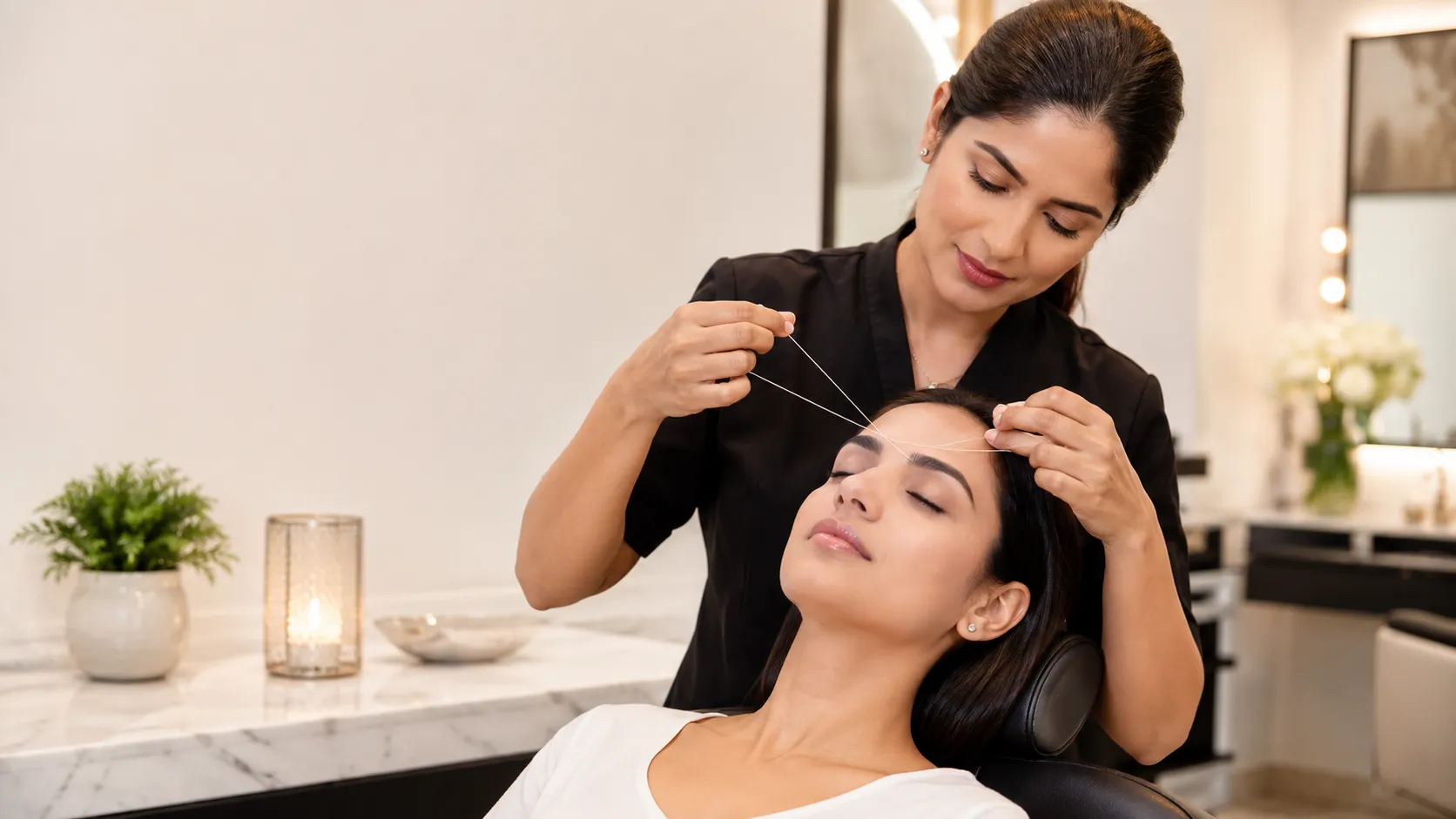
Professional dermaplaning near you uses a sharper surgical-grade blade for deeper exfoliation, skin analysis, and lower risk of cuts, usually costing about $100 to $300 per session. At-home dermaplaning tools are cheaper and convenient but less precise and easier to misuse. Choose a professional if you want the best results or have any skin concerns, and choose at-home for simple, gentle upkeep between visits. Either way, dermaplaning does not make hair grow back thicker.
That instantly smooth, glowy, makeup-glides-on-perfectly feeling is exactly why dermaplaning has taken over beauty routines. The big question is whether to book a professional treatment near you or try one of the popular at-home tools. Both remove peach fuzz and dead skin, but they differ in precision, cost, and risk. Here is an honest comparison to help you decide which is right for your skin.
That instantly smooth, glowy, makeup-glides-on-perfectly feeling is exactly why dermaplaning has taken over beauty routines. The big question is whether to book a professional treatment near you or try one of the popular at-home tools. Both remove peach fuzz and dead skin, but they differ in precision, cost, and risk. Here is an honest comparison to help you decide which is right for your skin.
Key Takeaways
- Professional dermaplaning uses a sharper blade for deeper, more even results and lower cut risk.
- At-home tools cost less and are convenient, but carry more risk of nicks and irritation.
- Dermaplaning only removes fine vellus hair, so it does not grow back thicker or darker.
- Anyone with active acne, eczema, rosacea, or recent isotretinoin use should avoid it or see a professional.
- Results last about three to four weeks, and sunscreen afterward is essential.
What is dermaplaning?
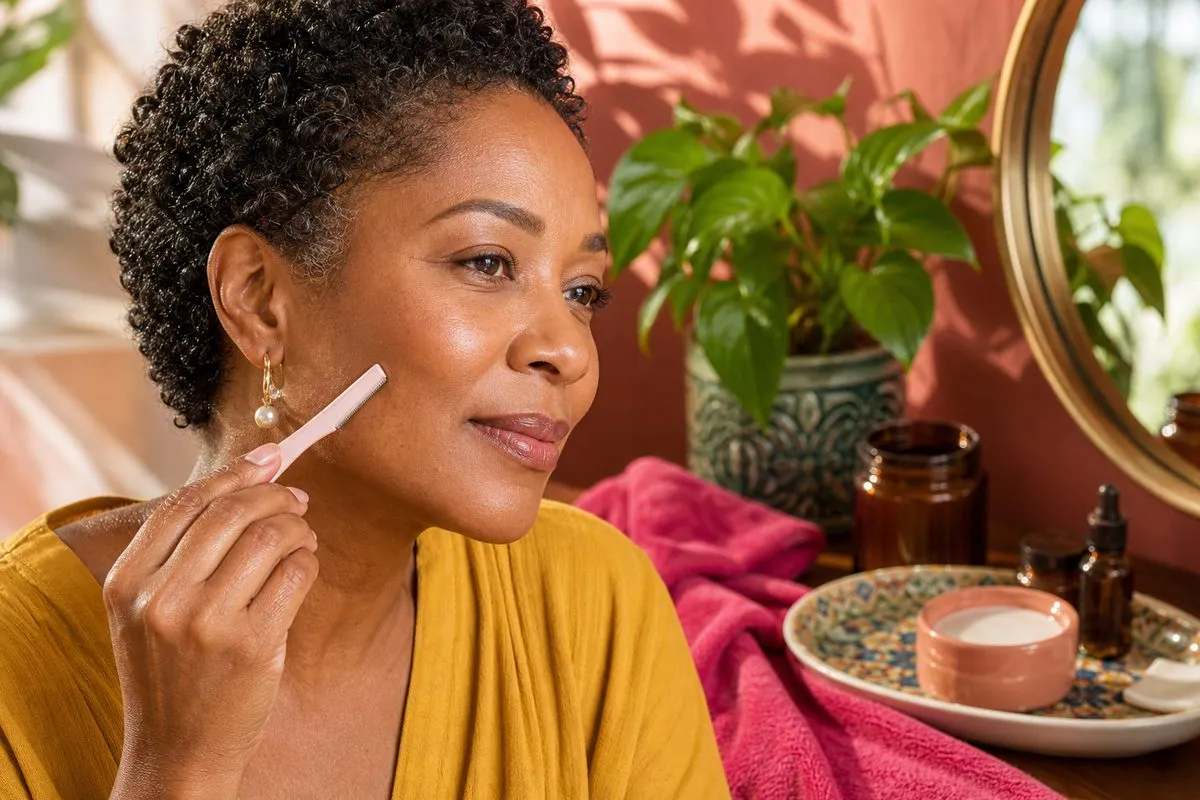
Dermaplaning is a gentle exfoliating treatment that uses a blade to scrape away dead skin cells and fine facial hair, known as vellus hair or peach fuzz. The word itself says it all: "derm" means skin and "plane" means a flat, smooth surface. By clearing away that top layer of dull skin and soft hair, dermaplaning reveals fresher skin underneath, which looks brighter and feels baby-soft.
It is considered low-risk and non-invasive, with no real downtime. A professional treatment takes about 30 minutes, and at-home versions are even quicker. It is purely cosmetic, but the glow is real.
What are the benefits people love?
Dermaplaning has a loyal following because the payoff is immediate:
- Instant smoothness and glow as dead skin and fuzz come away
- Flawless makeup application, since foundation glides over a smooth surface
- Better product absorption, so your serums work harder
- Gentle exfoliation that suits people who cannot tolerate harsh scrubs or strong acids
- No downtime, making it a favorite before events, travel, or photos
- A softer look to fine lines as texture is refined
It is a simple, low-commitment way to refresh your skin, which is why it fits so easily into a maintenance routine.
Professional Dermaplaning Near You
A professional treatment is performed by a trained esthetician, dermatologist, or cosmetologist, often as an add-on to a facial. Here is what sets it apart:
- A sharper, surgical-grade blade that exfoliates more deeply and evenly
- Skin analysis first, so the provider checks that your skin is a good candidate
- Proper technique, including blade angle and pressure, plus knowing which areas to avoid
- A sterile environment and lower risk of cuts
- The option to combine with a gentle chemical peel or facial for better results
Cost typically runs about $100 to $300 per session, and results usually last three to four weeks, so many people schedule maintenance every four to six weeks. If you want the most reliable results, have any skin concerns, or simply want it done by an expert, professional is the safer bet.
At-Home Dermaplaning
At-home dermaplaning tools have become hugely popular, and for good reason. They are inexpensive, convenient, and let you refresh your skin on your own schedule, including postponing if you have a breakout. The trade-offs come down to safety and precision:
- Tools are gentler and less sharp, with a safety guard to reduce cuts, but they exfoliate less deeply.
- Technique is on you, and improper use can cause micro-tears, nicks, irritation, or uneven texture.
- Dull or reused blades tug at skin, raising the risk of bacteria, breakouts, and barrier damage.
- It is easy to overdo it. Facial skin is delicate, so most experts suggest no more than once a week.
If you go the at-home route, choose a tool specifically designed for home use from a reputable brand, keep your hands and the blade clean, prep with a freshly washed and dried face, and follow the instructions exactly. Start slowly and never dermaplane over active breakouts or broken skin.
Side-by-Side Comparison
| Factor | Professional | At-Home |
|---|---|---|
| Blade | Sharper, surgical-grade | Gentler, with safety guard |
| Exfoliation depth | Deeper, more even | Lighter, surface-level |
| Skin assessment | Yes, by a trained provider | None, on you |
| Risk of cuts | Lower | Higher if misused |
| Cost | About $100 to $300 per session | Low, one tool plus refills |
| Convenience | Requires booking | Anytime at home |
| Best for | Best results, any skin concerns | Simple upkeep between visits |
Many women use both: a professional treatment now and then for a deeper result, with gentle at-home touch-ups in between.
Does the Peach Fuzz Grow Back Thicker?
This is the most common worry, and the answer is reassuring: no. Dermaplaning only removes surface-level vellus hair and does not affect the follicle, so it cannot change your hair's color, thickness, or growth rate. Your hair density is determined by hormones and genetics, not by shaving the surface. The hair may feel slightly coarse at first because the tip has been bluntly cut, but it grows back exactly as it was, soft and fine. Think of it like trimming the hair on your head: a cut does not make it grow back thicker.
One honest note: dermaplaning only handles fine peach fuzz, not coarse, dark, or hormonal facial hair. If that is your concern, laser hair removal is a better long-term option.
Who should avoid dermaplaning?
Dermaplaning is low-risk for most people, but it is not for everyone. Skip it or talk to a professional first if you have:
- Active acne, especially cystic or pustular breakouts, since the blade can spread bacteria and worsen it
- Inflammatory skin conditions like eczema, psoriasis, or rosacea
- Open wounds, cuts, cysts, or rashes on the area
- Recent isotretinoin use, where experts often advise waiting about six months after stopping
When in doubt, a consultation with a licensed dermatologist or esthetician is the smartest first step. If you have a flare-up, it is always fine to postpone.
How do you care for skin after dermaplaning?
Because dermaplaning lightly disrupts your skin barrier, aftercare matters:
- Wear sunscreen daily. Freshly dermaplaned skin is more sun-sensitive, so broad-spectrum SPF is essential.
- Moisturize with a gentle, hydrating product to support the barrier.
- Skip makeup right after to keep pores clear.
- Hold off on strong acids or retinoids for a day or two to avoid irritation.
- Keep the area clean to lower any infection risk.
A simple kit of a broad-spectrum sunscreen, a hydrating moisturizer, and a soothing serum is exactly the kind of affordable staple we recommend across The Fern Edit to protect that post-dermaplaning glow. If you choose to dermaplane at home, a quality tool from a trusted brand is worth the small investment.
Free printable: Download our Dermaplaning Safety and Aftercare Guide, with a who-should-skip-it checklist, an at-home prep routine, and an aftercare timeline.
Common Mistakes Women Make
- Dermaplaning over a breakout. The blade can spread bacteria and worsen active acne, so wait until skin is clear.
- Doing it too often at home. Once a week is plenty, since facial skin needs time to recover.
- Reusing a dull blade. A dull or dirty tool tugs at skin and raises the risk of nicks and irritation.
- Skipping sunscreen afterward. Freshly dermaplaned skin is more sun-sensitive, so daily SPF is a must.
- Expecting it to remove coarse hair. Dermaplaning only handles fine peach fuzz, not thick or hormonal facial hair.
Final Takeaway
Dermaplaning near you and at home both deliver that smooth, glowy, makeup-ready finish, so the right choice comes down to your skin and your goals. A professional treatment offers deeper, more even results with expert oversight, while a good at-home tool is perfect for gentle upkeep between visits. Whichever you choose, remember that peach fuzz grows back exactly as it was, skip it during breakouts, and always follow with sunscreen. Do that, and dermaplaning can be a simple, satisfying part of your glow routine.
This article is for general beauty and self-care education only and is not medical advice. If you have a skin condition or are unsure whether dermaplaning is right for you, please consult a licensed dermatologist or esthetician.
 📌 Save
Love this guide? Save it 📌
Pin it to your favorite board so it's easy to find again — and share it with a friend who'd love it too.
Save to PinterestFrequently asked questions
Is professional or at-home dermaplaning better?
Professional dermaplaning uses a sharper blade for deeper, more even results, includes a skin assessment, and carries a lower risk of cuts, usually costing $100 to $300 per session. At-home tools are cheaper and convenient but less precise. Choose professional for the best results or any skin concerns, and at-home for simple upkeep.
Does dermaplaning make hair grow back thicker or darker?
No. Dermaplaning only removes fine surface vellus hair and does not affect the follicle, so hair grows back the same color, thickness, and rate. It may feel slightly coarse at first because the tip is bluntly cut, but that is temporary.
How much does dermaplaning cost near me?
Professional dermaplaning typically costs about $100 to $300 per session and is often offered as a facial add-on. At-home tools cost far less upfront, though results are gentler and you take on the technique and safety yourself.
How often can I dermaplane?
Professional treatments are usually spaced every four to six weeks. At home, most experts suggest no more than once a week so your skin barrier has time to recover.
Who should not get dermaplaning?
Anyone with active acne, eczema, psoriasis, rosacea, open wounds, or recent isotretinoin use should avoid it or consult a professional first. Dermaplaning over active breakouts can spread bacteria and worsen them.
Is dermaplaning safe?
Yes, it is considered a low-risk, non-invasive treatment for most people. Risks like cuts, irritation, or breakouts are higher with improper at-home use, which is why technique, clean tools, and good aftercare with sunscreen matter.

We cite sources and update this guide regularly.