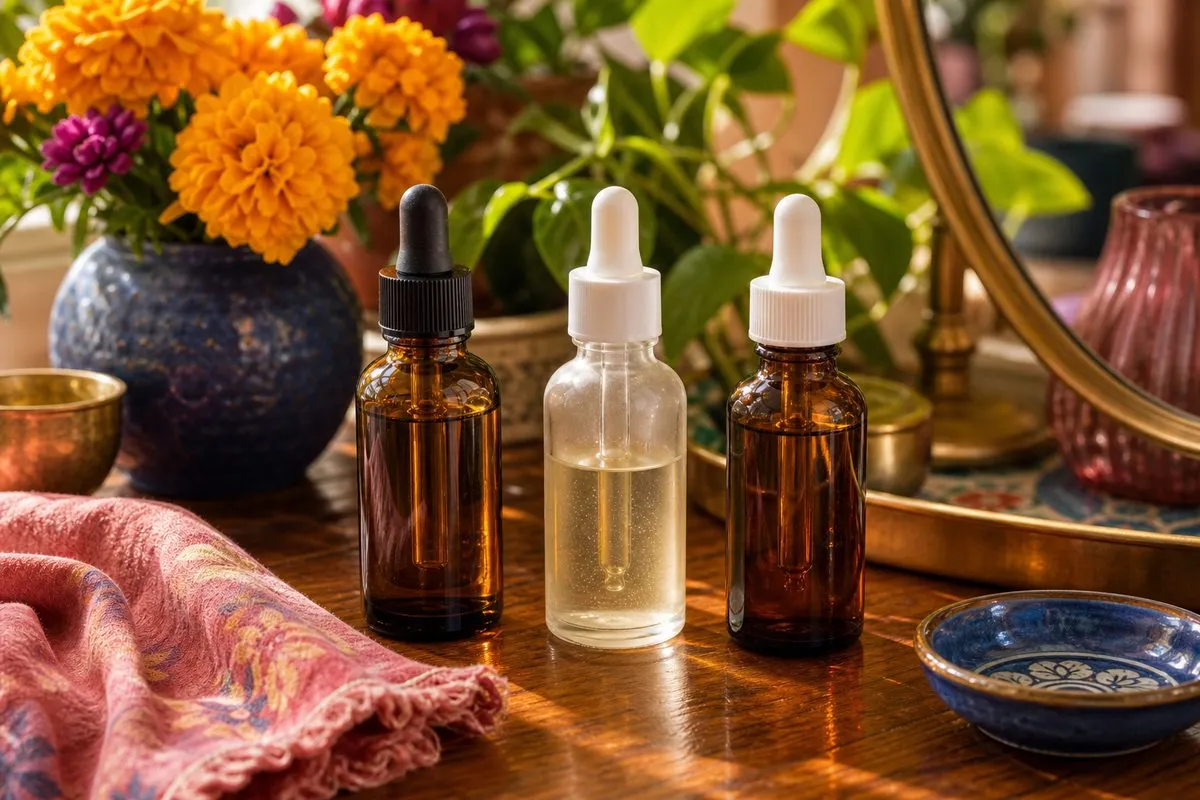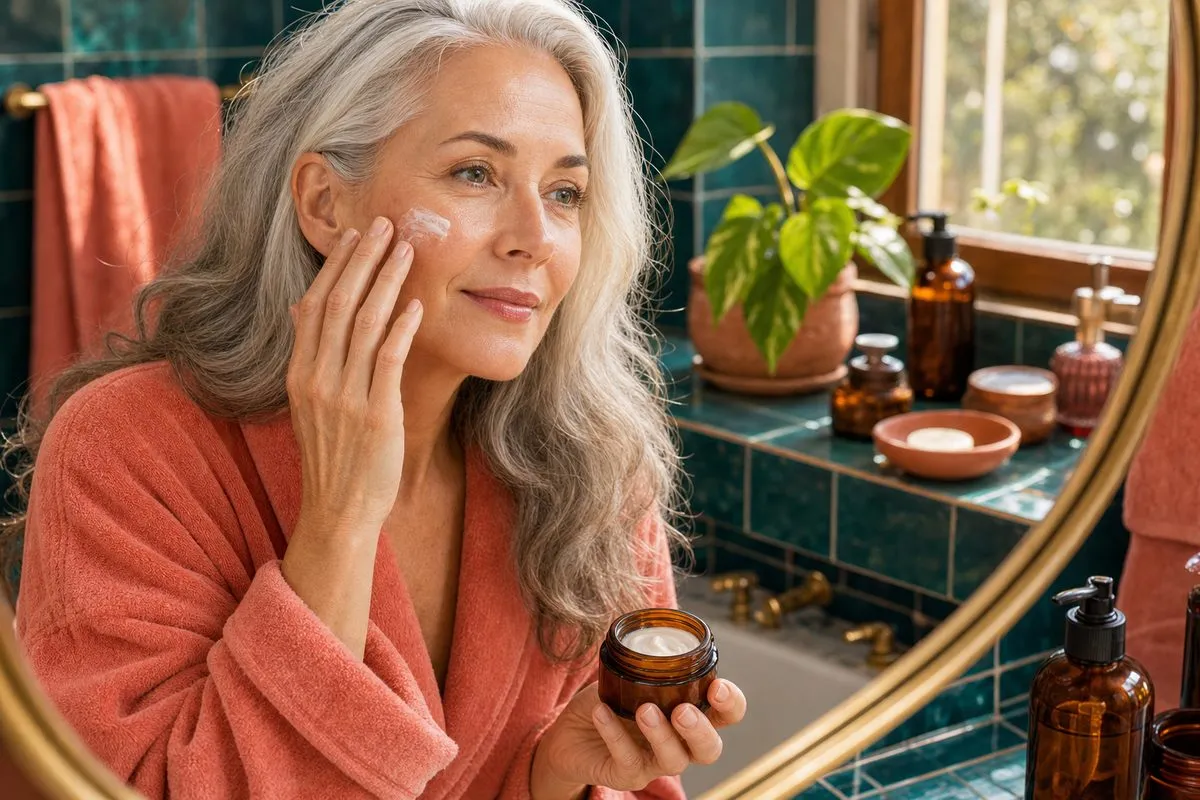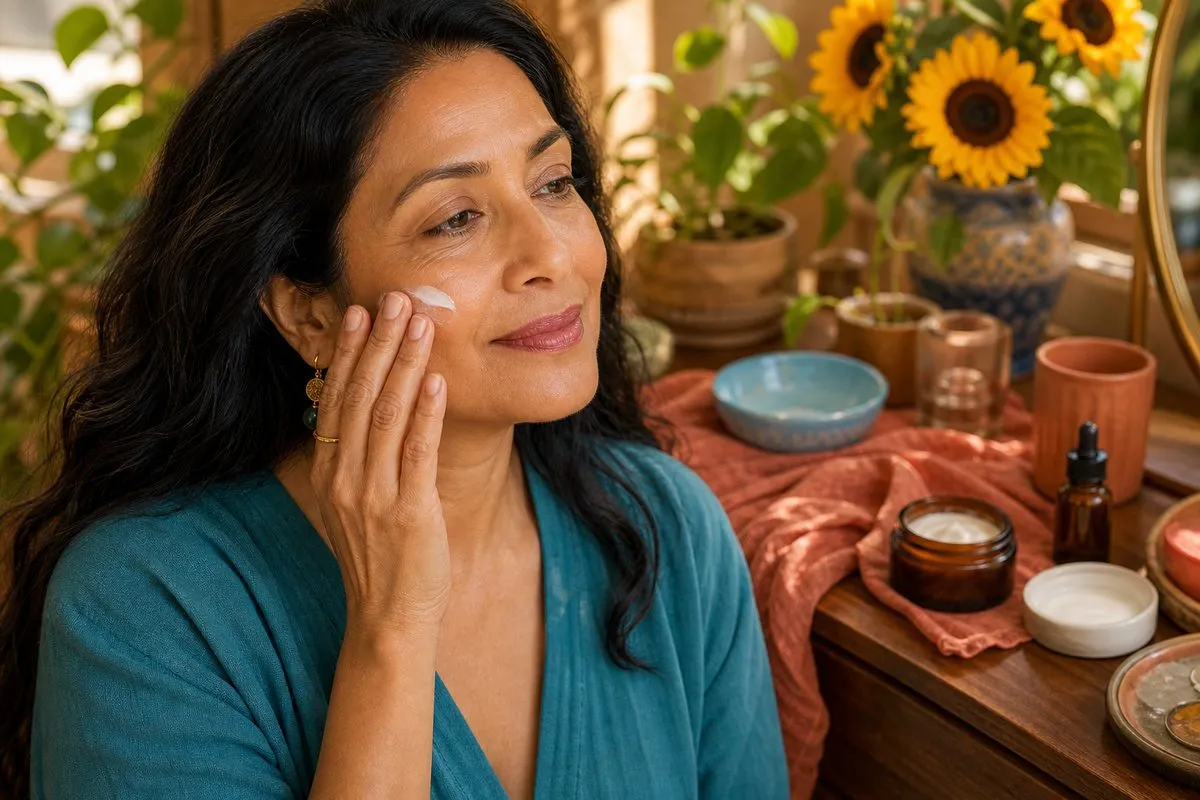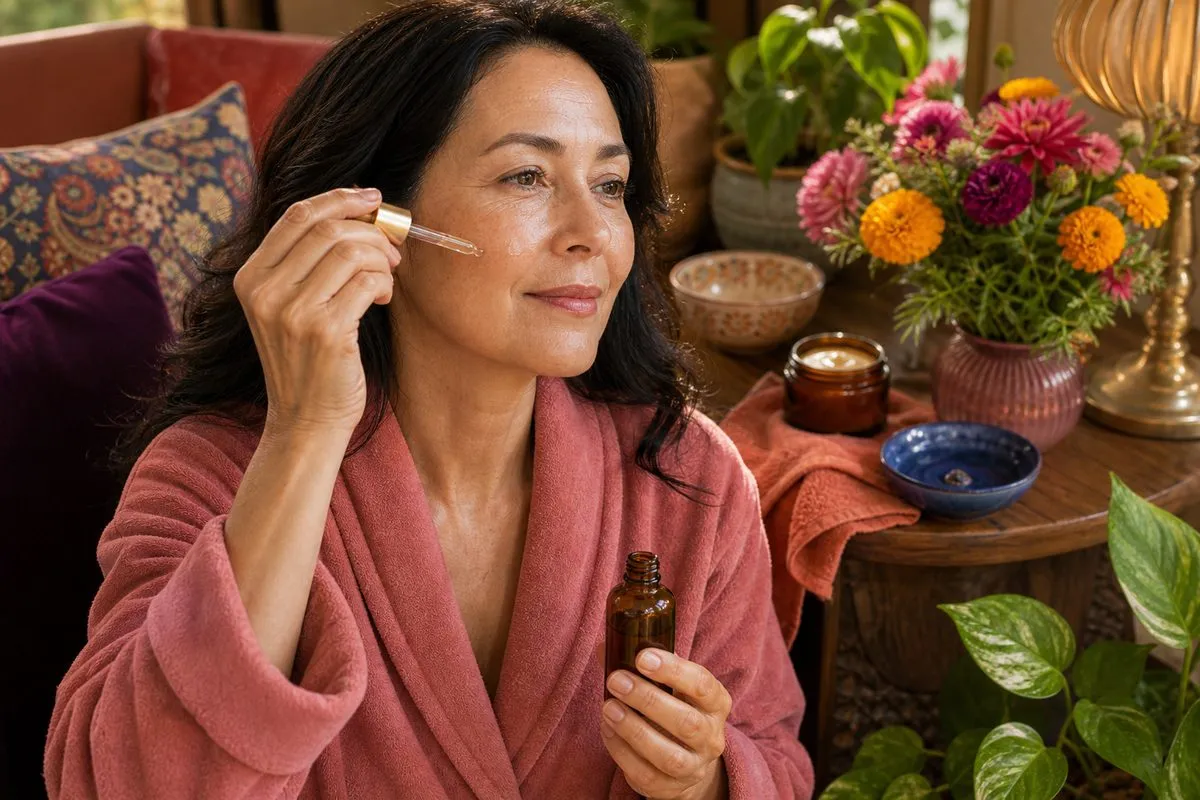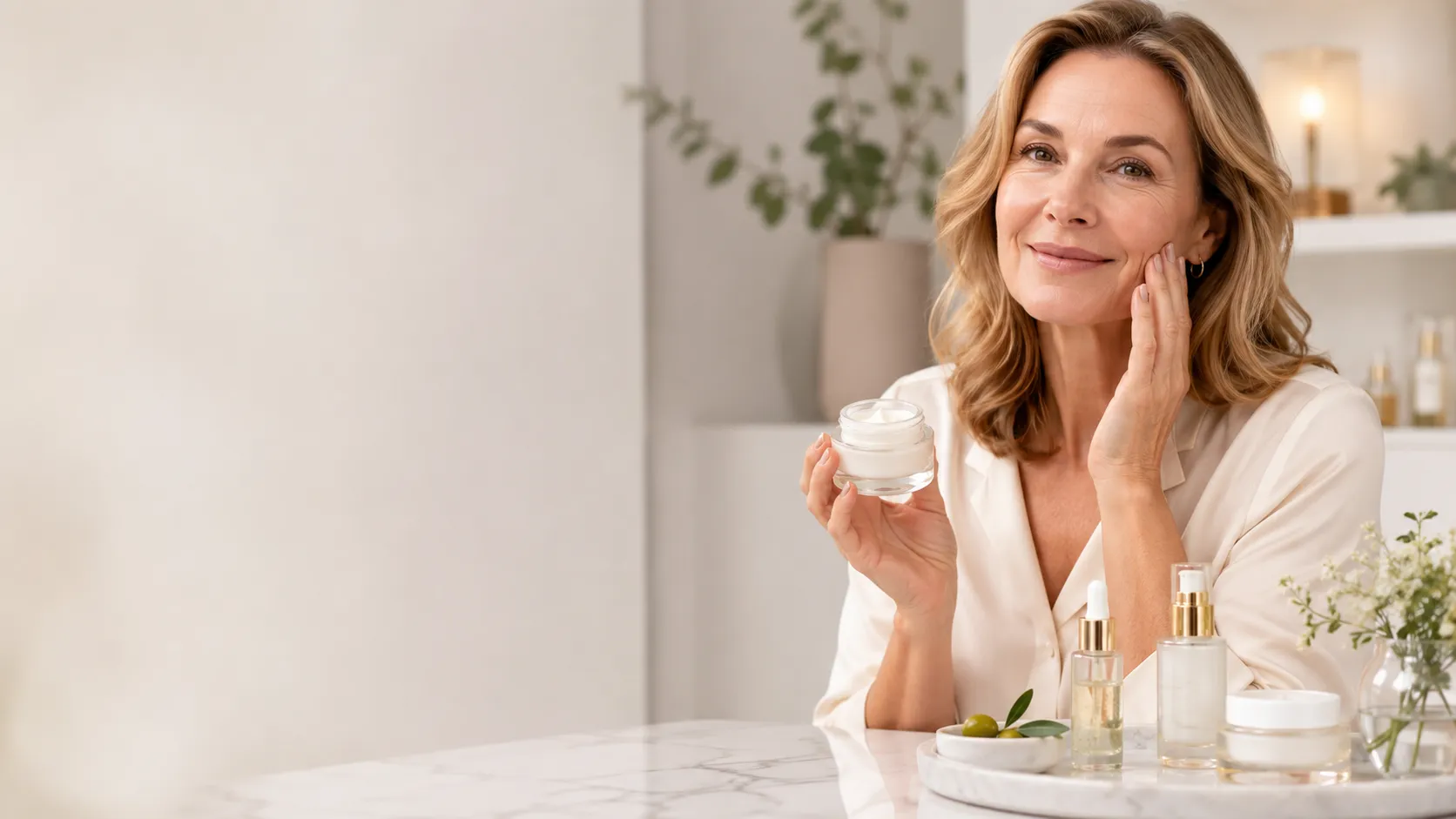
For mature, dry skin, look for moisturizers built around three things: humectants that draw in water (hyaluronic acid, glycerin), barrier lipids that lock it in (ceramides, squalane, fatty acids), and firming actives (peptides, plus a gentle retinoid and vitamin C in your routine). Skip large collagen molecules, harsh fragrance, and stripping formulas. Use a lighter moisturizer with SPF by day and a richer cream at night, applied to slightly damp skin.
Standing in the skincare aisle reading a moisturizer label can feel like decoding a foreign language, especially when your skin is mature and constantly thirsty. The truth is, you do not need to recognize every ingredient. You just need to know the handful that actually help dry, mature skin hold onto moisture and stay comfortable, and the few worth leaving on the shelf.
Standing in the skincare aisle reading a moisturizer label can feel like decoding a foreign language, especially when your skin is mature and constantly thirsty. The truth is, you do not need to recognize every ingredient. You just need to know the handful that actually help dry, mature skin hold onto moisture and stay comfortable, and the few worth leaving on the shelf.
Here is what to look for, what to skip, and how to put it together into a moisturizer routine that keeps mature skin soft and supple.
Key takeaways
- Mature dry skin needs both water (humectants) and a way to keep it in (barrier lipids).
- Ceramides plus hyaluronic acid is the power pairing: one hydrates, the other seals.
- Peptides support firmness, while a gentle retinoid and vitamin C round out the routine.
- Skip large collagen molecules, heavy fragrance, and stripping cleansers.
- Go richer at night, lighter with SPF by day, and always apply to damp skin.
Why does mature skin get so dry?
Mature skin makes less natural oil and produces fewer of its own ceramides, the lipids that hold the skin barrier together. With a weaker barrier, water escapes more easily, so skin feels tight, looks dull, and flakes in dry weather. The fix is two-part: add water with humectants, then lock it in with barrier-repairing lipids. Get that balance right and most dry, mature skin feels dramatically more comfortable.
What are the best hydrating ingredients?
These are the humectants, the moisture magnets that pull water into the skin.
- Hyaluronic acid. Draws water into the skin and plumps it. Apply to damp skin and seal it in. See how to use hyaluronic acid.
- Glycerin. A workhorse humectant found in many great moisturizers, gentle and reliable.
- Other humectants like panthenol and sodium PCA add to the hydration without heaviness.
Humectants are wonderful, but on their own in dry air they are not enough, which is where the next group comes in.
What are the best barrier and firming ingredients?
These lock moisture in and support the skin's structure.
Ceramides for dry mature skin
- Ceramides. Lipids that rebuild the skin's barrier, restoring its brick-and-mortar structure so it holds water. Since ceramide levels drop with age, replacing them topically is one of the best things you can do for dry mature skin. Safe for daily, long-term use.
- Squalane and fatty acids. Emollients that soften and help seal the barrier alongside ceramides.
- Peptides. Short amino acid chains that act as messengers, signaling skin cells to produce collagen and elastin. They support firmness and density over a 6 to 12 week course, and unlike large collagen molecules, small peptides can actually penetrate.
- Niacinamide. Strengthens the barrier, calms redness, and evens tone.
- A gentle retinoid. The most proven active for collagen and texture, eased in slowly.
- Vitamin C. A daytime antioxidant that brightens and supports collagen.
What are the best ingredient pairings?
A few combinations work better together than alone.
- Ceramides plus hyaluronic acid. The classic duo. Hyaluronic acid hydrates, ceramides lock it in. Many moisturizers include both, which simplifies your routine.
- Ceramides plus peptides. Barrier repair plus firmness, supporting both comfort and collagen.
- Retinoid at night, vitamin C in the morning. Two proven actives in their ideal windows, with hydration layered around them.
- Humectant plus emollient plus occlusive. Draw water in, soften, then seal, the full moisture sandwich dry skin loves.
What should you skip?
Not everything marketed to mature skin earns a place.
- Large collagen molecules. They are too big to penetrate and mostly sit on the surface. Choose small peptides and a retinoid instead.
- Heavy fragrance and high alcohol. Mature skin is often more reactive, so fragrance-free is frequently kinder.
- Stripping cleansers and bar soaps. They remove the oils dry skin badly needs.
- Too-lightweight, non-occlusive gels. Lovely for oily skin, but they can leave dry mature skin under-moisturized.
- Over-exfoliating acids. A little goes a long way. Too much thins the barrier and worsens dryness.
How do you choose and use a moisturizer?
Match the texture to the time of day and the season. Use a lighter moisturizer with built-in or layered SPF in the morning, and a richer cream or balm at night for deep overnight repair. In very dry skin or dry climates, lean into richer, more occlusive textures, and consider a facial oil as a final sealing step. Whatever you choose, apply it to slightly damp skin right after cleansing or serums, which traps far more moisture than applying to bone-dry skin. Our full mature skin routine shows where each step fits.
Expert tips
- If your moisturizer is not enough alone, layer a hyaluronic acid serum underneath it on damp skin.
- Look for a single cream with ceramides plus peptides to cover barrier and firmness in one step.
- Keep a richer balm for very dry nights or harsh winter weather.
- Patch test any new product on your inner arm for 24 hours, since mature skin can be reactive.
- Give firming ingredients like peptides and retinoids 8 to 12 weeks before judging results.
Final takeaway
The best skincare for mature, dry skin is not about chasing miracle creams, it is about a simple formula: pull water in with humectants like hyaluronic acid, lock it in with barrier lipids like ceramides, and support firmness with peptides and a gentle retinoid. Skip the large collagen molecules, harsh fragrance, and stripping products that work against you. Go lighter by day with SPF, richer at night, and always apply to damp skin. Get those basics right and dry, mature skin feels softer, calmer, and more comfortable, season after season.
This article is for general beauty and self-care education only and is not medical advice. For persistent dryness or irritation, see a board-certified dermatologist.
 📌 Save
Love this guide? Save it 📌
Pin it to your favorite board so it's easy to find again — and share it with a friend who'd love it too.
Save to PinterestFrequently asked questions
What ingredients are best for mature, dry skin?
Humectants like hyaluronic acid and glycerin to draw in water, barrier lipids like ceramides and squalane to lock it in, and firming actives like peptides, plus a gentle retinoid and vitamin C in your routine. Together they hydrate, protect, and support collagen.
What is the best moisturizer for mature skin?
A rich cream that combines hydration and barrier repair, ideally with hyaluronic acid, ceramides, and peptides. Use a lighter one with SPF by day and a richer cream or balm at night. The right texture depends on how dry your skin is.
Are ceramides or hyaluronic acid better for dry skin?
You want both. Hyaluronic acid draws water into the skin, while ceramides lock that moisture in and repair the barrier. They work best together, and many moisturizers include both.
Do peptides really work for mature skin?
Peptides can help. They signal skin cells to make more collagen and elastin, supporting firmness and density over a 6 to 12 week course. Look for them paired with ceramides in a moisturizer for both barrier and firming benefits.
Should I avoid collagen in skincare?
Not entirely, but do not rely on it. Large collagen molecules are too big to penetrate and mostly hydrate the surface. Small peptides and retinoids are more effective for actually supporting your own collagen.
Why does my moisturizer stop working in winter?
Cold, dry air and indoor heating pull moisture from skin faster, so a moisturizer that suffices in summer may not seal enough in winter. Switch to a richer, more occlusive cream and apply to damp skin.
Is fragrance bad for mature skin?
Not always, but mature skin is often more sensitive, so heavy fragrance can cause irritation or stinging. If your skin is reactive, fragrance-free formulas are a safer, kinder choice.
How do I layer ingredients for dry mature skin?
Thinnest to thickest: a hydrating serum on damp skin, then a barrier-repairing moisturizer, then a facial oil or balm to seal if needed. Add a retinoid at night and vitamin C in the morning, easing actives in gently.

We cite sources and update this guide regularly.