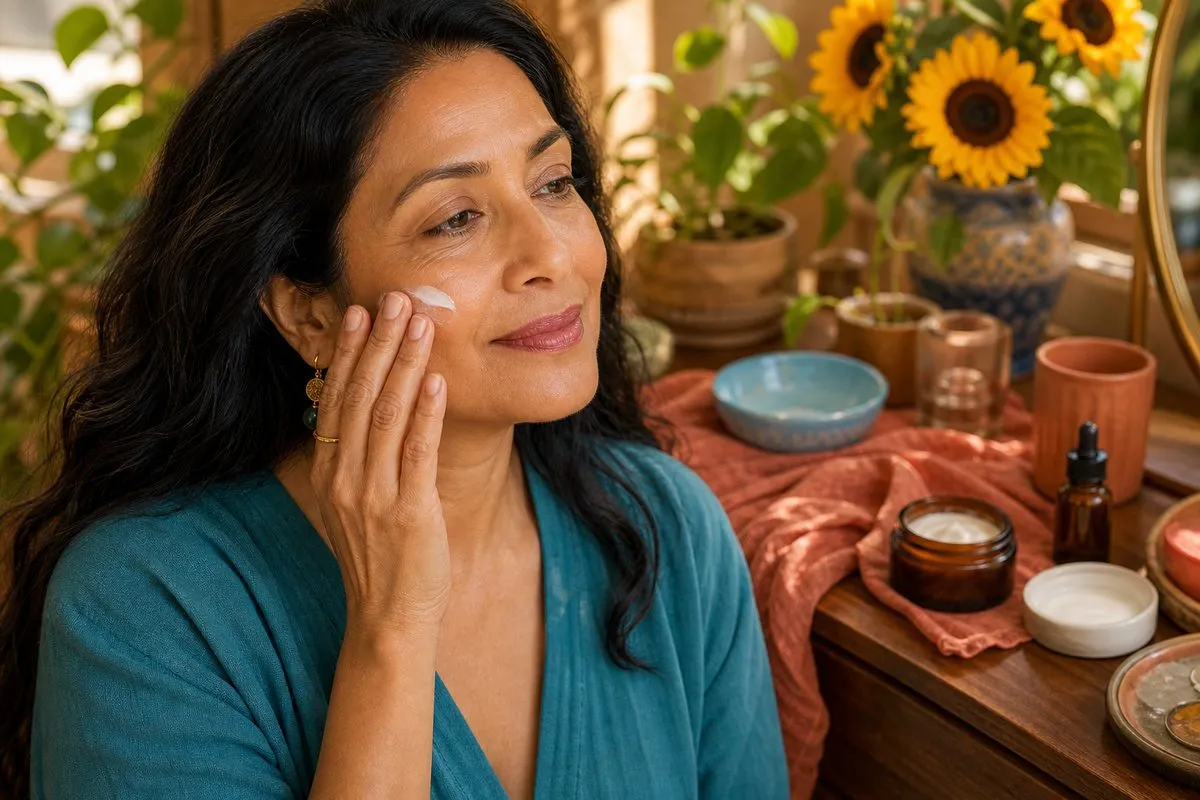

A simple skincare routine over 40 should focus on gentle cleansing, hydration, sunscreen, barrier support, and carefully chosen active ingredients. Dry mature skin often needs more moisture, less over-exfoliation, and a routine that protects the skin barrier.
Skincare over 40 often works best when the routine becomes more supportive, less harsh, and more consistent. Dry, mature skin usually wants more moisture, less over-exfoliation, and a routine that protects the barrier rather than stripping it.
You do not need a ten-step regimen. A few well-chosen products, used consistently, do far more than a cabinet full of actives. Here is a simple, gentle routine to build from.
Before you begin
This guide is general skincare education only. Skin firmness, texture, and laxity are shaped by age, genetics, sun exposure, health, and lifestyle. Patch-test new products, stop anything that irritates, and see a dermatologist for diagnosis or treatment.
The most useful routines respect your real life. Keep it simple, track what works, and adjust based on comfort rather than chasing every trend.
How does skin change after 40?
A few shifts tend to happen together, which is why the routine changes too. Skin makes less oil, so it feels drier and can look duller. Natural collagen and elasticity continue their gradual decline, so firmness and bounce soften. Cell turnover slows, so texture and tone can become uneven, and hormonal changes around this stage often add dryness and sensitivity. None of this means your skin is "failing" — it simply means it now rewards support and moisture over the stripping, high-oil-control approach that might have suited younger skin. Working with these changes, rather than fighting them, is the whole strategy.
What should a skincare routine over 40 include?
The essentials are gentle cleansing, generous hydration, barrier support, daily sunscreen, and one or two well-chosen actives introduced slowly. That is genuinely enough. A creamy cleanser, a hydrating serum, a nourishing moisturizer, and a morning SPF form the backbone; a retinoid and a vitamin C are the most worthwhile actives to add when your skin is ready. Everything beyond that is optional. For dry mature skin especially, consistency with a simple, comforting routine beats an elaborate one that leaves skin tight or irritated.
A simple skincare-over-40 routine
1. Gentle morning cleanse
Use a mild, creamy cleanse or just a water rinse if your skin feels dry in the morning.
2. Hydrating layer
Apply a hydrating serum or essence (hyaluronic acid, glycerin) to damp skin if it suits you.
3. Moisturizer
Choose a nourishing moisturizer that leaves skin comfortable, not tight.
4. Daily sunscreen
Broad-spectrum SPF is the most important step for visible-aging support.
5. Evening cleanse
Remove sunscreen and makeup gently without stripping the skin.
6. Barrier support
Look for ceramides, glycerin, squalane, and fatty acids to strengthen the barrier.
7. Retinoid, introduced slowly
A retinoid supports collagen and texture, but start low and buffer with moisturizer.
8. Gentle exfoliation
Exfoliate sparingly, if at all, when dryness or sensitivity is present.
9. Neck and chest care
Extend the routine beyond the face to the neck and décolletage.
10. Consistency tracker
Note what your skin tolerates so you do not overload it with too much at once.
What ingredients are best for dry mature skin?
Favor ingredients that hydrate, repair, and gently renew. Hyaluronic acid and glycerin draw in moisture; ceramides, squalane, and fatty acids rebuild and seal the barrier; niacinamide strengthens and smooths. For renewal, retinoids are the most proven anti-aging active, and vitamin C brightens and protects. Peptides offer gentle firmness support. Sunscreen, of course, protects it all. You do not need every one of these — a moisturizer rich in barrier ingredients plus a slowly introduced retinoid and a morning SPF covers most dry mature skin beautifully.
How do you introduce retinoids without irritation over 40?
Slowly and with plenty of moisture, since dry mature skin can be reactive. Start with a low-strength retinoid just once or twice a week, applied to dry skin at night, and always follow with a nourishing moisturizer — or use the "sandwich" method of moisturizer, retinoid, moisturizer to buffer it. Increase frequency only as your skin stays comfortable, and expect a short adjustment period. If you get persistent redness, stinging, or flaking, cut back rather than pushing through. Daily sunscreen is non-negotiable while using one, since retinoids increase sun sensitivity.
How often should you exfoliate mature skin?
Less than you might think, especially if your skin is dry. For most mature skin, a gentle exfoliation once or twice a week is plenty, and some very dry or sensitive skin does better with even less. Over-exfoliating is one of the most common causes of the tightness, flaking, and irritation people blame on "aging skin" when it is really a damaged barrier. Favor a mild chemical exfoliant (like a gentle lactic acid) over harsh physical scrubs, always follow with moisture, and if your skin ever feels raw or looks red, back off. When in doubt, under-exfoliate — dry mature skin almost always prefers moisture over abrasion.
What is the best way to layer moisturizer for dry skin?
The trick is to trap water against the skin rather than just coating it. Apply your hydrating serum or a light layer of product while your skin is still slightly damp, since humectants like hyaluronic acid and glycerin draw in that moisture. Then seal it with a richer moisturizer to lock it in. At night, dry skin often loves a heavier cream or a facial oil layered on top as the final step. This "damp skin, then seal" approach does far more for dryness than a single thick layer on dry skin, and it keeps the barrier comfortable through the day.
Can you fix dry mature skin, or only manage it?
You can dramatically improve how it looks and feels, while accepting that some of what drives it is ongoing. The dryness and barrier weakness respond genuinely well to consistent moisture, gentle care, and the right ingredients, so skin can look plumper, calmer, and more radiant. What you are managing rather than curing is the underlying shift — less oil production and gradual collagen loss that come with age. The good news is that "managing" it well, day in and day out, produces skin that looks healthy and comfortable, which is exactly the goal. Consistency is what turns management into visible results.
Common mistakes to avoid
- Over-cleansing or using stripping, foaming cleansers
- Over-exfoliating dry, sensitive skin
- Introducing too many actives at once
- Skipping daily sunscreen
- Neglecting the neck and chest
Final thoughts
A gentle cleanser, a hydrating layer, a nourishing moisturizer, daily sunscreen, and a few well-chosen actives are a strong foundation for dry mature skin. Less is often more — protect the barrier, add actives slowly, and stay consistent. When it is time for makeup, our makeup for wrinkled skin tips build right on top of this routine.
Explore more from The Fern Edit: Skin Firming, Mature Skin, Gua Sha, Face Yoga, printables.
 📌 Save
Love this guide? Save it 📌
Pin it to your favorite board so it's easy to find again — and share it with a friend who'd love it too.
Save to PinterestFrequently asked questions
What skincare should women over 40 use?
A gentle cleanser, moisturizer, sunscreen, and carefully chosen active ingredients are a strong foundation.
Why is my skin drier after 40?
Hormonal changes, aging, weather, and product choices can all affect dryness.
Should I use retinol over 40?
Retinol may help some people, but it should be introduced slowly and avoided if it irritates your skin.
How often should mature skin exfoliate?
Less is often better if skin is dry or sensitive. Over-exfoliation can damage the barrier.
Is sunscreen still important over 40?
Yes. Daily sunscreen helps protect against further visible sun damage.
What should I stop doing?
Avoid harsh scrubs, too many actives at once, skipping moisturizer, and neglecting the neck and chest.
How do I restore moisture to dry mature skin?
Layer hydration: apply a humectant like hyaluronic acid to damp skin, seal with a ceramide-rich moisturizer, and add a facial oil on very dry areas. Cleanse gently, avoid over-exfoliating, and support your barrier with niacinamide and squalane.
What is the difference between dry and dehydrated skin?
Dry skin lacks oil and feels tight or flaky; dehydrated skin lacks water and looks dull. Mature skin is often both, which is why combining humectants with rich, sealing moisturizers works best.
What ingredients are best for dry mature skin?
Hyaluronic acid and glycerin to draw in water, ceramides and squalane to seal and repair the barrier, niacinamide to calm, and facial oils like rosehip or marula for glow.
How can I make dry mature skin glow?
Hydrate well, seal with a facial oil, exfoliate gently to clear dull buildup, and keep the barrier healthy. A drop of lightweight oil pressed into the skin gives that lit-from-within glow.

We cite sources and update this guide regularly.