Liquid Onyx
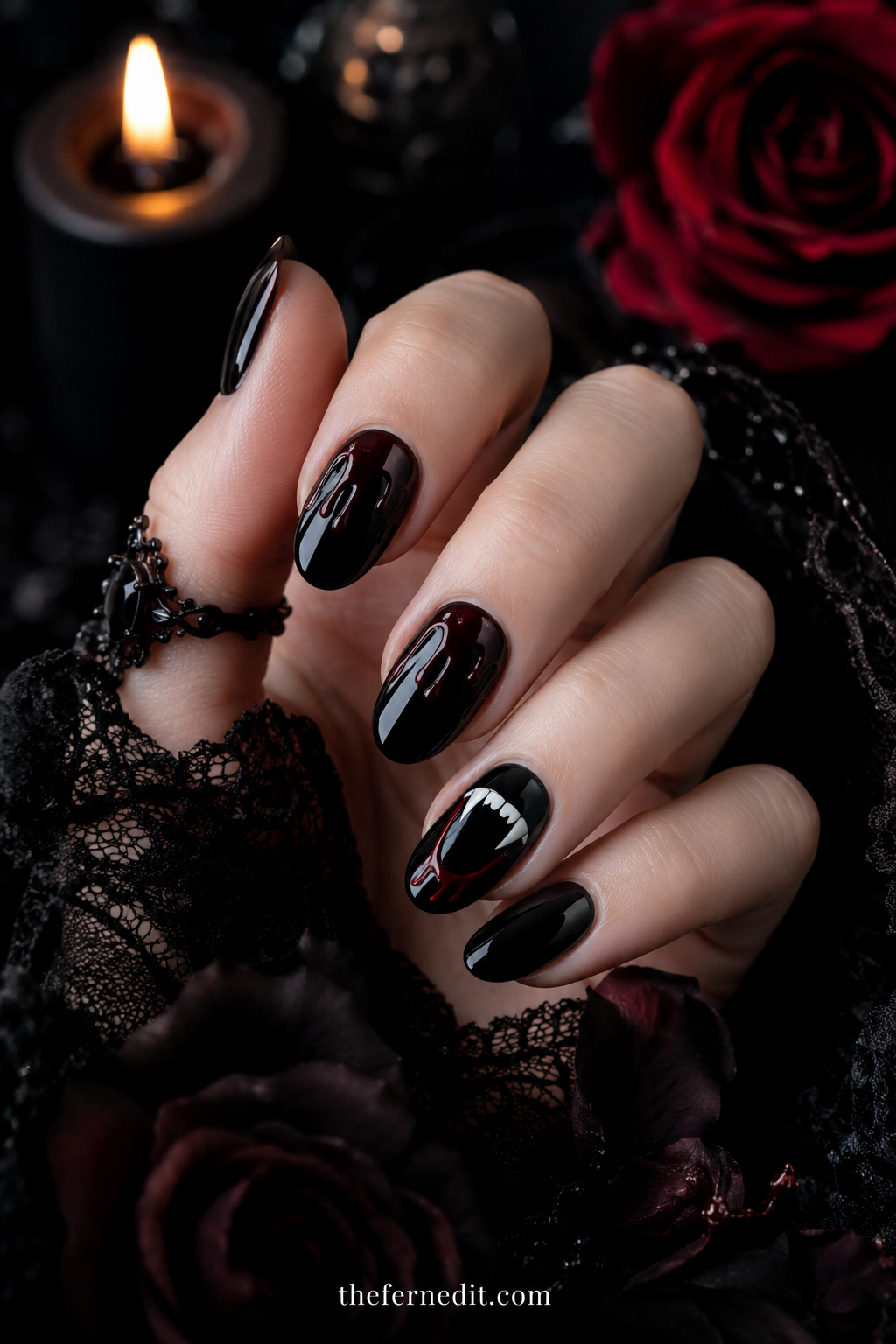
The image shows a medium almond set in a high-gloss black so reflective the surface holds a sharp white highlight down the center of each nail. This is the version of black nails that reads as expensive rather than as edgy, and the entire difference is application quality. Black is the least forgiving color there is — every ridge, every thin patch, every stray brushstroke at the cuticle is visible in a way it never would be on a neutral. Two thin coats, never one thick one, because thick black streaks and cannot be corrected after curing without filing back and starting over. Clean the skin around the cuticle with a small angled brush dipped in remover before the final cure. A generous glossy top coat is what produces the liquid quality; a thin one leaves the surface looking slightly dry. On almond and coffin shapes the highlight travels the length of the nail, which is where this finish looks best.
Velvet Matte
The image shows a short squoval set in a flat black that absorbs light entirely, giving the surface a soft suede quality. Matte black reads completely differently from glossy — where gloss reflects and feels polished, matte swallows light and feels considered and slightly severe. It is the more fashion-forward of the two and the harder to keep looking fresh, since matte finishes show skin oils and fingerprints readily. A quick wipe with a lint-free cloth restores it. Two thin coats under a matte top coat. Short nails suit matte black particularly well, since the small surface area keeps the darkness from dominating the hand.
Gunmetal Chrome
The image shows a long coffin set in black finished with a gunmetal chrome powder, the surface reading like polished obsidian with a cool metallic shift. This is the most striking black manicure available and it stays sophisticated well past Halloween. The base must be fully cured and completely non-tacky before the powder goes on — any stickiness and the chrome grabs unevenly, leaving patches that cannot be fixed. Buff with a soft applicator in small circular motions until the surface goes fully reflective. Seal with a no-wipe top coat, applying extra over the free edge where chrome always wears first.
Sheer Smoke
The image shows a short round set in a translucent black built in two light coats, sheer enough that the natural nail shows through as a smoky grey rather than reading as solid black. This is black for anyone who finds the opaque version too heavy, and it is considerably more wearable in a professional setting. The sheerness also blurs regrowth almost entirely, which extends the manicure past three weeks without looking neglected. Stop at two coats — a third pushes it toward opacity and loses the effect. Glossy top coat for depth.
Black Cherry Depth
The image shows a medium almond set in a near-black red that reads pure black in shadow and reveals a deep cherry undertone in direct light. That shift is what makes it more interesting than a true black, and it is the single most flattering dark shade for most skin tones because the warmth prevents the coldness that pure black can bring. Two thin coats. A base coat is essential since red pigment stains even at this depth. Glossy top coat for the wet-looking finish that makes the shade read as rich rather than as flat.
Negative Space Slash
The image shows a short squoval set in glossy black where a single narrow diagonal stripe of bare nail runs across each nail, left unpainted rather than painted in a second color. Negative space designs work because the gap reads as sharper and more architectural than any painted line could. Use striping tape laid across the bare nail before applying the black, then remove it while the color is still wet, pulling at a low angle. The exposed nail must be perfectly clean before the base goes on or the gap will look dirty rather than deliberate.
Gold Fracture
The image shows a medium almond set in matte black where fine gold lines run across two accent nails like veins of metal in stone, branching irregularly. The reference is kintsugi — the Japanese practice of repairing pottery with gold. Each line should branch into smaller ones as it travels, which is what makes it read as a fracture rather than as a decorative stripe. Use gold gel paint and a very fine brush, keeping the lines sparse. Cure between elements. Glossy top coat over the gold only, matte over the rest, so the metal appears raised.
Black Pearl
The image shows a short almond set in black finished with a pearl chrome powder, producing an iridescent shift that reads faintly green, purple and blue depending on the angle. It is softer and more romantic than gunmetal chrome and considerably more unusual. Pearl over black produces a deeper, oilier shift than pearl over white, closer to the inside of a mussel shell. Requires a fully cured non-tacky base and a generous no-wipe top coat. Pearl wears more gracefully than colored chrome because the fading is even rather than patchy.
Matte and Gloss Stripe
The image shows a short squoval set in black where alternating vertical stripes are matte and glossy, the design visible purely through the difference in finish rather than in color. It is the most subtle design in this article and among the most sophisticated — the stripes appear and disappear as the hand moves through light. Apply glossy top coat across the whole nail first and cure, then use a fine brush to lay matte top coat in stripes over it. Precision matters, since the finish boundary is the only thing defining the pattern.
Ink Wash
The image shows a medium squoval set where a deep black gathers at the cuticle and fades upward into a pale grey at the free edge — the reverse of a standard gradient. Building the darkness at the base rather than the tip is unusual and it has a practical benefit: regrowth pushes the dark area outward rather than exposing bare nail, so the manicure ages more gracefully. Build with a sponge in several light passes. Glossy top coat to smooth the texture.
Black French
The image shows a short round set with a sheer nude base and a black tip following the natural smile line. It is the most conventionally elegant way to wear black and the most workplace-acceptable, since the color is confined to the free edge and the overall hand reads neutral. Because black is so high in contrast against a pale base, the smile line needs to be genuinely clean — any wobble is highlighted rather than hidden. Define the curve in gel with a fine brush first, cure, then fill toward the edge. Glossy top coat, extra over the tip.
Silver Constellation
The image shows a long almond set in matte black where tiny silver dots scatter across two accent nails at varying sizes, with a few connected by hairline silver threads. The reference is a star chart. Vary the dot sizes significantly — a few large among many small — which creates the impression of depth. Connect only three or four of them, leaving most unlinked. Silver gel paint, dotting tool for the points, fine brush for the threads. Glossy top coat over the silver only for contrast against the matte base.
Croc Texture
The image shows a short squoval set in black where a subtle crocodile-skin pattern has been embossed across the surface using a textured top gel, producing raised scales visible only in raking light. Texture rather than color or pattern is the most underused way to make a black manicure interesting. The effect is achieved with a thick building gel dabbed with a silicone tool before curing. Matte top coat suits it better than gloss, since the texture reads more clearly without competing reflections.
Half Moon Black
The image shows a short round set in cream with a black half-moon arcing across the base of each nail. The reverse French places the drama at the cuticle rather than the tip, which is unexpected and slightly retro. Leave a small margin of bare nail between the black arc and the skin — that gap is what makes it look deliberate rather than like a flooded application. Follow the natural curve of the cuticle. Fine brush, worked slowly. Glossy top coat.
Oil Slick
The image shows a medium almond set in black with a multichrome powder buffed over the surface that shifts through green, purple, teal and bronze as the hand moves. It is the most dramatic finish available and it depends entirely on the black base — multichrome over any lighter color produces a washed-out result, while over black the shifts are saturated and intense. Fully cured non-tacky base, soft applicator, generous no-wipe top coat. Extra sealing over the free edge.
Matte Black Almond
The image shows a long almond set in flat black with no design at all, the length and the shape doing all the work. On long almond nails, matte black reads as genuinely editorial — the tapered silhouette combined with a light-absorbing surface produces a silhouette that no other combination achieves. This is a shape-and-finish design rather than a color design. Two thin coats, meticulous cuticle cleanup, matte top coat. Nothing else.
Black and Nude Colorblock
The image shows a short squoval set where each nail is split vertically down the center, black on one half and warm nude on the other, with the split side alternating across the five nails. The graphic quality is high but the palette keeps it wearable. The edge where the two colors meet determines everything — use nail vinyls or striping tape, press the edge firmly, and remove while the second color is wet. Work nude first, then black, so any bleed is easier to correct. Glossy top coat.
Charcoal Cat Eye
The image shows a medium squoval set in a magnetic black where a bright silver beam cuts diagonally across each nail. Magnetic black produces the strongest cat eye contrast of any shade, because the base absorbs so much light that the beam looks as though it is genuinely glowing. Work one nail at a time — the pigment settles within seconds — hold the magnet at an angle for the diagonal, and cure immediately. Two thin coats, magnetizing on the second. Glossy top coat.
Lacquer Tips Only
The image shows a short round set where the nail is left completely bare and glossy black is applied only to the free edge in a thin band, following the nail's natural edge rather than a curved smile line. The absence of a base color is what makes it modern — it reads as minimal and slightly severe rather than as a French manicure. The bare nail must be buffed smooth and sealed with a clear base or the contrast will highlight any ridging. Glossy top coat over the whole nail.
Black Velvet Magnetic
The list closes with the softest interpretation. The image shows a short almond set in a magnetic black where the magnet was held flat rather than angled, producing a diffused pool of light in the center of each nail rather than a sharp beam. The effect reads as crushed velvet — dimensional and rich without the graphic quality of a diagonal. On short nails the diffused version works considerably better than a sharp beam, which needs length to look deliberate. Hold the magnet flat and close for five seconds, cure immediately, glossy top coat.
The Takeaway
Black nails succeed or fail entirely on application. The color has no ability to hide a thin patch, a ridge, or a flooded cuticle, which is why a carelessly applied black looks worse than any other careless manicure. Get the base clean and the rest is easy — and if you want black to read as editorial rather than as edgy, chrome and matte both do that work better than gloss.
This article is for general beauty and self-care education only and is not medical advice.
Frequently asked questions
Are black nails hard to apply at home?
They are the least forgiving color. Two thin coats rather than one thick one, and clean the cuticle line with an angled brush before curing — that step matters more with black than with any other shade.
Matte or glossy black — which is better?
Glossy reads polished and expensive; matte reads fashion-forward and slightly severe. Matte shows fingerprints and needs occasional wiping, but it is the more current of the two.
Do black nails suit short nails?
Yes. The smaller surface area actually prevents black from overwhelming the hand, provided the cuticle line is cleanly applied.
How do I make black nails look less harsh?
Choose black cherry instead of true black, or apply a sheer black in two light coats. Both keep the depth while softening the contrast against skin.
What finish makes black nails look most expensive?
Gunmetal or pearl chrome. Both add dimension that flat black lacks, and both photograph considerably better than a plain glossy surface.

We cite sources and update this guide regularly.