
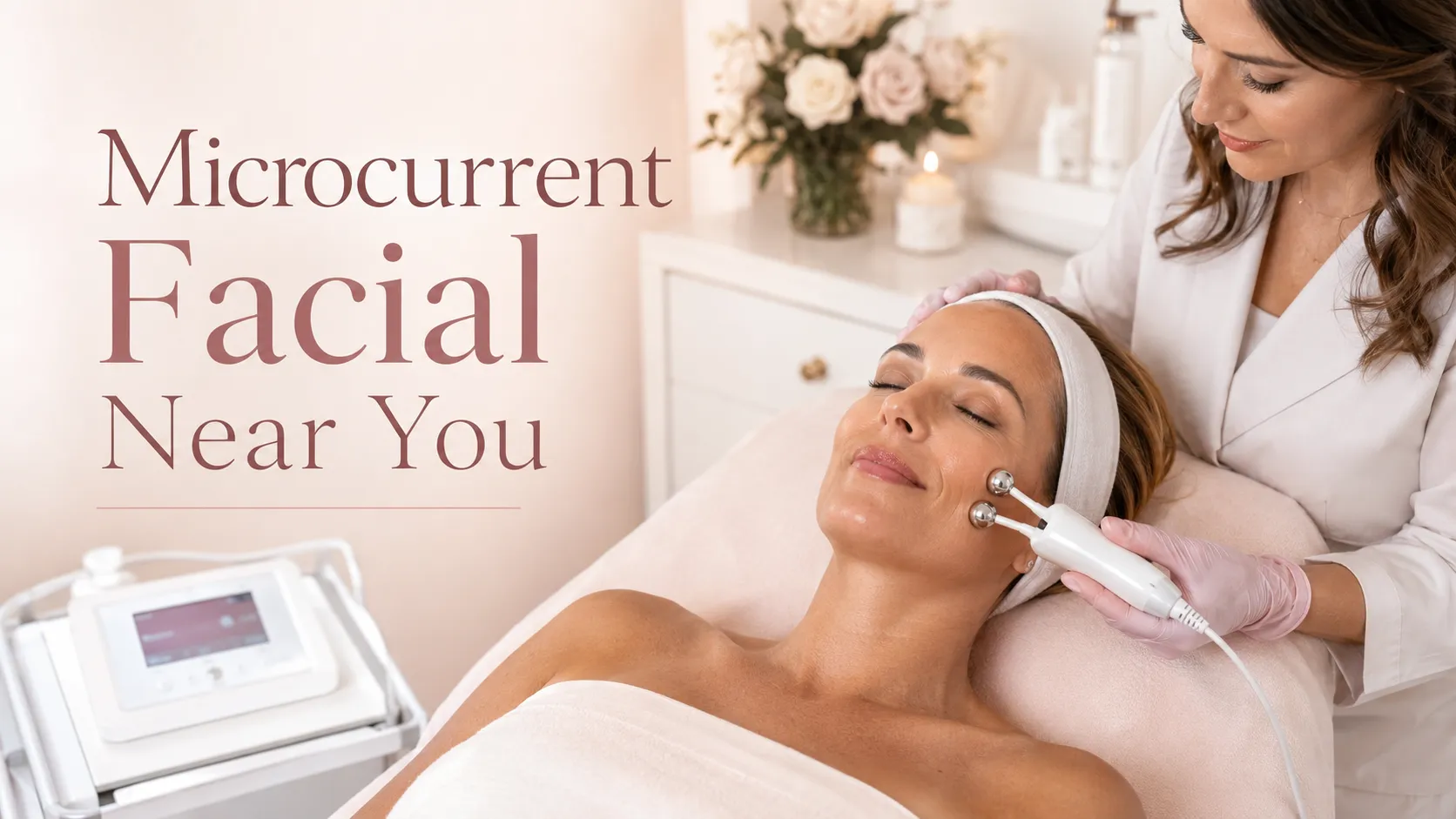
A microcurrent facial uses low-level electrical currents to stimulate the muscles beneath your skin, creating a temporarily lifted, more sculpted, and toned look. You can find one near you at facial studios, med spas, and dermatology offices, usually for $150 to $300 per session. Results from a single visit last about one to three days, while consistent treatments build a more lasting effect. An at-home device offers similar cumulative results for a one-time cost.
If you have ever wished for a more lifted, sculpted look without needles or downtime, a microcurrent facial probably keeps showing up on your feed. It is often called a workout for your face, and the immediate before-and-after photos can be striking. Before you book, it helps to understand what the treatment really does, what a fair price looks like, and how to choose a good studio near you. Here is your complete guide.
If you have ever wished for a more lifted, sculpted look without needles or downtime, a microcurrent facial probably keeps showing up on your feed. It is often called a workout for your face, and the immediate before-and-after photos can be striking. Before you book, it helps to understand what the treatment really does, what a fair price looks like, and how to choose a good studio near you. Here is your complete guide.
Key Takeaways
- A microcurrent facial gives an immediate lift that lasts a day or three, with stronger results from a series.
- Professional sessions typically run $150 to $300, while at-home devices are a one-time purchase around $200 to $400.
- The treatment is gentle and painless, often described as a tingle, not pain.
- It is best for tone and contour, not deep wrinkles or major sagging, and it is not permanent.
- Skip it if you are pregnant or have a pacemaker, heart condition, epilepsy, or active facial conditions without medical clearance.
What is a microcurrent facial?
Microcurrent is a low-level electrical current that mirrors the body's own natural energy. During a facial, a provider glides conductive probes across your skin, sending gentle waves to the facial muscles underneath. The idea is to stimulate those muscles, encourage cellular energy known as ATP, and support a firmer, more contoured look.
People often compare it to exercise because it works the muscles rather than the surface of the skin. Just like the gym, one session gives a temporary boost, while regular sessions build toward something more lasting.
What does a microcurrent facial do (and what can't it do)?
Setting honest expectations is the difference between loving microcurrent and feeling let down.
What it can do:
- Create an immediate lifted, sculpted appearance, especially along the jawline and cheekbones
- Improve overall facial tone and definition with consistent use
- Soften the look of fine lines and leave skin looking more awake
- Boost circulation for a healthier glow
- Offer a relaxing, no-downtime treatment
What it can't do:
- Permanently lift or reshape your face
- Replace the deeper structural tightening of radiofrequency or the results of injectables
- Fix significant sagging on its own
Research on the cellular energy side of microcurrent is fairly credible, while the muscle re-education claims are more debated. The honest takeaway is that microcurrent gives a real, visible, temporary lift, and a subtle cumulative improvement with commitment. The dramatic single-session photos are usually that "photoshoot effect" that fades within a few days.
Professional vs at-home microcurrent: which is better?
This is the question most women actually want answered.
| Factor | Professional facial | At-home device |
|---|---|---|
| Strength | Higher amperage, multiple probes, precise targeting | Lower, FDA-cleared, safe for home |
| Initial results | Faster, more dramatic | Build over about 60 days |
| Cost | $150 to $300 per session | One-time, roughly $200 to $400 |
| Best for | Event prep, a polished single result | Long-term, cost-effective maintenance |
A professional session shines before a wedding or big event because the result looks immediate and refined. An at-home device wins on long-term value if you will actually use it consistently. Many women do both: occasional professional facials plus an at-home routine in between.
Where can you find a microcurrent facial near you?
Search with terms like "microcurrent facial near me," "microcurrent facial in [your city]," or "facial toning treatment near me." You will typically find it at:
- Facial studios and esthetician spas, often as a standalone or an add-on
- Med spas, sometimes paired with LED or other treatments
- Dermatology offices that offer aesthetic services
As with any facial, read recent reviews, confirm the provider is a licensed esthetician, and look for someone experienced specifically with microcurrent. Our guide on how to find a good facialist near you covers the full vetting checklist.
What does it cost?
Professional microcurrent facials in the U.S. typically run $150 to $300 per session, with higher prices in big cities and premium med spas. Because results build with repetition, providers often recommend a series, then monthly maintenance. A package or membership usually lowers the per-session cost.
If you go the at-home route, popular FDA-cleared devices generally cost around $200 to $400 as a one-time purchase, plus an ongoing conductive gel or primer. Over a year, that can work out cheaper than monthly professional visits, as long as you use it.
What to Expect and What to Ask
A microcurrent facial is calm and painless.
- Consultation. Your provider reviews your skin, health history, and goals.
- Cleanse. They remove makeup and prep your skin.
- Conductive gel. A water-based gel goes on so the current flows smoothly.
- The microcurrent work. The provider moves the probes along your facial muscles in lifting motions. You may feel a faint tingle or a slight metallic taste, but it should not hurt.
- Finishing care. Serum, moisturizer, and sunscreen complete the session, sometimes with LED added on.
Questions to ask before you book:
- Are you a licensed esthetician experienced with microcurrent?
- How many sessions do you recommend for my goal, and how far apart?
- What is the full price, and do you offer packages?
- What results are realistic for my skin and age?
- Do you have any health screening questions I should know about?
Who should skip it?
Microcurrent is gentle, but it is not for everyone. Avoid it or get medical clearance first if you:
- Are pregnant
- Have a pacemaker or other implanted electrical device
- Have a heart condition or arrhythmia
- Have epilepsy or a seizure disorder
- Have active facial infections, open wounds, or recent injectables in the area
- Have metal implants in the treatment area
A few users have reported side effects like stinging, broken capillaries, or irritation, so if you have any of these conditions, talk with your doctor or a board-certified dermatologist before booking.
The At-Home Option
At-home microcurrent has come a long way, and for many women it is the more practical choice. The most established FDA-cleared microcurrent devices are designed for a short daily routine, often around five minutes a day, five days a week for the first couple of months, then a few times a week to maintain.
To get results, consistency is everything. A device used twice and shelved will not do much, but one used regularly can deliver a genuine, cumulative lift. Pair it with a conductive primer gel, and support your skin with retinol, a vitamin C serum, and daily sunscreen for the best long-term outcome.
These at-home devices and supporting products are the kind of higher-value, dermatologist-discussed tools we point to across The Fern Edit, and they make microcurrent realistic for an everyday routine.
Free printable: Download our Microcurrent Facial Questions & Routine Card, with the questions to ask a studio plus a simple at-home schedule so you actually stick with it.
Common Mistakes
- Expecting permanent results from one session. The single-visit lift fades in a few days. Plan for a series or ongoing use.
- Buying a device you won't use. At-home microcurrent only works with consistency, so be honest about your routine first.
- Skipping the conductive gel. The current needs the gel to flow. Skin care primers are not optional here.
- Ignoring health screening. If you have a heart device or other condition, clearance comes first.
- Treating it as a wrinkle eraser. Microcurrent tones and lifts. For deep lines or major laxity, talk to a dermatologist about other options.
Final Takeaway
A microcurrent facial is a gentle, no-downtime way to look more lifted and sculpted, whether you book it near you for a special occasion or build it into your routine with an at-home device. The trick is realistic expectations: it is a temporary, buildable lift, not a permanent transformation. Choose a licensed, experienced provider, screen for any health conditions, and pair it with steady skincare, and microcurrent can be a lovely part of your firming routine.
This article is for general beauty and self-care education only and is not medical advice. If you have a heart condition, implanted device, or other health concern, please consult a board-certified dermatologist or your doctor before microcurrent treatment.
 📌 Save
Love this guide? Save it 📌
Pin it to your favorite board so it's easy to find again — and share it with a friend who'd love it too.
Save to PinterestFrequently asked questions
How much is a microcurrent facial near me?
Professional microcurrent facials in the U.S. typically cost $150 to $300 per session, with big cities and premium med spas at the higher end. Packages and memberships usually lower the per-visit price.
Does a microcurrent facial really work?
Yes, for a temporary lift and, with consistent use, a subtle cumulative improvement in tone and contour. It does not permanently reshape the face or replace deeper treatments, so set expectations accordingly.
How long do microcurrent facial results last?
A single session usually lasts about one to three days. With a regular series and ongoing maintenance, results become more lasting, though they fade if you stop entirely.
Is an at-home microcurrent device as good as a professional facial?
Professional treatments use stronger currents and show faster initial results, while at-home devices deliver comparable cumulative results over about 60 days at a lower long-term cost. The key is using the device consistently.
Does a microcurrent facial hurt?
No. It is painless for most people, often described as a light tingle, with occasional warmth or a faint metallic taste. Tell your provider if anything feels uncomfortable.
Who should not get a microcurrent facial?
Avoid it or get medical clearance if you are pregnant or have a pacemaker, heart condition, epilepsy, metal implants in the area, or active facial infections. When in doubt, check with a board-certified dermatologist.

We cite sources and update this guide regularly.