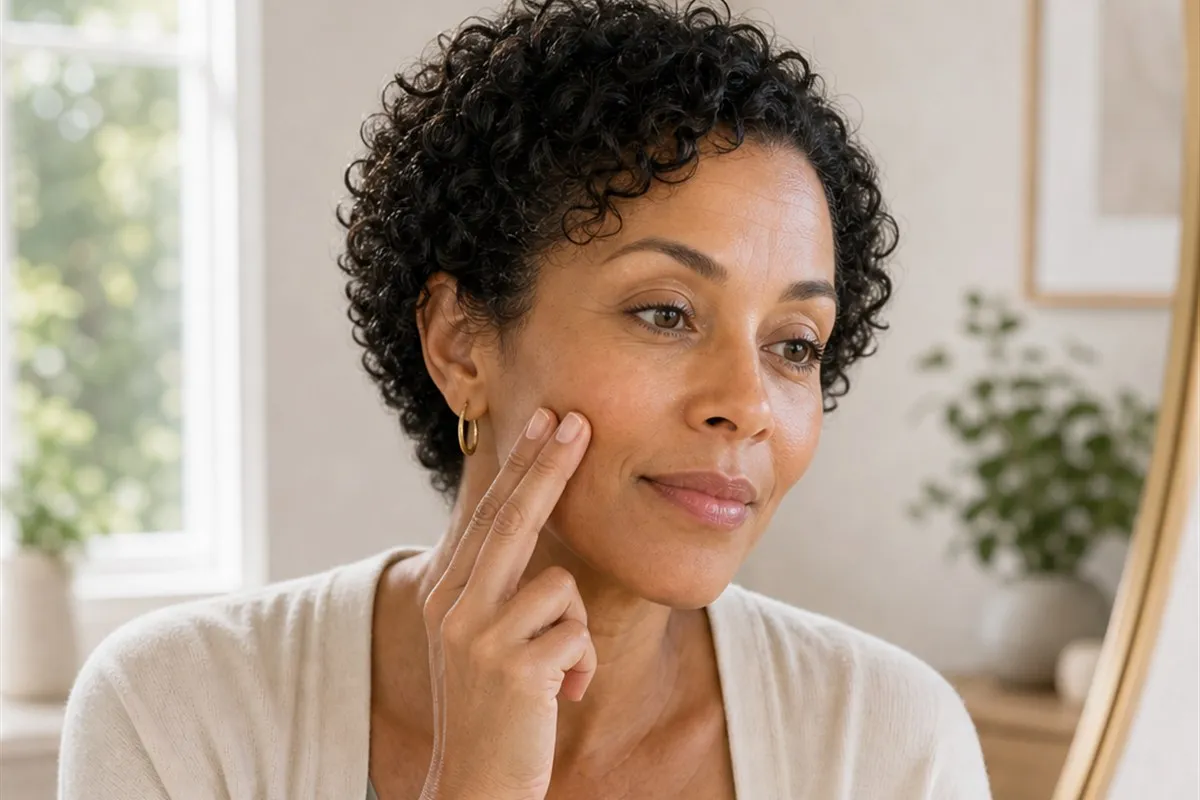
Forehead lines come from the frontalis muscle (which raises your brows), and frown lines, the vertical "11s," come from the corrugator and procerus muscles between your brows. Face yoga helps by relaxing this overactive tension, strengthening the eye muscles so they take over some of the work, and building awareness of unconscious frowning. Practiced gently and consistently, it can soften the look of these expression lines over time, though it will not erase deep, etched wrinkles the way injectables do.
The lines that show up first are often the ones we make on purpose, the horizontal creases from raising our brows and the vertical "11" lines from frowning and concentrating. They are called expression lines for a reason, and that is exactly why face yoga can help soften them. Much of the time, these lines are driven by tension and habit, and gentle exercises can release that tension and make you more aware of it.
The lines that show up first are often the ones we make on purpose, the horizontal creases from raising our brows and the vertical "11" lines from frowning and concentrating. They are called expression lines for a reason, and that is exactly why face yoga can help soften them. Much of the time, these lines are driven by tension and habit, and gentle exercises can release that tension and make you more aware of it.
Here are simple, gentle face yoga moves for the forehead and frown lines, with an honest look at what they can and cannot do.
Key takeaways
- Forehead and frown lines are mostly tension-and-habit driven expression lines.
- Face yoga relaxes overactive brow muscles and builds awareness of unconscious furrowing.
- Use a feather-light touch, since the goal is to release tension, not crease the skin.
- Best results come from consistency plus daytime awareness of how you hold your face.
- It softens dynamic lines gradually and does not replace Botox for deep, static lines.
Why do you get forehead and frown lines?
Two main muscle groups are behind these lines. The frontalis muscle runs across your forehead and lifts your eyebrows, so repeatedly raising them, when you are surprised, talking, or trying to see, etches horizontal lines over time. The corrugator and procerus muscles sit between your brows and pull them together when you frown, squint, or concentrate, creating the vertical "11" lines. Years of these repeated expressions, plus declining skin elasticity, gradually turn movement into lasting creases.
The useful insight: because tension and habit drive so much of this, relaxing those muscles and catching yourself mid-furrow can genuinely make a difference.
Can face yoga really help?

Within limits, yes. The honest picture is that face yoga for these areas works mostly by releasing muscle tension and improving your awareness, plus boosting circulation. Reviews of facial exercise research suggest a real if modest impact on appearance, while noting the evidence is still limited. So think of these moves as a way to relax overworked brow muscles, soften the look of dynamic lines, and prevent new tension creases, rather than as an eraser for deep, set-in wrinkles. For lines that are already deeply etched, a dermatologist has stronger options, and face yoga can still complement them.
What forehead line exercises can you do?
Spend about a minute on each, breathing slowly. Keep the pressure light.
1. Forehead resistance smoother

Place both palms flat on your forehead, just above your brows, holding the skin gently still. Now try to raise your eyebrows in a surprised expression against that resistance. Hold for 5 seconds, relax, and repeat 10 times. This trains you to stop overusing the forehead muscle.
2. Knuckle glide
Make loose fists and rest your knuckles in the center of your forehead. Gently glide them outward to your temples as you exhale. Repeat a few times. This eases tension and supports circulation and lymphatic flow.
3. Eye-muscle isolation

Rest your fingers lightly on your forehead to keep it still. Open your eyes wide using only the muscles around your eyes, keeping your forehead relaxed, hold 5 seconds, and release. Strengthening the eye muscles lets them take over some work from the frontalis.
What exercises help frown lines (the "11s")?
These focus on releasing the tense muscles between your brows.
1. Brow smoother

Place your index and middle fingers at the inner corners of your eyebrows. Gently press and smooth outward along the brow, releasing the tension between them. Repeat for about a minute.
2. Criss-cross smoothing
Using light pressure, move your fingertips in a gentle criss-cross motion from the bridge of your nose up between your brows. This soothes the crease and boosts circulation. Keep the touch feather-light so you do not drag the skin.
3. Brow press release

Place your fingertips between your brows, then gently squeeze your brows together against that resistance and release. Repeat 10 times. This helps relax the frown muscles. Finish by smoothing the area and taking a slow breath.
What is the awareness habit?
This is the secret ingredient. So much forehead and frown-line tension is unconscious, you furrow at your screen, raise your brows when you talk, or scrunch up when you are stressed. Throughout the day, gently notice when you are tensing your forehead or pulling your brows together, and consciously relax. Prevention really is easier than cure here. Many people find that this awareness alone, paired with the exercises, makes the biggest difference. Reducing overall stress helps too, since stress drives a lot of the furrowing.
Mistakes to avoid
- Pressing or dragging too hard. The skin between the brows is delicate. Too much force can pull at it.
- Skipping the facial oil. A little slip lets your fingers glide instead of tug.
- Expecting to erase deep lines. Face yoga softens dynamic lines, it does not remove etched ones.
- Forgetting daytime awareness. The exercises work far better alongside catching yourself mid-frown.
- Sleeping face-down. Pressing your face into the pillow can deepen 11 lines. Back-sleeping helps.
Expert tips
- Pair the exercises with a hydrating serum or facial oil so your fingers glide smoothly.
- A few minutes daily beats a long session once a week.
- Keep a sticky note or phone reminder to "relax your forehead" while you work.
- Combine with good skincare, since a retinoid and daily SPF address the skin side of lines. See our retinol for beginners guide.
- Approach it from self-care, not self-criticism. Lines are normal, and this is about feeling relaxed and cared for.
Final takeaway
Forehead and frown lines are expression lines, written by years of raising and furrowing your brows, which is exactly why gentle face yoga can help. By relaxing those overworked muscles, boosting circulation, and noticing when you tense up during the day, you can soften the look of these lines and slow new ones. Keep the touch feather-light, stay consistent, and pair it with good skincare and daily SPF. It will not erase a deep crease the way a dermatologist can, but as a calming, preventive habit, it earns its few minutes a day.
This article is for general beauty and self-care education only and is not medical advice. For deep or bothersome lines, a board-certified dermatologist can discuss your options.
 📌 Save
Love this guide? Save it 📌
Pin it to your favorite board so it's easy to find again — and share it with a friend who'd love it too.
Save to PinterestFrequently asked questions
Can face yoga get rid of forehead lines?
It can soften the look of dynamic forehead lines by relaxing the overworked muscle and building awareness of unconscious brow-raising. It will not fully erase deep, etched lines, which respond better to dermatological treatments. Consistency and a gentle touch matter most.
What causes the 11 lines between my eyebrows?
The corrugator and procerus muscles pull your brows together when you frown, squint, or concentrate. Repeating this, along with declining skin elasticity, etches vertical "11" lines over time. Relaxing this tension is the focus of face yoga for this area.
Does face yoga work for frown lines?
It can help soften them by releasing muscle tension and improving circulation, though the evidence is limited and results are modest. It works best on tension-driven dynamic lines and as prevention, not as a way to remove deep static creases.
How long until I see results?
Several weeks to a few months of consistent, gentle practice for subtle softening, with relaxation benefits felt right away. Pairing the moves with daytime awareness of frowning speeds things along.
Can face yoga replace Botox for forehead lines?
No. Botox temporarily relaxes the muscles to smooth lines, while face yoga gently encourages relaxation and awareness for a much subtler effect. They are different tools, and face yoga can be a natural complement rather than a replacement.
Will making these expressions cause more wrinkles?
Not if you keep the movements gentle and relaxed and avoid creasing the skin. The exercises are designed to release tension, not hold tense expressions. Use light pressure and a little oil, and relax your face between moves.
How often should I do these exercises?
Daily, or at least every other day, for a few minutes. Brief, regular practice works better than occasional long sessions, and consistency is what produces gradual softening.
Do I need any products or tools?
No tools are required. A little facial oil or serum helps your fingers glide without tugging the skin, and a mirror helps while you learn. A gua sha tool or roller is optional.

We cite sources and update this guide regularly.