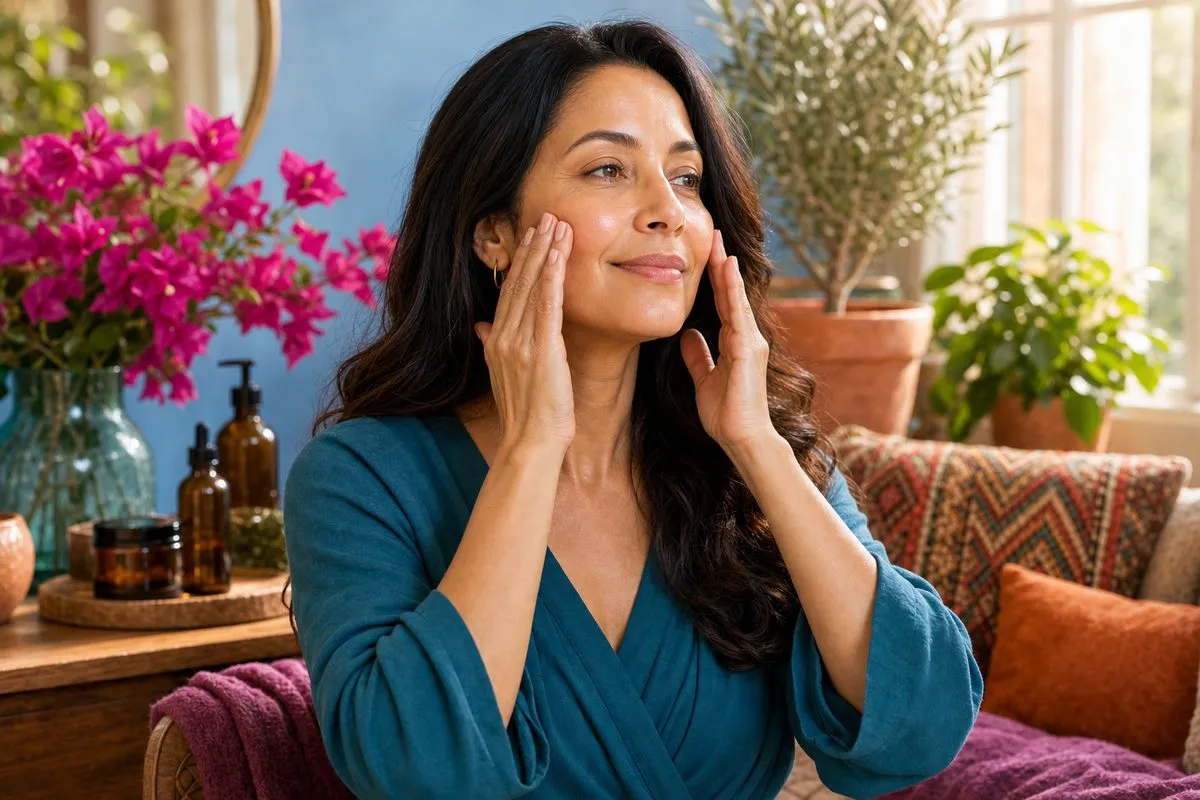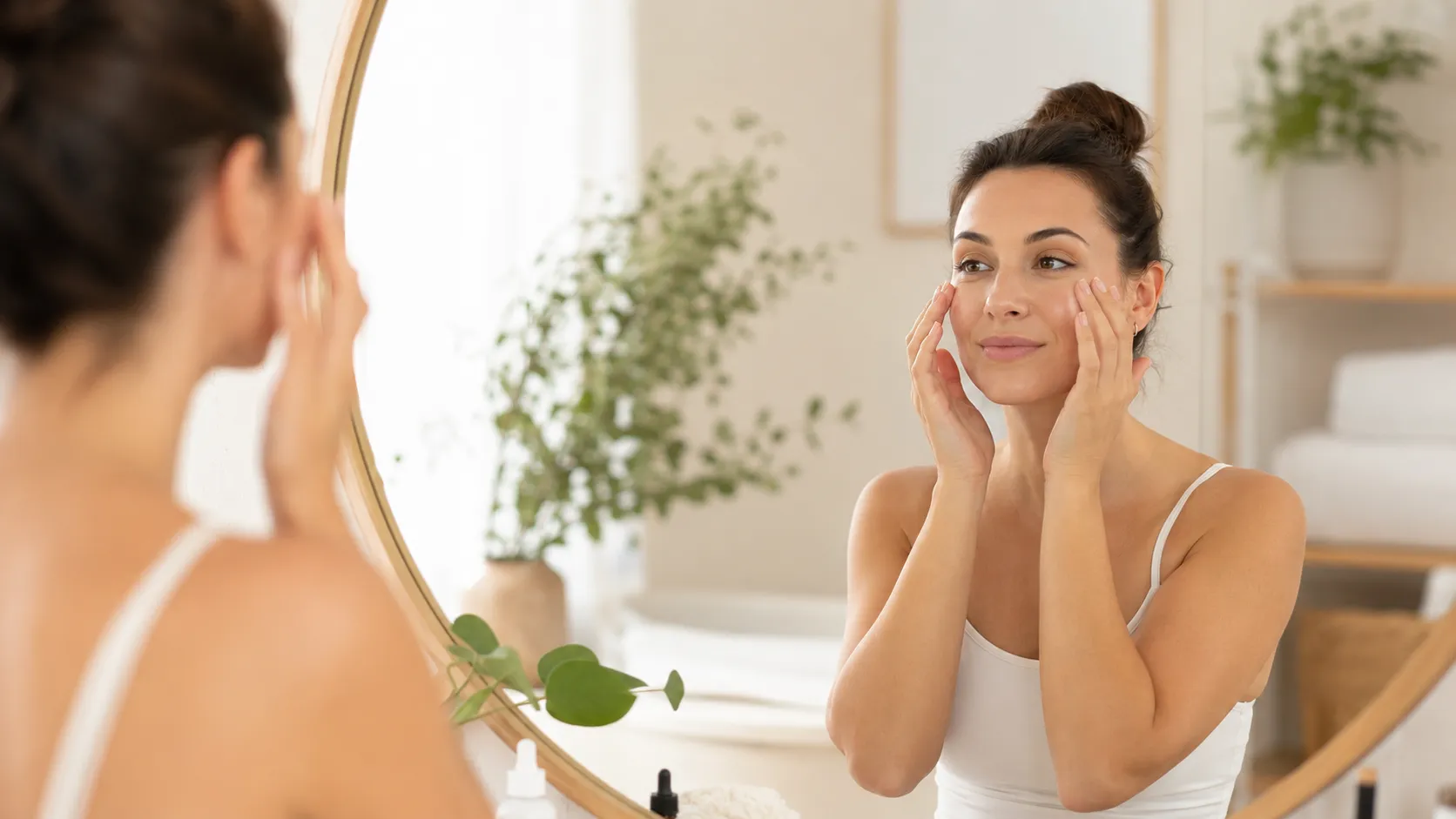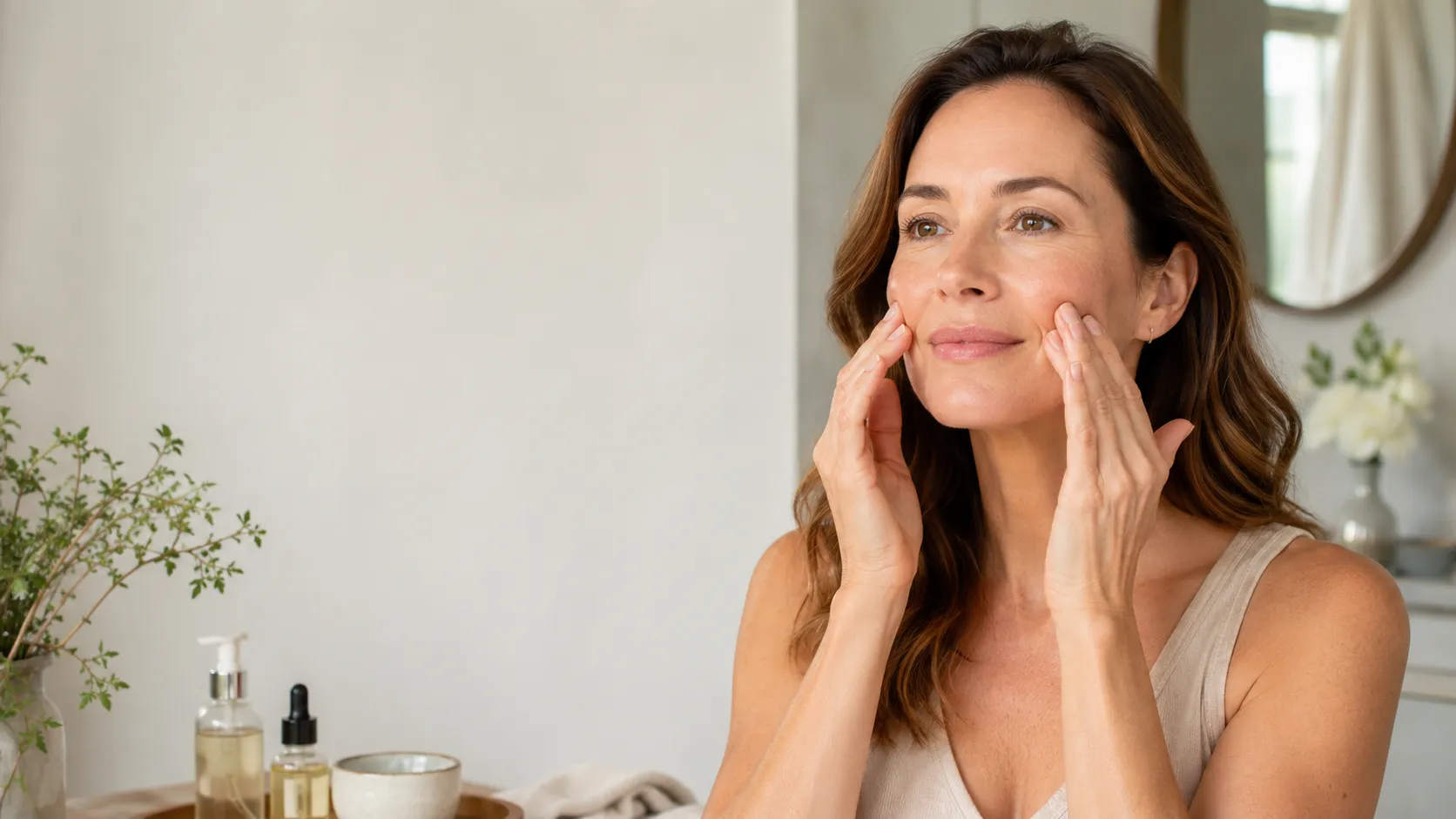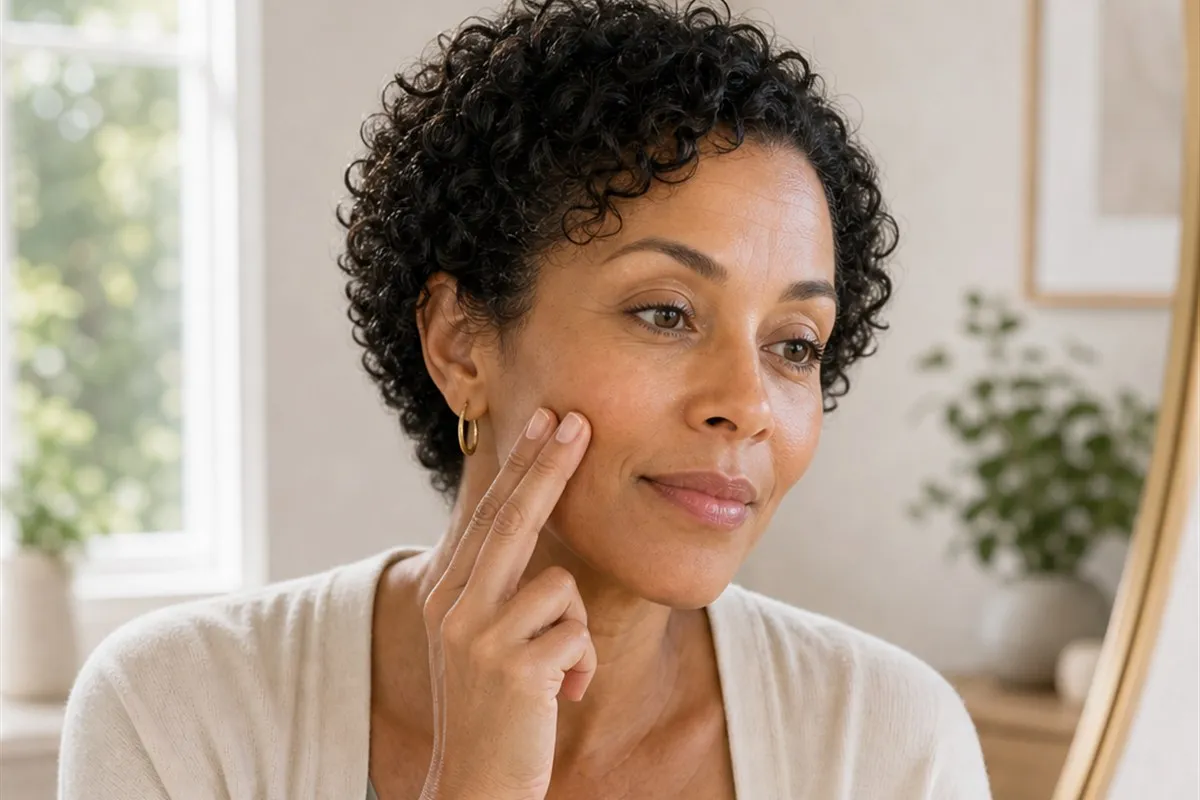

Face yoga for tired eyes should focus on posture, gentle eye relaxation, brow softness, temple release, sleep-support habits, and careful skincare. It cannot cure dark circles, but it can support a softer, more rested-looking routine.
The under-eye area is delicate, so face yoga for tired eyes should be calm, light, and focused on relaxation rather than pressure. Done gently, it can be a soothing way to support a more rested-looking eye area and ease the tension that builds up after a long day of screens.
This routine emphasizes safety: light touch, no dragging, and lifestyle support like sleep and screen breaks. It will not get rid of dark circles on its own, but it is a kind, low-cost habit that pairs well with good eye care.
Before you begin
This guide is general beauty education, not medical advice. Face yoga and facial massage are not treatments and results vary. If you have pain, recent cosmetic procedures, skin irritation, jaw problems, or other concerns, check with a qualified professional first.
The most useful routines respect your real life. Keep it simple, track what works, and adjust based on comfort rather than chasing every trend.
Can face yoga get rid of dark circles?
Honestly, no — not on its own, and it is worth being clear about that up front. Dark circles have several causes, and many of them (like genetics, pigmentation, or the natural thinness of under-eye skin) do not change with facial movement. What gentle eye-area face yoga can do is boost circulation for a temporarily brighter look, relax the muscle tension that makes eyes look strained, and encourage you to slow down and treat the delicate skin kindly. Think of it as supporting a more rested appearance rather than erasing shadows.
What causes dark circles and tired-looking eyes?
Knowing the cause helps you aim your effort where it actually helps. Common contributors include:
- Genetics and skin tone, which influence natural pigmentation around the eyes.
- Thin under-eye skin, which lets the blood vessels beneath show through as a bluish or purple tint.
- Tiredness and poor sleep, which can make the area look duller and more shadowed.
- Fluid and puffiness, which cast shadows, often worse in the morning.
- Allergies and rubbing, which can darken and irritate the area.
Because the causes are so varied, a gentle routine plus lifestyle support tends to help more than any single trick. Persistent or sudden changes are worth checking with a professional.
Gentle face yoga moves for tired eyes
1. Screen-break blink
Blink slowly and intentionally several times to release the dry, fixed stare that builds up from phones and laptops.
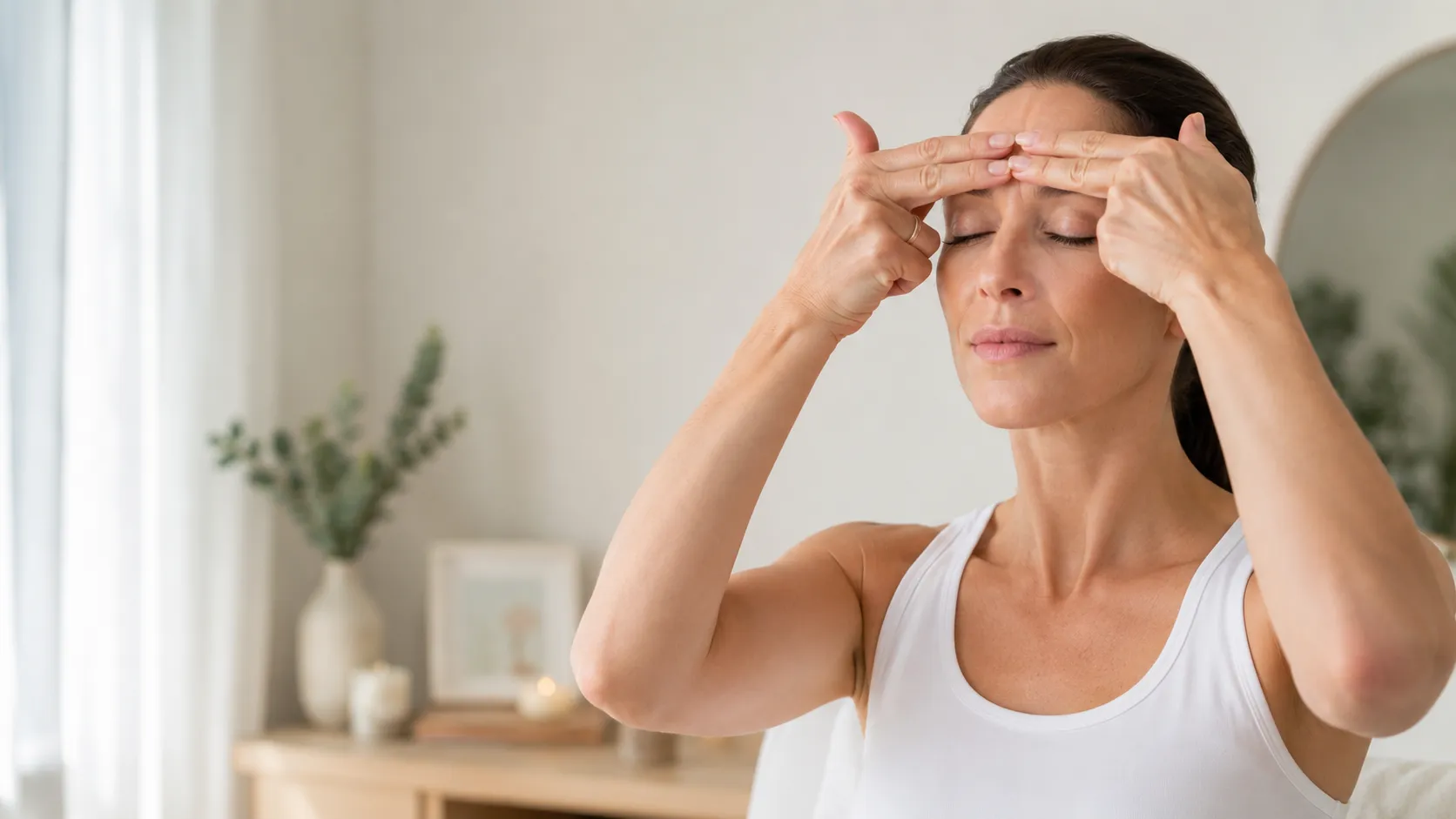
2. Brow softening
Place your fingers just above the brows and breathe slowly while consciously relaxing the forehead, letting the space between your brows soften.
3. Temple release
Use very light circles at the temples, well away from the eye itself, to ease tension that travels in from the sides.
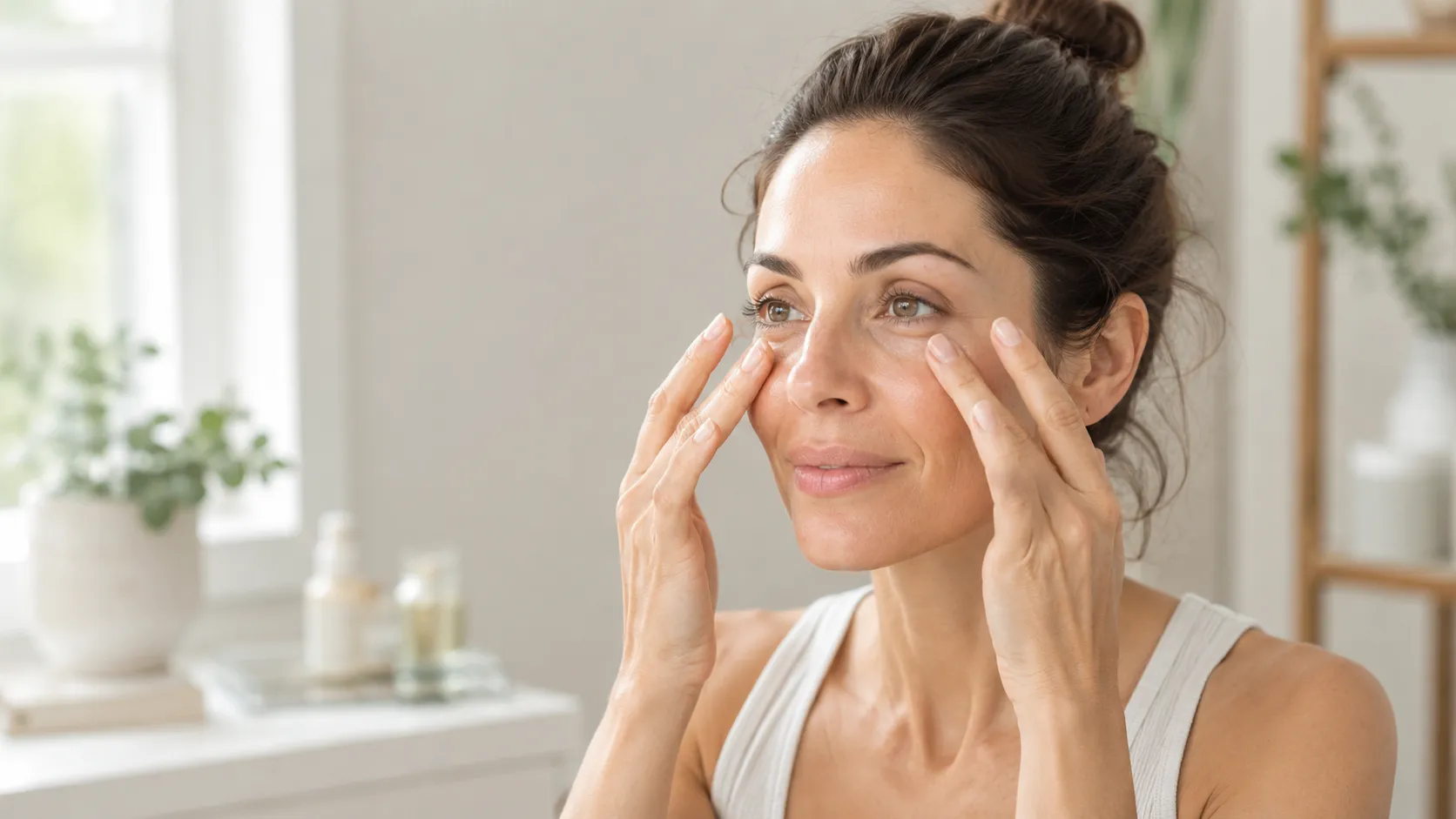
4. Under-eye no-pull rule
Never drag the under-eye skin. If you apply product, pat it in lightly with your ring finger, which naturally presses the softest.
5. Eye focus reset
Look slowly from something near to something far and back, a few times, to relax the eye muscles after close screen work.
6. Shoulder and neck drop
Roll and drop your shoulders to release upper-body tension that otherwise settles into a tight, tired face.
7. Cool, brief refresh
A chilled spoon or cooling tool can feel refreshing under the eyes — use it gently and briefly, never pressing hard.
8. Soft finish
Close your eyes for a few slow breaths and let your whole face relax to end on a calm note.
How do you care for the under-eye area safely?
The golden rule is no pulling. Under-eye skin is among the thinnest on your body, so it creases and irritates easily if you tug it. Always use your ring finger for the lightest possible touch, pat rather than rub, and let products absorb instead of dragging them across. Apply skincare gently, avoid harsh rubbing when you are tired or have allergies, and keep any tools cool and light. Treating the area with this much care is genuinely more important than any specific exercise.
What else helps dark circles besides face yoga?
Lifestyle support usually does more heavy lifting than facial movement here. Prioritize consistent sleep, stay hydrated, and manage allergies if they affect your eyes. A brief cool compress can reduce a puffy, shadowed look in the morning. Daily sunscreen helps protect against pigmentation worsening over time. A hydrating eye cream can improve the look of the skin, and color-correcting concealer is a quick cosmetic fix. If circles are persistent and bother you, a dermatologist can identify the specific cause and targeted options.
How often should you do it, and when will you notice a difference?
Because everything here is so gentle, a few minutes daily is perfectly fine, ideally paired with your morning or evening skincare. The relaxation and temporary brightness can be noticeable right away, especially after screen-heavy days. What you should not expect is a dramatic fading of pigment or genetics-based shadows, since those do not respond to movement. Enjoy it as a calming, rested-look ritual and let realistic expectations keep it enjoyable.
Does face yoga help with under-eye puffiness?
This is where gentle eye-area work tends to help most. Light, draining movements and a cool touch can encourage the fluid that settles overnight to move along, which may make the under-eye area look less puffy and shadowed in the morning. Because puffiness is often about fluid rather than pigment, it responds better to gentle massage than true dark circles do. Keep it feather-light and brief, sweep softly outward toward the temples and down toward the sides of the neck, and pair it with good sleep and hydration for the best morning result. It is a temporary refresh, not a permanent change, but a genuinely nice one.
Can you overdo eye face yoga?
Yes, and the under-eye area is exactly where restraint matters most. The skin here is thin and delicate, so pressing hard, rubbing, or doing long, forceful sessions can irritate it or contribute to creasing over time — the opposite of what you want. More is not better with tired eyes. A few gentle minutes daily is plenty, and if the area ever feels sore, tender, or looks irritated, ease off or take a break. When it comes to the eyes, the lightest possible touch is always the right amount.
Common mistakes to avoid
- Trying too many new products or steps at once
- Copying a viral routine without adjusting for your skin, face, or lifestyle
- Using harsh pressure when the routine should stay gentle
- Expecting instant results from a routine that depends on consistency
- Skipping sunscreen or basic care while chasing trends
Final thoughts
Dark circles can be linked to genetics, sleep, allergies, and pigmentation, so a gentle eye routine supports a rested look rather than curing them. Keep the touch feather-light, lean on sleep and hydration, and see a professional for persistent swelling or changes rather than expecting facial movement to get rid of them. If you are new to facial exercise, start with our face yoga for beginners routine, build a fuller session from the at-home exercises library, and read our honest take in does face yoga work.
Explore more from The Fern Edit: Face Yoga, Gua Sha, Skin Firming, Mature Skin, printables.
 📌 Save
Love this guide? Save it 📌
Pin it to your favorite board so it's easy to find again — and share it with a friend who'd love it too.
Save to PinterestFrequently asked questions
Can face yoga remove dark circles?
Face yoga cannot guarantee dark circle removal. Dark circles can be related to genetics, sleep, allergies, pigmentation, and skin structure.
Is it safe to massage under the eyes?
Use very light pressure and avoid dragging the skin. The under-eye area is delicate.
What helps tired-looking eyes?
Sleep, hydration, screen breaks, gentle skincare, and soft relaxation routines may help the eye area look more rested.
Can I do eye face yoga daily?
A gentle short routine can be done often, but stop if you feel irritation or discomfort.
Should I use eye cream?
Use eye cream only if it suits your skin. Apply by patting, not pulling.
When should I see a professional?
Persistent swelling, irritation, pain, or sudden changes around the eyes should be checked by a qualified professional.

We cite sources and update this guide regularly.