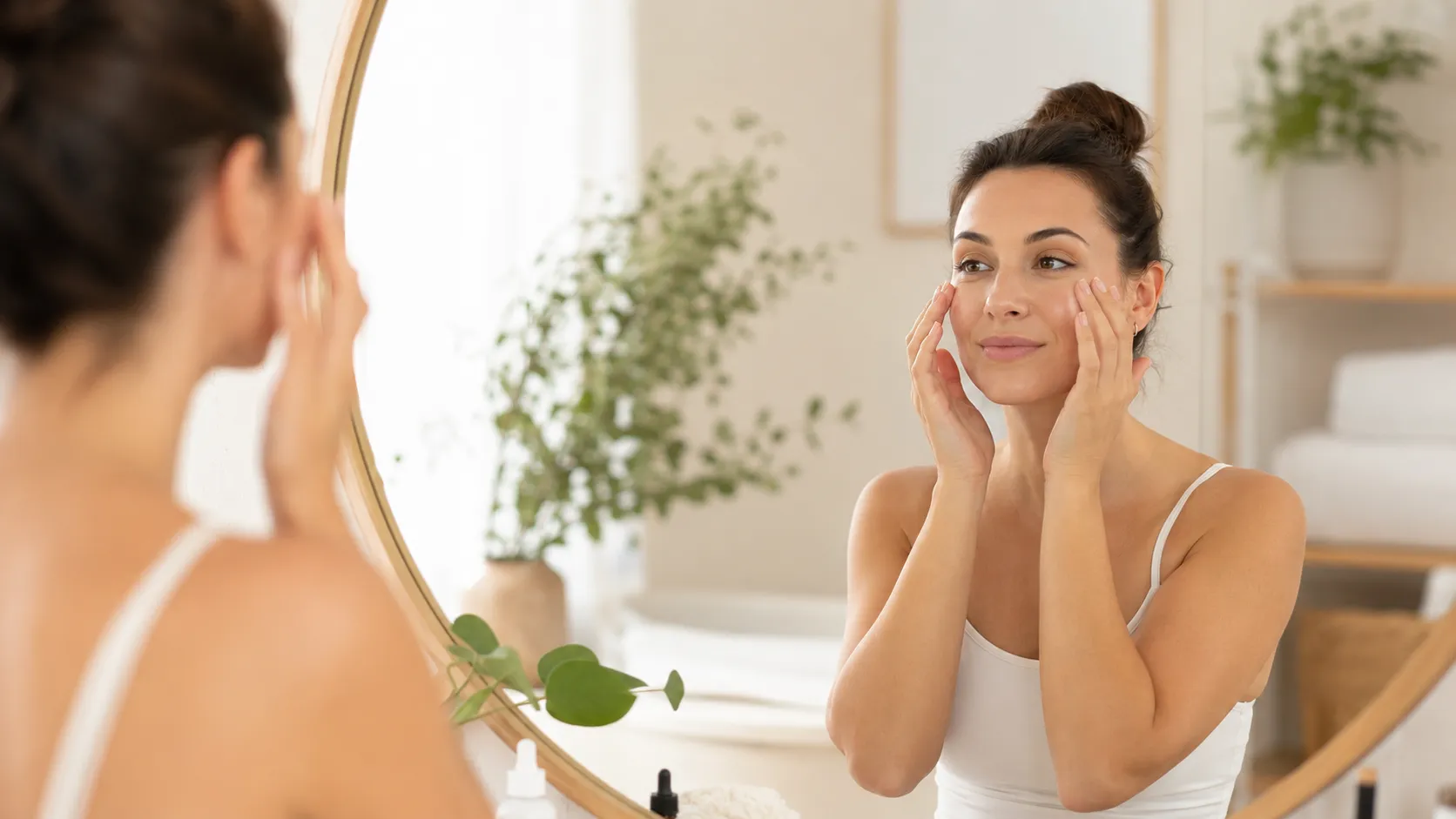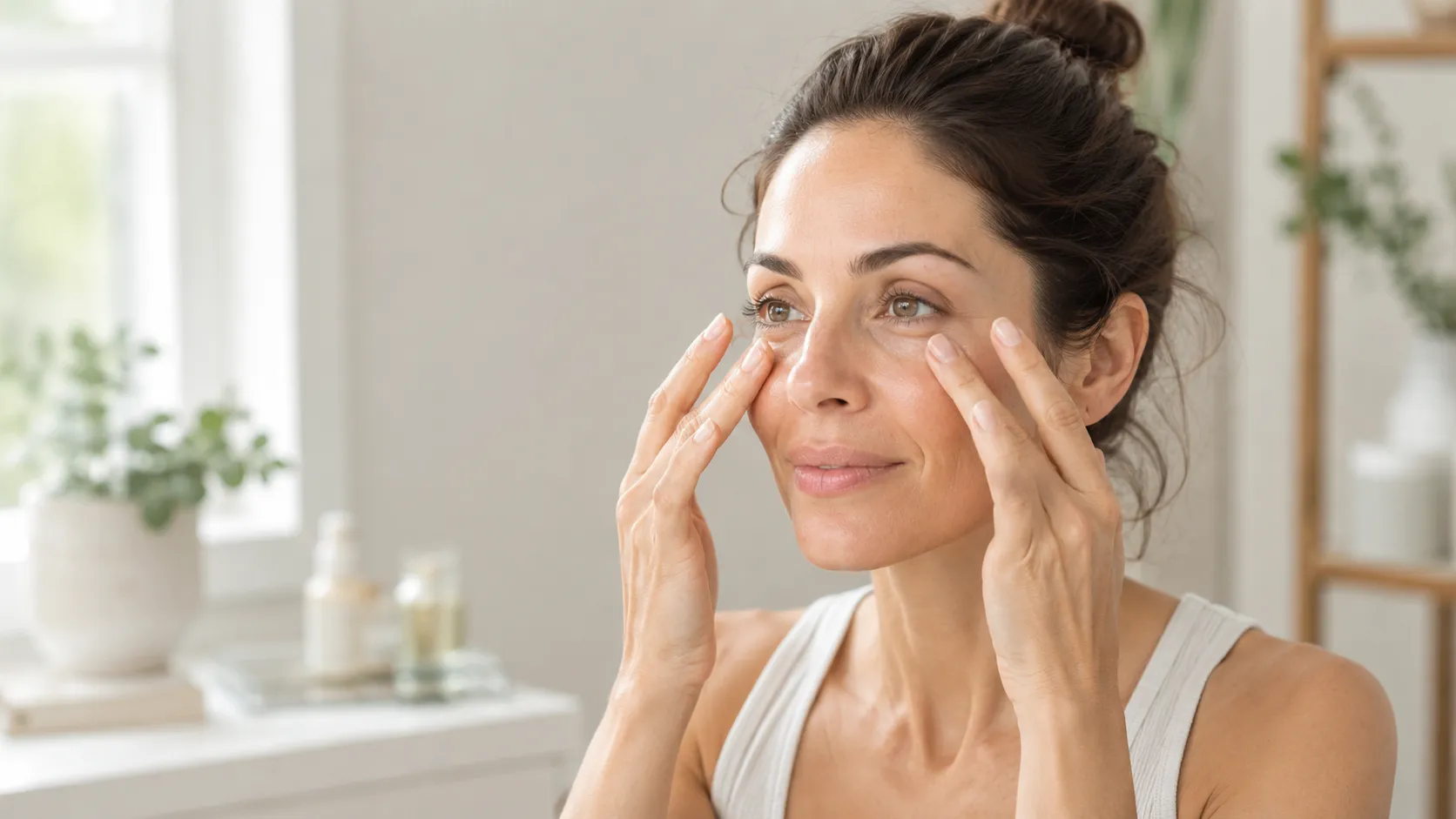

The best at-home face yoga focuses on posture, forehead relaxation, cheek awareness, jaw release, eye-area softness, neck length, and a gentle finish — using slow, controlled movement, clean hands, and light pressure.
Face yoga exercises are easiest to follow when they are organized like a calm routine, not a random list of facial movements. Think of this page as your at-home library: a set of gentle moves grouped by area, so you can pull from it and build a session that suits your time and your face.
The routine is gentle, repeatable, and realistic enough to keep going. The focus is awareness and relaxation, not forcing a dramatic result. If you are completely new, get oriented first with our face yoga for beginners guide, then come back here for more moves to choose from.
Before you begin
This guide is general beauty education, not medical advice. Face yoga and facial massage are not treatments and results vary. If you have pain, recent cosmetic procedures, skin irritation, jaw problems, or other concerns, check with a qualified professional first.
Always start with clean hands and a clean face to avoid pressing bacteria into the skin, keep the pressure light, and move slowly and with control.
How do you build an at-home face yoga session?
Structure keeps a session calm and easy to repeat. A simple flow is: start with posture and a breath to relax, then work from the top of the face down — forehead, eyes, cheeks, jaw, and neck — and finish with a light overall massage. You do not need every move below in one sitting. Pick one or two exercises per area for a quick five-minute round, or work through more for a fuller ten to fifteen minutes. Ending with relaxation matters as much as the moves themselves.
Forehead and brow exercises
Posture reset
Sit tall and relax your shoulders so every movement stays controlled and you stop scrunching your neck.
Forehead softener
Place your fingertips gently on the forehead and raise and relax the brows slowly, keeping the movement smooth and controlled to build awareness and ease tension.
Brow smoother
Rest your fingers just above the brows, hold the skin still, and gently try to lift the brows against that light resistance, then fully relax.
Eye-area exercises
Eye softening hold
Rest your fingers lightly around the orbital bone without pressing the eye itself, breathe, and relax the forehead as you do.
Focus reset
Look slowly from near to far and back a few times to release the fixed screen stare and relax the eye muscles.
Cheek exercises
Cheek smile hold
Smile softly and hold for a few seconds, then release completely without clenching your teeth.
Cheek puff release
Fill your cheeks gently with air and move it side to side, keeping it controlled and brief.
Cheek lift with resistance
Smile with lips closed and use your fingertips to lightly support the tops of the cheeks while you resist with a slightly bigger smile.
Jaw and neck exercises
Jaw glide awareness
Move the lower jaw a tiny amount side to side if comfortable, and skip this if you have any jaw issues.
Neck posture lift
Lengthen the neck and gently angle the chin forward, keeping the throat relaxed. For a fuller jaw-focused set, see our jawline face yoga moves.
Finishing massage
Use feather-light upward strokes with a little oil or moisturizer, if your skin tolerates it, to relax the whole face.
Lip and mouth exercises
Lip release
Press your lips together lightly, hold briefly, then release and soften the corners of the mouth to ease tension you may hold there.
Smooth "O" hold
Form a gentle "O" shape with your mouth, keeping it relaxed rather than tense, and feel a light stretch around the mouth and cheeks before releasing.
Can you do face yoga every day?
Yes, as long as you keep it gentle. Because the movements should be light and controlled, daily practice is fine and is actually the best way to build both the habit and any subtle tone. The thing to avoid is not frequency but force — doing aggressive, heavy-handed sessions every day can irritate skin. If you practice daily, simply keep the pressure feather-light and the sessions short. Let your skin be the guide: faint warmth from circulation is normal, but soreness or lingering redness means ease off.
Morning or evening — when is best?
Both work, so choose what fits your day. A **morning** session pairs well with skincare and can leave your face looking more awake thanks to the circulation boost. An **evening** session is a lovely way to release the tension that builds up in the jaw and brow over a long day, and it slots naturally in after cleansing. Some people do a quick morning round and a slower evening wind-down. The best time is simply the one you will actually keep up with, since consistency matters far more than the clock.
How many exercises should you do, and how often?
Quality beats quantity. A focused set of five or six moves done gently and well is more useful than rushing through fifteen. Most days of the week, for about five to fifteen minutes, is a realistic and effective rhythm, and beginners do best starting on the shorter end so it becomes a lasting habit. Any visible toning builds over weeks of consistency, so a short daily session beats an occasional marathon.
What are the rules for good face yoga form?
Good form is what keeps face yoga safe and pleasant. Keep these in mind:
- Clean hands and clean face, every time.
- Light pressure — you are toning and relaxing, not tugging.
- Slow, controlled movements rather than fast or jerky ones.
- Support the skin so you are not creating new creases by scrunching.
- Breathe and keep the rest of your face relaxed.
- Stop any move that causes pain, especially around the jaw.
Do you need any tools or products?
No — the biggest advantage of at-home face yoga is that your clean hands are all you truly need. A little facial oil or moisturizer can help your fingers glide for the finishing massage, and a chilled tool can feel nice, but none of it is required. Skip anything that promises dramatic reshaping; the value here is a gentle, free habit you can do anywhere.
Because there is no equipment to set up, at-home face yoga fits into small pockets of time — while your skincare absorbs, during a screen break, or as a wind-down before bed. That convenience is exactly what makes it easy to do consistently, which is the only thing that actually matters for results.
Common mistakes to avoid
- Trying too many new products or steps at once
- Copying a viral routine without adjusting for your skin, face, or lifestyle
- Using harsh pressure when the routine should stay gentle
- Expecting instant results from a routine that depends on consistency
- Skipping sunscreen or basic care while chasing trends
Final thoughts
A written routine can work as well as a video if the instructions are simple and slow. Keep the movements gentle, pick a few moves per area, and repeat most days. For orientation, start with face yoga for beginners; for a structured plan, follow the 28-day face yoga challenge; and for the honest evidence, read does face yoga work.
Explore more from The Fern Edit: Face Yoga, Gua Sha, Skin Firming, Mature Skin, printables.
 📌 Save
Love this guide? Save it 📌
Pin it to your favorite board so it's easy to find again — and share it with a friend who'd love it too.
Save to PinterestFrequently asked questions
What face yoga exercises should I start with?
Start with posture, forehead relaxation, cheek awareness, jaw release, and light finishing massage.
Can I follow face yoga without a video?
Yes. A written routine can work well if the instructions are simple and slow.
How often should I do face yoga exercises?
A short consistent routine a few times per week or daily is better than an intense routine you cannot maintain.
Can face yoga make lines worse?
Aggressive movements or repeated scrunching may irritate the skin or deepen expression habits. Keep movements gentle.
Should I use oil for face yoga?
Use slip only if your skin tolerates it. Avoid dragging dry skin.
Who should skip face yoga?
Anyone with pain, recent procedures, skin irritation, or jaw concerns should check with a qualified professional first.

We cite sources and update this guide regularly.