Scalp care means treating your scalp like the skin it is: cleansing it gently to remove oil, dead skin, and buildup, exfoliating it occasionally to keep follicles clear, protecting it from the sun, and keeping its microbiome balanced. A healthy scalp creates the best environment for hair to grow strong and shiny. The two most important steps, dermatologists say, are simply keeping it clean and protecting it from UV.
We pour attention into our hair and often forget the place it grows from. Yet dermatologists are clear on this: the scalp is skin, and healthy hair starts with a healthy scalp. Take care of the roots, and the lengths have a much better chance of looking shiny, strong, and full.
We pour attention into our hair and often forget the place it grows from. Yet dermatologists are clear on this: the scalp is skin, and healthy hair starts with a healthy scalp. Take care of the roots, and the lengths have a much better chance of looking shiny, strong, and full.
Here is a simple, practical guide to scalp care, what actually matters, what is hype, and how to build a routine that supports healthier hair.
Key takeaways
- Your scalp is skin and needs the same care as your face.
- The two essentials are cleansing and sun protection.
- Gentle exfoliation clears buildup but does not directly grow hair.
- A balanced scalp microbiome prevents flaking and irritation.
- Persistent itching, flaking, or shedding warrants a dermatologist.
Why does scalp health matter?
Dermatologists describe the scalp simply: it is skin, just like the skin on your face, and it grows hair from follicles. When the scalp is calm and balanced, hair tends to grow in healthier. When it is clogged, inflamed, or irritated, you can see flaking, itching, and weaker-looking hair. So scalp care is not a separate trend, it is the foundation that everything else, shine, strength, fullness, sits on.
The scalp microbiome
Your scalp hosts its own community of bacteria and fungi, called the microbiome. The key player is an oil-loving yeast called Malassezia, which is normal in balanced amounts. When that balance tips, often from excess oil, buildup, or irritation, the yeast can overgrow and contribute to flaking, dandruff, and seborrheic dermatitis. This is why gentle, regular cleansing and microbiome-friendly products matter more than aggressive scrubbing: the goal is balance, not sterility.
How do you cleanse your scalp?
Cleansing is the non-negotiable basic. The aim is to remove excess oil, dead skin, sweat, and product without stripping the scalp dry.
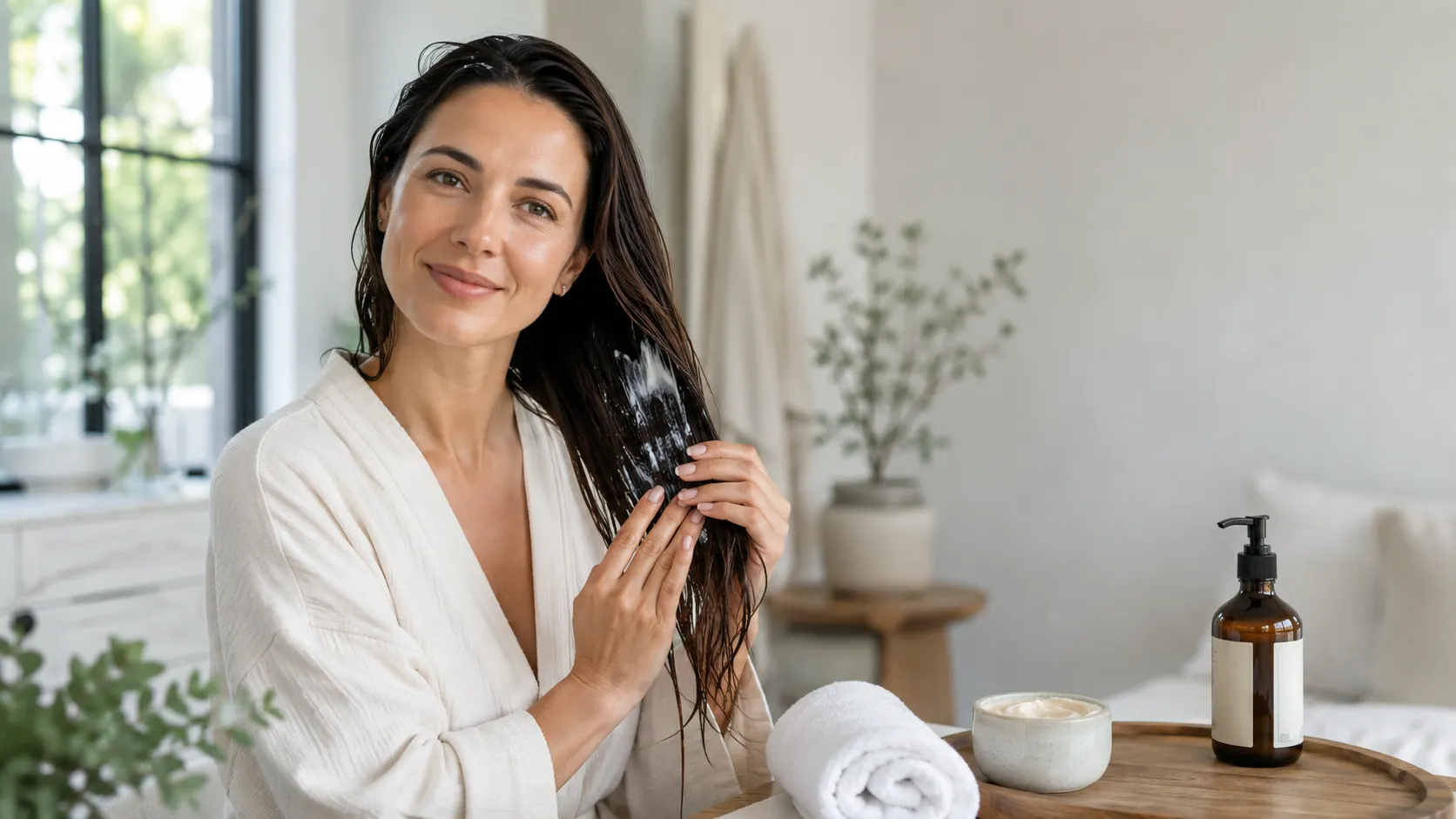
- Shampoo the scalp directly, massaging gently with your fingertips, and let the lather rinse through your lengths.
- Match your shampoo to your scalp: clarifying for oily, hydrating and sulfate-free for dry or sensitive, and an anti-dandruff formula if you are prone to flaking.
- Use lukewarm water, since hot water strips and irritates.
- Clarify periodically. A clarifying shampoo once or twice a month clears stubborn buildup from products and dry shampoo.
How often you cleanse depends on your hair type, which we cover in how often to wash your hair.
Should you exfoliate your scalp?
Just like facial skin, the scalp benefits from occasional exfoliation to clear dead skin and buildup that can clog follicles.
- Physical exfoliants: scalp scrubs or a scalp brush that gently lift debris.
- Chemical exfoliants: salicylic acid (a BHA) or glycolic acid that dissolve buildup, often found in clarifying or scalp shampoos.
- Frequency: about once a week, or every one to two weeks depending on your hair type and styling, always in moderation to avoid irritation.
An honest note: exfoliation does not directly grow hair. What it does is remove buildup and create a healthier environment, which indirectly supports better-looking, healthier hair. Anyone promising exfoliation alone regrows hair is overselling.
Does scalp massage help?
Massaging your scalp increases circulation, which nourishes the follicles, and it feels genuinely relaxing, easing tension and itch. Use your fingertips in slow, circular motions for a few minutes, during shampooing or with a scalp oil. Daily brushing with a soft, natural-bristle brush also helps redistribute your scalp's oils down the strands and sloughs away light debris. These are gentle, supportive habits rather than miracle growth cures, but they are worth doing.
How do you protect your scalp?
This is the step almost everyone forgets. Your scalp can sunburn, and along your part or any thinning areas, it is exposed to real UV damage, dryness, and increased skin cancer risk over time. Protect it with a spray or powder scalp sunscreen of SPF 30 or higher, a hat during peak sun, and shade between 10 a.m. and 4 p.m. Seasons matter too: scalps tend to dry out in winter, when a hydrating shampoo or scalp oil helps, and get oilier in summer, when more frequent cleansing keeps buildup down.
When should you see a dermatologist?
Scalp care handles the everyday, but some things need a professional. See a board-certified dermatologist for persistent flaking, redness, severe itching, thick scaling or plaques, painful or acne-like bumps, or noticeable hair shedding or thinning. These can signal conditions like seborrheic dermatitis, psoriasis, a fungal infection, or hair loss, all of which respond far better to proper diagnosis than to guesswork. Scalp care supports healthy hair, but it is not a substitute for medical treatment.
Expert tips
- Think of shampooing as scalp care, not just hair washing. It reframes the whole routine.
- Choose anti-dandruff shampoos with proven actives, zinc pyrithione, ketoconazole, or selenium sulfide, if you flake.
- Do not over-strip. A tight, squeaky scalp is a sign you went too harsh.
- Listen to your scalp through the seasons and adjust, just as you would your skincare.
- A calm, balanced scalp is the real goal, and it shows up in your hair.
Final takeaway
Healthy hair really does start at the roots. Treat your scalp like the skin it is, cleanse it gently, exfoliate occasionally, keep its microbiome balanced, and protect it from the sun, and you create the conditions for stronger, shinier hair to grow. Keep your expectations honest: scalp care supports healthy hair but does not replace medical treatment for real conditions. Tend the roots well, see a dermatologist when something feels off, and let your hair benefit from the foundation underneath.
This article is for general beauty and self-care education only and is not medical advice. For hair loss, persistent flaking, or a scalp condition, see a board-certified dermatologist.
 📌 Save
Love this guide? Save it 📌
Pin it to your favorite board so it's easy to find again — and share it with a friend who'd love it too.
Save to PinterestFrequently asked questions
Why is scalp care important for hair?
Because the scalp is the skin your hair grows from, and a healthy scalp creates the best environment for strong, shiny hair. A clogged, irritated, or imbalanced scalp leads to flaking, itching, and weaker-looking hair, so scalp health is the foundation of hair health.
Is the scalp really just skin?
Yes. Dermatologists describe the scalp as skin like any other location, just with more hair follicles. That is why it benefits from the same principles as facial skincare: gentle cleansing, occasional exfoliation, hydration, microbiome balance, and sun protection.
Does scalp exfoliation help hair grow?
Not directly. Exfoliation removes dead skin and buildup that can clog follicles, creating a healthier environment that indirectly supports better hair. It does not itself cause new growth, so be wary of products promising regrowth from exfoliation alone.
How often should I exfoliate my scalp?
About once a week, or every one to two weeks depending on your hair type and how much product you use. Over-exfoliating can irritate the scalp, so moderation matters. Use a gentle scrub, a scalp brush, or a salicylic acid shampoo.
How do I get rid of scalp buildup?
Cleanse regularly, use a clarifying shampoo once or twice a month, and add gentle exfoliation to lift dead skin and product residue. A scalp brush during shampooing helps. If buildup keeps returning despite this, a dermatologist can check for an underlying scalp issue.
Should I put sunscreen on my scalp?
Yes, especially along your part and any thinning areas, which are exposed to UV. Use a spray or powder scalp SPF 30 or higher, wear a hat in strong sun, and avoid peak UV hours. The scalp can burn and is vulnerable to sun damage like any skin.
Does scalp massage actually do anything?
It increases circulation to the follicles and relieves tension and itch, and it feels relaxing. It is a supportive habit for scalp health rather than a proven standalone growth treatment, so enjoy it as part of a broader routine.
When should I see a dermatologist about my scalp?
See one for persistent flaking, redness, severe itching, thick scaling, painful or acne-like bumps, or noticeable hair shedding or thinning. These can indicate conditions like seborrheic dermatitis, psoriasis, or hair loss that need proper diagnosis and treatment.
We cite sources and update this guide regularly.