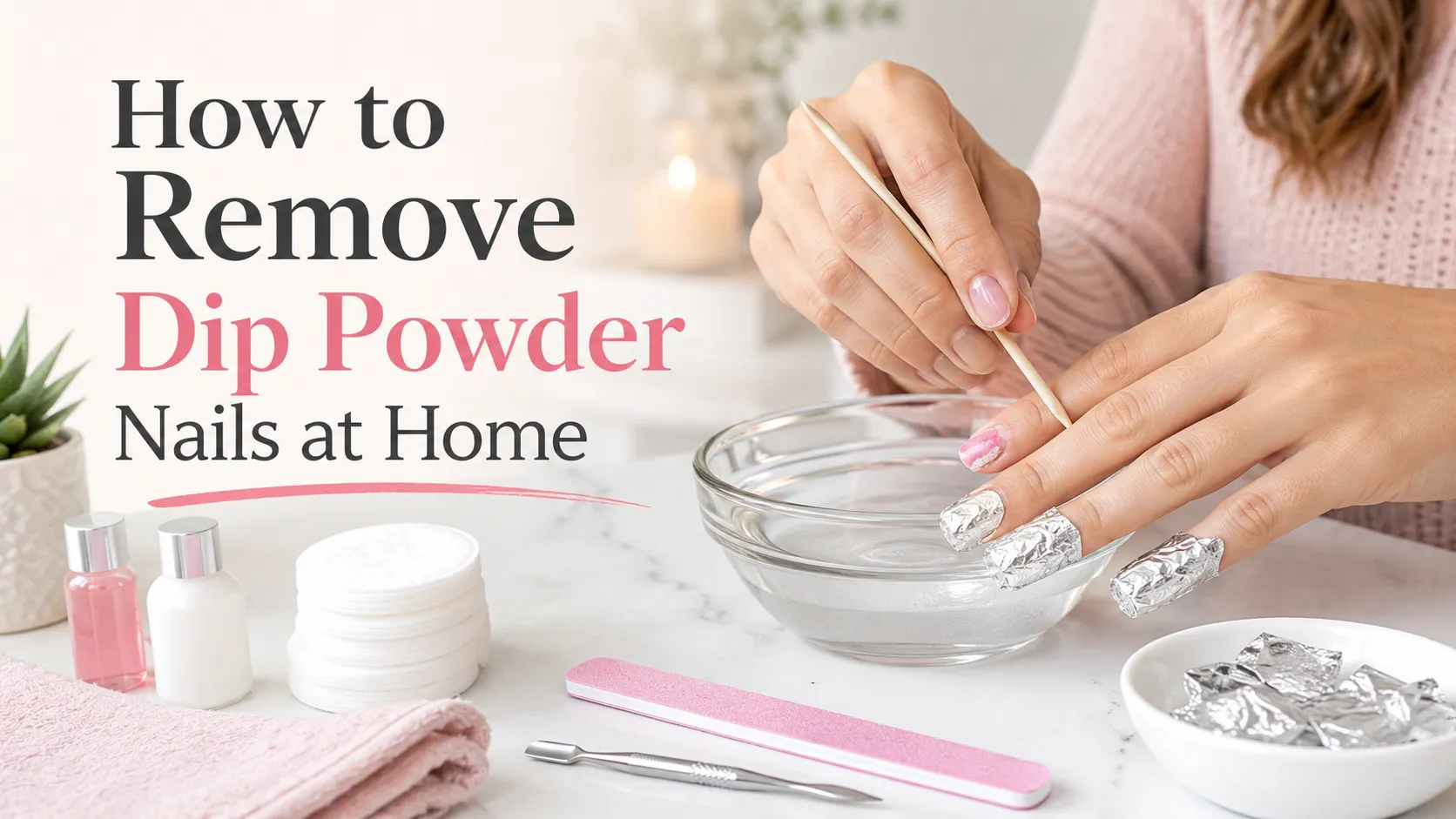
To remove dip powder nails at home without damage, file off the shiny top layer, protect your cuticles with petroleum jelly, then soak the nails in 100% acetone using a cotton-and-wrap or baggie method for about 10 to 15 minutes. The softened dip should flake away with a gentle wipe or a wooden stick. Never pick or scrape it off, since that pulls layers from your natural nail.
Dip powder earned its fans for good reason. It lasts about two weeks or longer, skips the UV lamp, and feels sturdy enough to survive real life. The catch comes when it is time for a change, because dip is bonded to your nail with a glue in the same family as super glue. That strength is lovely on, and a problem if you try to pick it off.
Dip powder earned its fans for good reason. It lasts about two weeks or longer, skips the UV lamp, and feels sturdy enough to survive real life. The catch comes when it is time for a change, because dip is bonded to your nail with a glue in the same family as super glue. That strength is lovely on, and a problem if you try to pick it off.
Here is the calm, no-damage way to take dip powder off at home, the same soak-off approach nail pros use, plus the after-care that keeps your natural nails healthy for the next set.
Key takeaways
- Pure 100% acetone is the only thing that reliably breaks down dip. Regular and acetone-free removers will not work.
- Filing off the glossy sealant first lets the acetone get in faster, so you are not tempted to force it.
- Dip usually softens in 10 to 15 minutes, often quicker than gel, because the glue dissolves readily.
- Warm acetone speeds removal, but heat it only in a hot water bath, never in a microwave or over a flame.
- After-care matters. Acetone is drying, so finish with cuticle oil and hand cream every time.
What dip powder actually is
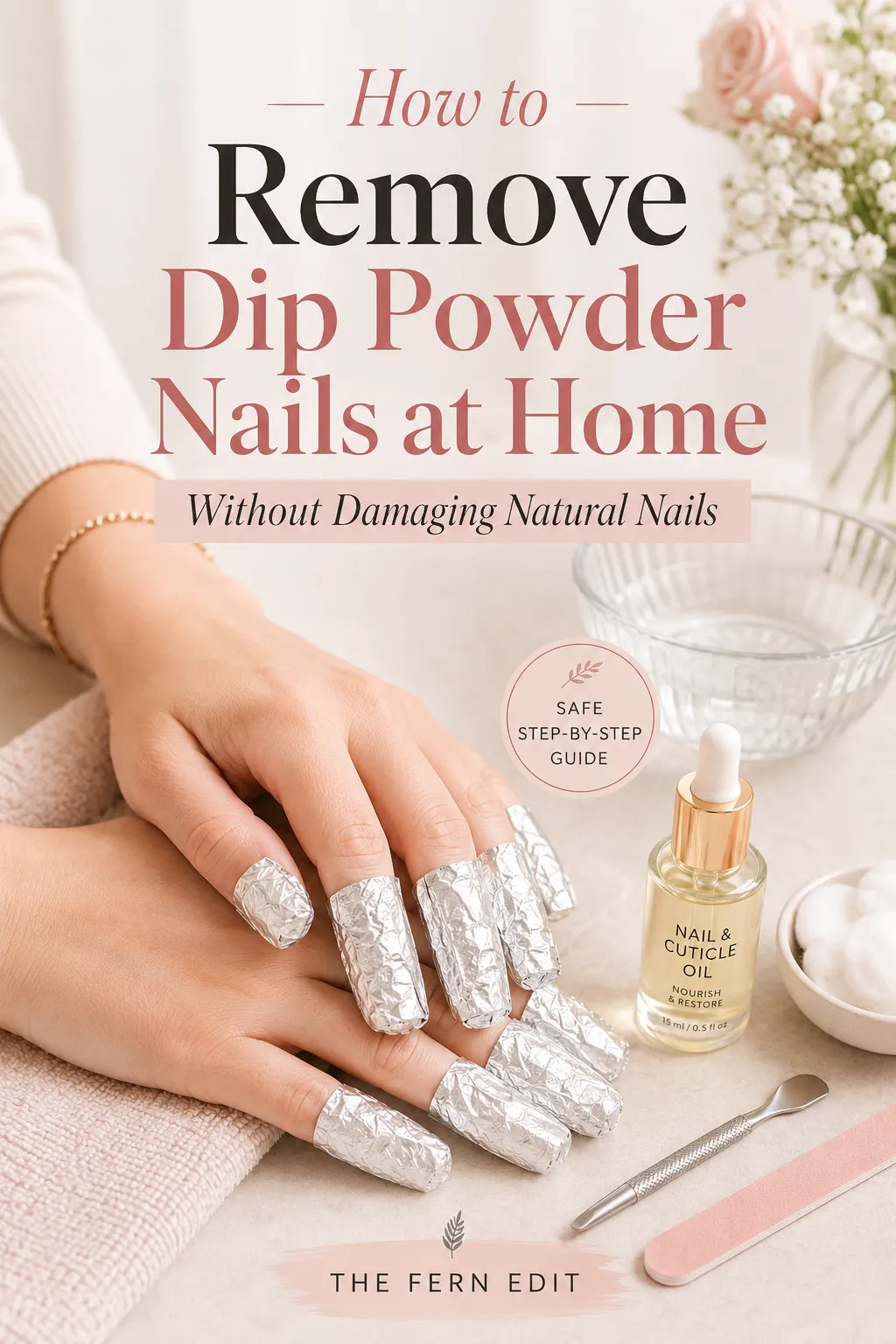
Knowing what you are removing makes the process easier. Dip powder, often sold under the brand name SNS, uses a colored powder set with a liquid adhesive instead of polish or UV gel. That adhesive is usually cyanoacrylate, the same family of ingredient as super glue, which is why dip is so durable. The upside for removal is that cyanoacrylate is sensitive to solvents, so a proper acetone soak loosens it well, often with less scraping than gel needs.
What you'll need
- 100% pure acetone
- Cotton balls or pads, plus a fine-grit file or buffer
- Aluminum foil, plastic food wrap, or a few small zip-top bags
- A wooden or orange cuticle stick
- Petroleum jelly
- A bowl of hot water (for the warm-acetone method)
- Cuticle oil and a rich hand cream
- Optional: rubbing alcohol to wipe away residue, and a nail strengthener
The soak-off method (step by step)

Plan for around 20 to 30 minutes total, working on one hand at a time.
Step 1: Protect your space and skin
Lay down plastic wrap and a towel, work somewhere ventilated, and rub petroleum jelly onto your cuticles and the skin around each nail.
Step 2: File off the shine
With a fine-grit file or buffer, gently scuff the glossy sealant layer until it looks dull. Do not over-file. You are only opening the surface so acetone can reach the powder, not thinning your natural nail.
Step 3: Soak and wrap
Soak a cotton pad in acetone, press it onto the nail, and wrap the fingertip in foil or plastic wrap. Wrap snugly enough to hold the cotton in place.
Step 4: Wait
Set a timer for 10 to 15 minutes. Dip often softens faster than gel, so check one nail early. It should look soft and flaky.
Step 5: Wipe and gently push
Most of the dip should wipe away with the cotton. For any stubborn spots, use a wooden stick at a low angle to push it off, or rub with fresh acetone-soaked cotton. Never dig or scrape.
Step 6: Smooth, wash, and hydrate
Lightly buff the nail smooth, wipe with a little rubbing alcohol if you have it, then wash your hands. Finish with cuticle oil and hand cream.
The faster warm-acetone method (safely)
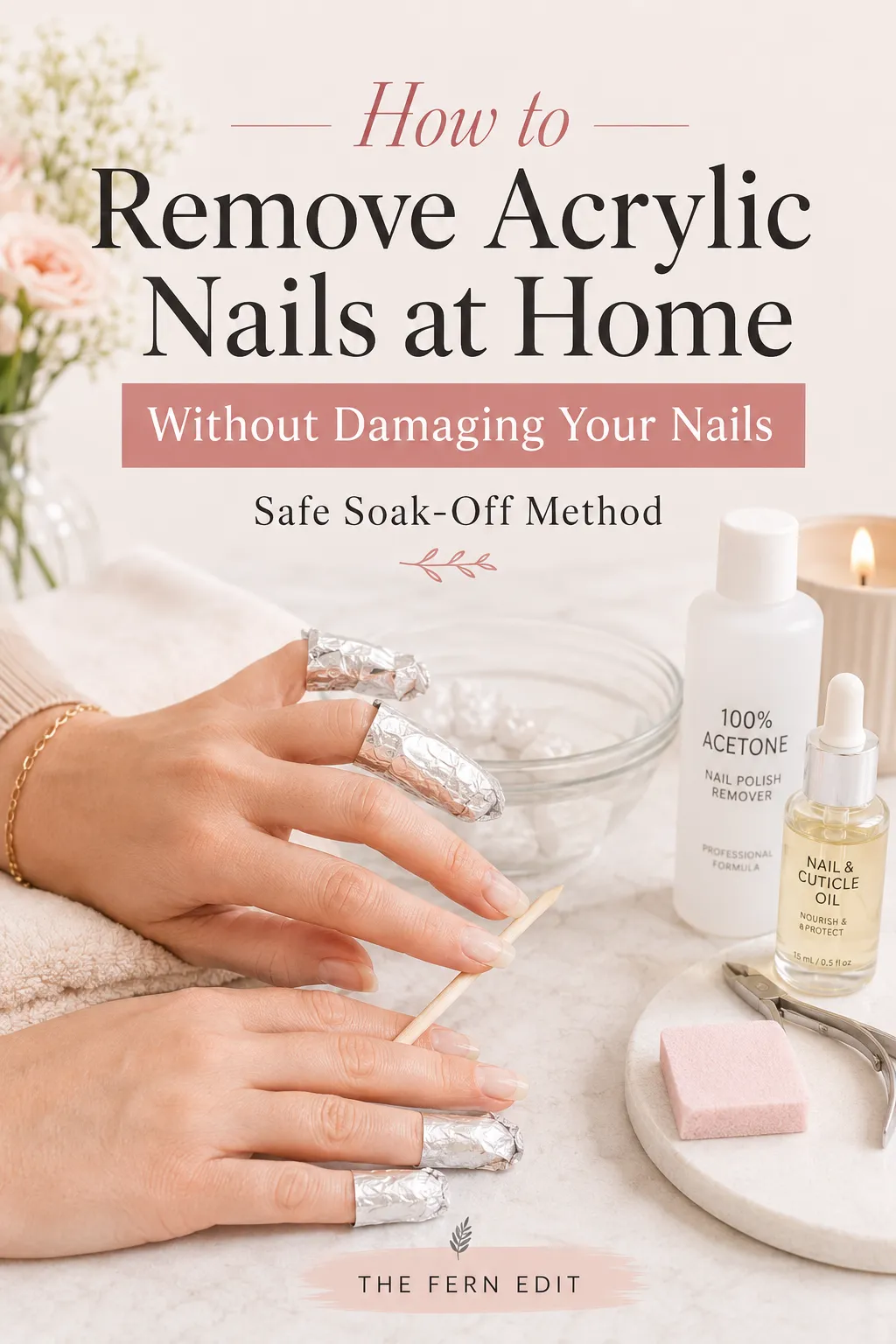
Nail pros speed things up with gentle warmth, and you can too. After filing, pour acetone into a small bowl, or a zip-top bag, and set that container inside a larger bowl of hot water. The warmth helps the acetone work faster through heat conduction. Then either soak your fingertips for 10 to 15 minutes, moving them against a folded paper towel to create friction, or hold the acetone-soaked cotton against each nail.
Important: warm the acetone only with a hot water bath. Acetone is highly flammable, so never microwave it or heat it directly. If you soak your bare fingers in a bowl, the surrounding skin gets more acetone exposure, so the cotton-and-wrap method is gentler on your skin.
How long does it take?
Most dip removals run about 20 to 30 minutes from setup to hydration, with the acetone soak itself being 10 to 15 minutes. Darker colors, glitter, and extra layers can take a little longer. If a nail is not ready, the fix is always more soak time, never more force.
Common mistakes that damage your nails
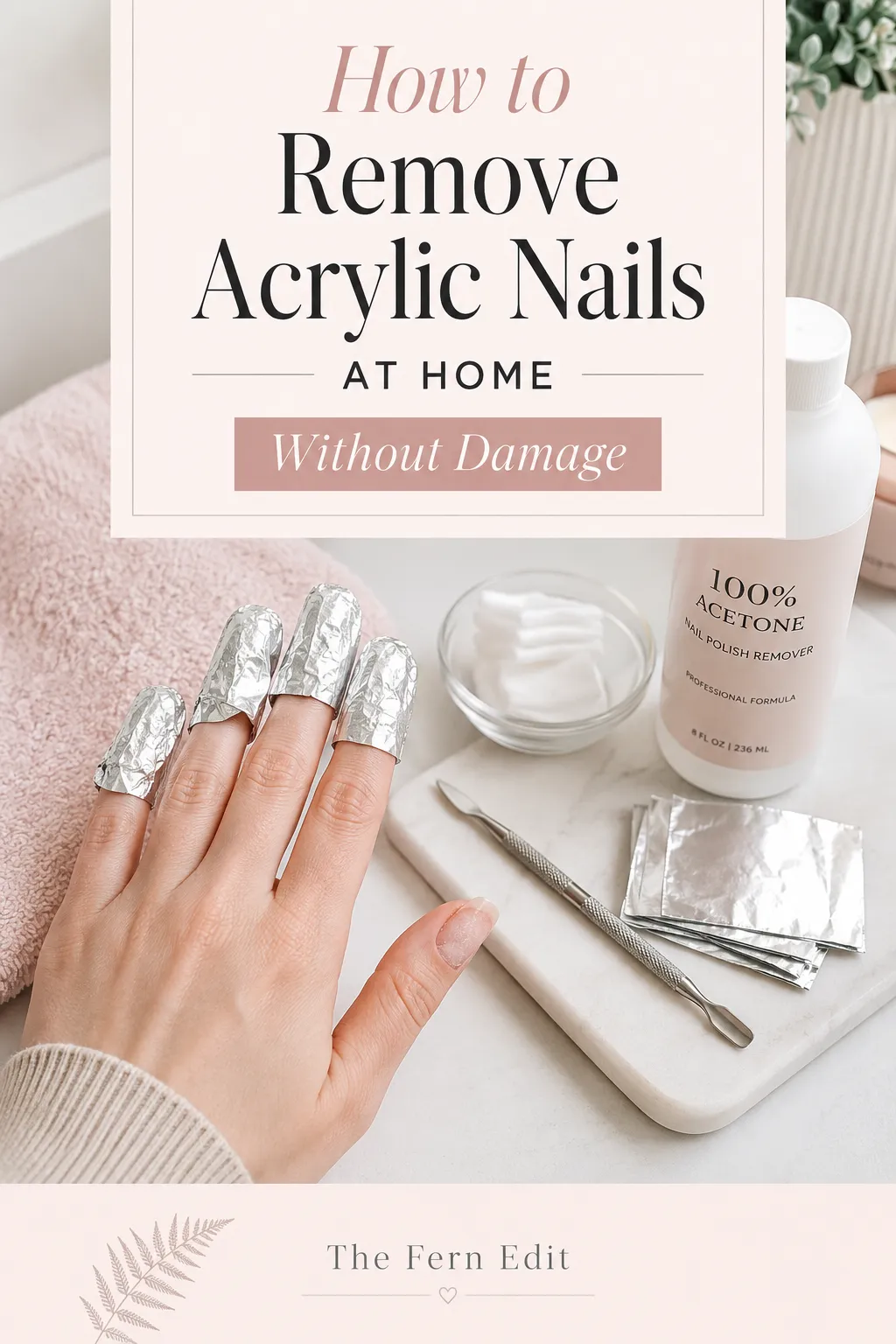
- Picking or peeling the dip off. It feels satisfying and it strips layers of your natural nail, leaving it weak and thin.
- Filing the dip off completely. Heavy filing to grind dip away can dent and thin the nail. File only to break the seal, then let acetone do the work.
- Using regular or acetone-free remover. They will not dissolve dip, which tempts people into picking.
- Scraping with metal tools. Aggressive scraping causes white spots and damage. A wooden stick at a low angle is kinder.
- Skipping after-care. Acetone dries the nail, so oil and cream are what keep it healthy.
After removal: recovering your natural nails
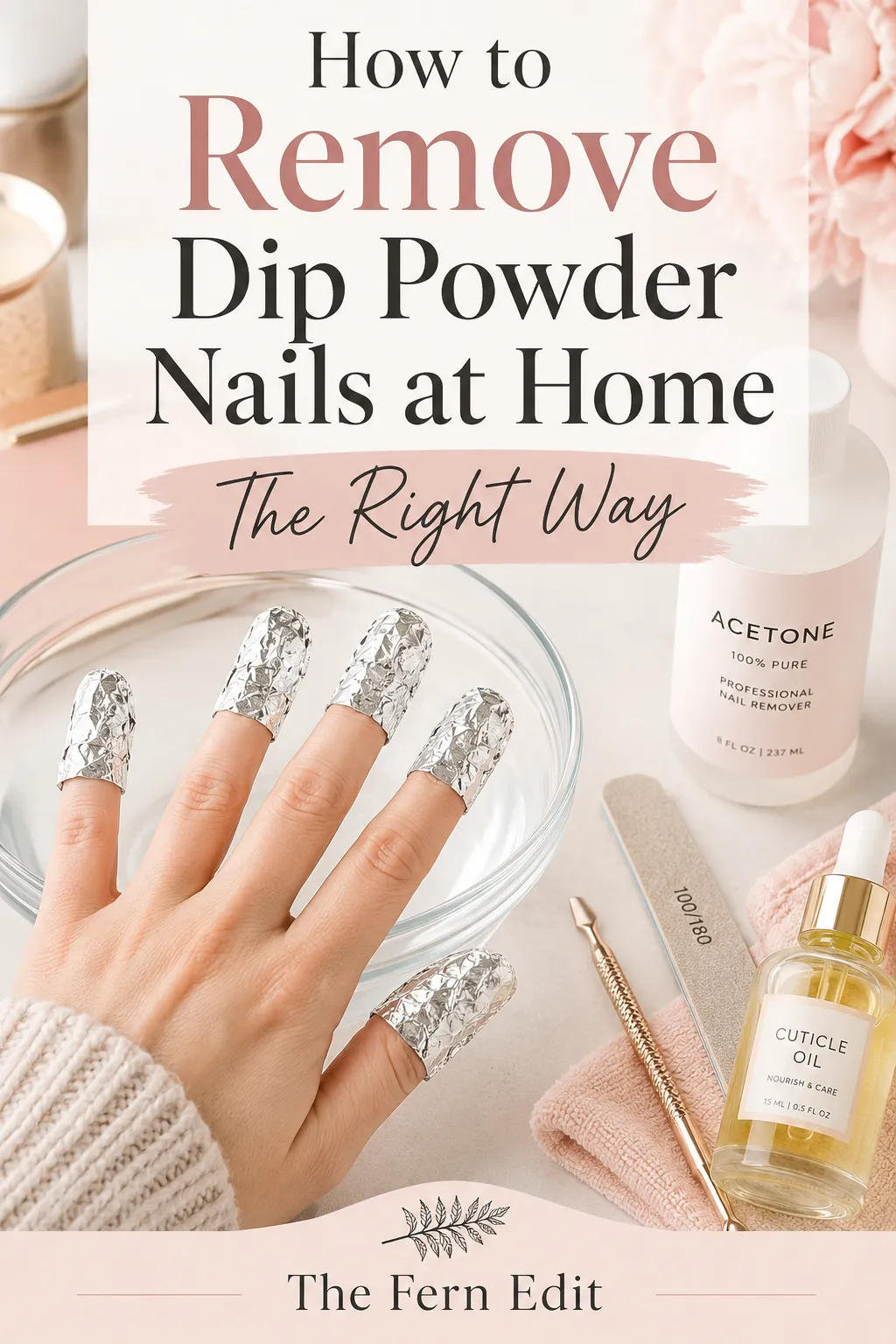
Right after dip comes off, nails can feel a little dry or soft, which is normal after acetone. Help them bounce back:
- Apply cuticle oil twice a day to rehydrate the nail and cuticle.
- Use a rich hand cream, especially after washing your hands.
- Give your nails a short break before the next dip set.
- Consider a nail strengthener while they recover.
For the daily routine that helps weak nails firm up over time, see our guide on how to grow stronger nails. The same gentle soak-first approach works for gel removal too.
A safety note on acetone
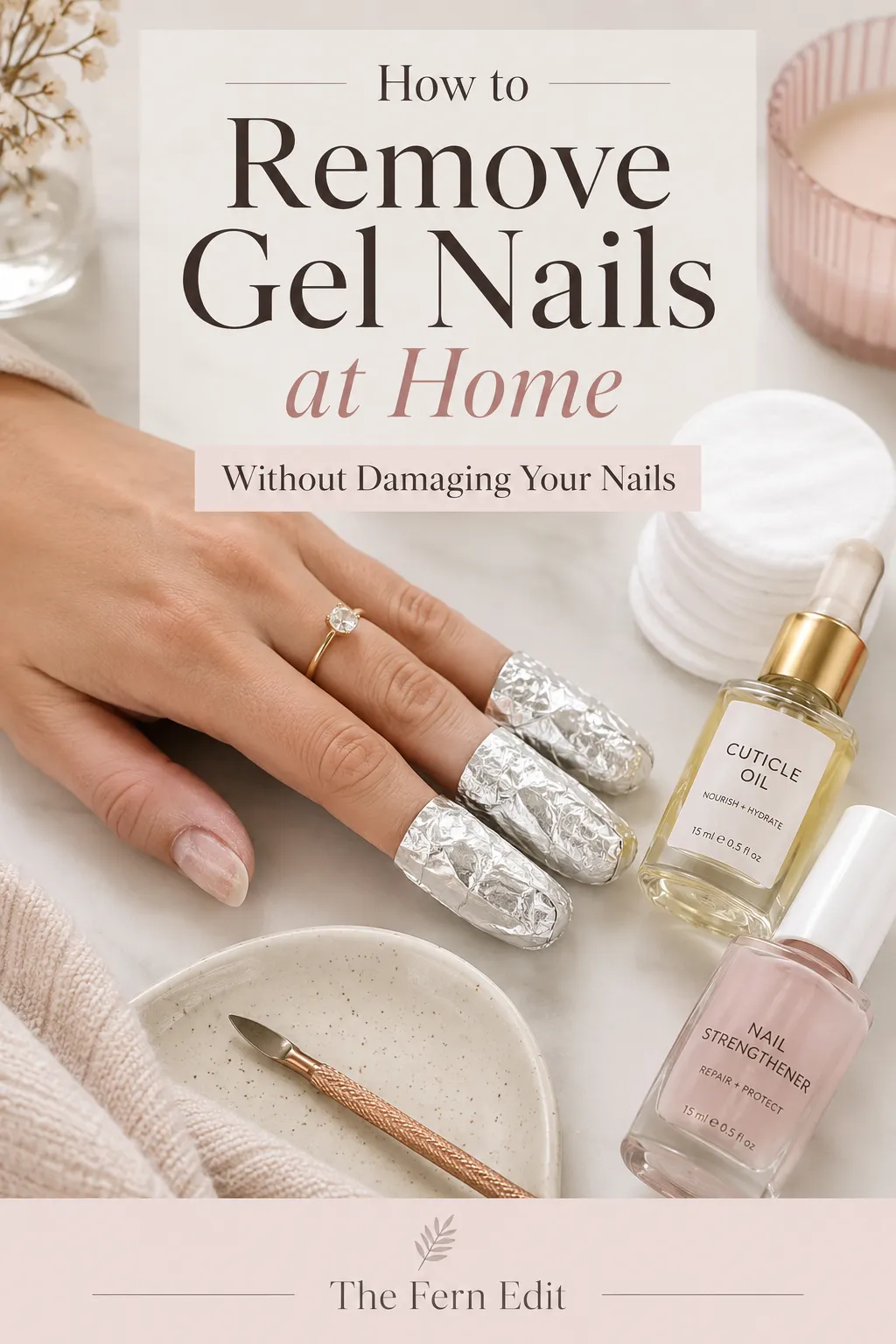
Acetone is a strong solvent. If you have eczema, psoriasis, or any cuts around your nails, skip the bowl soak and use the targeted cotton method so less skin is exposed, or wait until skin has healed. If you have never had acetone on your skin for this long, it is reasonable to patch-test first: dab a little on the skin near one nail and watch for redness, swelling, or itching over a day. Signs of irritation are your cue to give dip a rest.
Expert tips
- Set a timer and check one nail early, since dip can be ready quickly.
- A hot-water-warmed acetone bath speeds things up, with no open flame ever.
- Do one hand fully, then the other, so you always have a free hand.
- Do not reapply dip the same day. Let your nails rehydrate first.
- Keep cuticle oil by your sink and use it daily to extend your next manicure.
Save this for later

Pin this for next time. The short version: file the shine, protect your skin, soak in 100% acetone for 10 to 15 minutes, wipe the dip away, then hydrate. No picking, ever.
Final takeaway
Dip powder is built to last, so the kind way to take it off is to dissolve it, not fight it. File the seal, protect your skin, soak in 100% acetone, and let the dip flake away, warming the acetone safely if you want speed. Then give your nails oil and cream so they are ready for whatever you choose next. Gentle removal today is what keeps your natural nails strong for every future manicure.
This article is for general beauty and self-care education only and is not medical advice. If you notice nail pain, separation, or signs of infection, see a board-certified dermatologist.
Nail inspiration to save 💅
Tap any look to open it — then save your favorites.


 📌 Save
Love this guide? Save it 📌
Pin it to your favorite board so it's easy to find again — and share it with a friend who'd love it too.
Save to PinterestFrequently asked questions
Can I remove dip powder nails without acetone?
True dip needs pure acetone to break down reliably. Warm soapy water or alcohol can help loosen dip that is already lifting, but they are slow and incomplete. Picking it off without acetone is what damages nails, so it is worth using acetone properly instead.
How long does it take to remove dip nails at home?
About 20 to 30 minutes total, with a 10 to 15 minute acetone soak. Warming the acetone in a hot water bath can shorten it.
Is dip powder easier to remove than gel?
Often, yes. Dip is set with a cyanoacrylate glue that dissolves readily in acetone, so it tends to flake off with less scraping than gel, which can mean less stress on the natural nail.
Will removing dip at home ruin my nails?
Not if you soak instead of pick. Damage comes from peeling or aggressive filing, both of which strip the nail surface. A proper soak protects the nail underneath.
Can I warm the acetone to speed it up?
Yes, but only in a hot water bath. Acetone is flammable, so never microwave it or heat it directly. Place your acetone bowl inside a larger bowl of hot water.
What is SNS, and does it come off the same way?
SNS is simply a popular brand of dip powder. The removal process is the same: file the seal, soak in acetone, wipe away.
Why do my nails feel dry after removing dip?
Acetone is dehydrating by nature. That is why the oil-and-cream after-care step matters, and why a short break between sets helps.
What should I put on my nails after dip removal?
Cuticle oil and hand cream right away, then cuticle oil twice daily for the next week. A nail strengthener can help during the break.

We cite sources and update this guide regularly.