
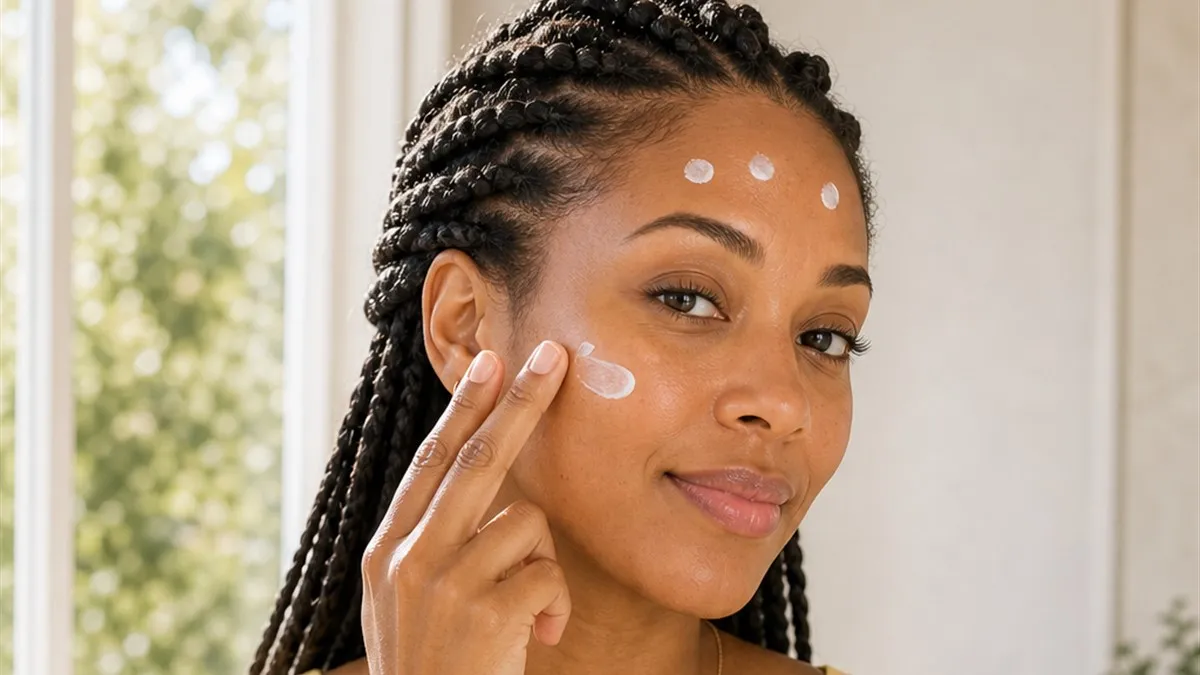
Yes, daily sunscreen is one of the most effective ways to prevent wrinkles, because UV rays break down the collagen and elastin that keep skin firm. Use a broad-spectrum SPF 30 or higher every day, apply enough, and reapply outdoors. It is the single most proven anti-aging step.
Why daily sunscreen is the most important anti-aging step for your forehead.
If you only did one thing for aging skin, dermatologists would tell you to wear sunscreen. UV exposure is the biggest external cause of wrinkles, so daily SPF is genuinely the most powerful anti-wrinkle habit you have. Here is how sunscreen protects against lines and how to use it well.
Quick answer
Sunscreen prevents wrinkles by blocking the UV rays that break down collagen and elastin, the fibers that keep skin firm and smooth. Wear a broad-spectrum sunscreen of SPF 30 or higher every day, use enough (about a quarter teaspoon for the face), and reapply every two hours when outdoors.
Key takeaways
- Most visible skin aging is linked to sun exposure, not just the passage of time.
- Daily broad-spectrum SPF is the most proven way to prevent new wrinkles.
- It also protects the results of your other anti-aging products.
How does the sun cause wrinkles?
UVA and UVB rays penetrate the skin and damage collagen and elastin while generating free radicals. Over years, this photoaging shows up as wrinkles, sagging, and uneven tone. The two types do different jobs: UVB is the shorter-wave, higher-energy ray behind sunburn, while UVA penetrates more deeply and is most associated with aging changes. Because UVA is present year-round and passes through clouds and windows, the damage adds up even on days you are not at the beach. This is why sun is such a major cause, as covered in what causes forehead wrinkles.
Does sunscreen actually prevent wrinkles?
Yes, and it is well supported. Research, including a well-known Australian study, found that people who used sunscreen daily showed noticeably less skin aging over years than those who used it occasionally. That fits what dermatologists see in practice: prevention is far easier than reversal, which is what makes daily SPF so valuable. You are not chasing a dramatic overnight change here — you are stopping new damage from stacking up, quietly, every single day.
Can sunscreen reverse wrinkles you already have?
This is where honesty matters. Sunscreen's main job is prevention, not repair, so it will not erase established lines. What it can do is give your skin a break from constant UV assault, and when that daily damage stops, skin has a better chance to carry out its own gradual maintenance — some studies have noted mild improvement in the look of sun-damaged skin once consistent protection begins. So think of it this way: sunscreen protects the progress your other products (like a retinoid) are making, rather than reversing wrinkles on its own.
How do you choose a sunscreen for aging skin?
Three things matter most:
- Broad-spectrum, so it covers both UVA (aging) and UVB (burning).
- SPF 30 or higher for everyday use.
- A texture you like, since the best sunscreen is the one you will actually wear daily.
Beyond that, look for a formula that layers well under makeup if you wear it, and consider one with added antioxidants for a little extra daily defense. Dry skin often prefers a hydrating or cream formula; oily skin tends to like a lighter fluid or gel.
Mineral or chemical sunscreen — which is better for wrinkles?
Both prevent the UV damage that causes wrinkles, so neither is "anti-aging superior" — the best one is the one you will reapply. Mineral sunscreens (zinc oxide, titanium dioxide) sit on top of the skin and are a common choice for sensitive or reactive skin. Chemical sunscreens absorb UV and tend to feel lighter and blend clear, which many people find easier to wear daily. Modern formulas of both are elegant. If a white cast bothers you, a chemical or a tinted mineral formula solves it; if your skin is easily irritated, mineral is a gentle default.
How much sunscreen should you use, and how often?
Most people apply far too little, which lowers the protection well below the number on the bottle. Use roughly a quarter teaspoon for the face and neck, and do not forget the forehead, ears, and hairline. Apply as the last step of your morning routine, after moisturizer, and let it set for a few minutes before makeup. Reapply every two hours when you are outdoors, and after sweating or swimming. On a normal indoor day, a solid morning application is the anchor of your protection.
Do you need sunscreen indoors and in winter?
Yes to both, because UVA is present year-round and passes through windows, whether at home, in the office, or in the car. Cold, cloudy days still carry UV, and snow and water reflect it back at you. This is exactly why "every day, year-round" is the rule rather than "sunny days only." If you spend all day far from any window, your exposure is genuinely low — but building the daily habit is easier than deciding each morning whether today counts.
Is a higher SPF always better for anti-aging?
Not dramatically. SPF mainly measures protection against UVB, and the jump in real-world protection between SPF 30 and much higher numbers is smaller than the numbers suggest — SPF 30 blocks a large share of UVB, and higher SPFs add only a little more. What matters far more is that the sunscreen is broad-spectrum (so it also covers the UVA linked to aging), that you apply enough, and that you reapply. A high SPF applied too thinly protects less than a moderate SPF applied properly. Choose SPF 30 or above, then focus on using it well rather than chasing the biggest number.
Does makeup or moisturizer with SPF count?
It helps, but it is usually not enough on its own. Most people apply makeup and moisturizer far too thinly to reach the protection level on the label, and they rarely reapply foundation through the day. Treat SPF in your makeup or moisturizer as a bonus layer on top of a proper dedicated sunscreen, not a replacement for it. If you genuinely want the makeup to carry the load on a low-exposure day, you would need to apply it generously — which most of us do not. A separate sunscreen step remains the reliable anchor.
How do you know if you are using enough?
The most common mistake is under-applying, which quietly cuts your real protection. A good visual guide for the face and neck is about a quarter teaspoon, or the classic "two-finger" rule — a line of sunscreen along the length of your index and middle fingers. If your bottle seems to last for many months of daily use, you are probably applying too little. It should feel like a genuine layer, not a whisper. Using enough, every day, is what turns the SPF number on the bottle into actual protection.
How it fits your anti-aging routine
Sunscreen slots in as the final morning step of the forehead wrinkle routine, and it becomes essential when using retinol, which increases sun sensitivity. It is also the foundation of any needle-free plan in forehead wrinkles without Botox — nothing else you do holds up if UV keeps breaking collagen down.
Final takeaway
Sunscreen is the most proven anti-wrinkle step there is, because it stops the UV damage that causes lines in the first place. Choose a broad-spectrum SPF 30+ you enjoy wearing, apply enough every morning, reapply outdoors, and wear it year-round. It protects both your skin and everything else you do for it.
General skincare education, not medical advice.
 📌 Save
Love this guide? Save it 📌
Pin it to your favorite board so it's easy to find again — and share it with a friend who'd love it too.
Save to PinterestFrequently asked questions
Does sunscreen prevent wrinkles?
Yes. Sunscreen blocks the UV rays that break down collagen and elastin, which are the main external cause of wrinkles. Daily use is one of the most proven ways to prevent new lines and sagging.
What SPF is best for anti-aging?
A broad-spectrum sunscreen of SPF 30 or higher is recommended for daily anti-aging use. Broad-spectrum is key, since UVA rays are the ones most associated with skin aging.
Do I need sunscreen indoors?
It is a good idea, because UVA rays pass through windows and contribute to aging over time. If you sit near windows or drive often, daily sunscreen still helps protect your skin.
How much sunscreen should I use on my face?
About a quarter teaspoon for the face, or a two-finger length, is the usual guide. Most people apply too little, which reduces the protection, so be generous and cover the forehead, ears, and neck.
Can sunscreen reverse existing wrinkles?
Its main power is prevention rather than reversal. That said, consistent daily use lets skin repair some damage over time and stops new wrinkles from forming, which is why it is so valuable.

Medically reviewed by The Fern Edit Editorial Team, . We cite sources and update this guide regularly.