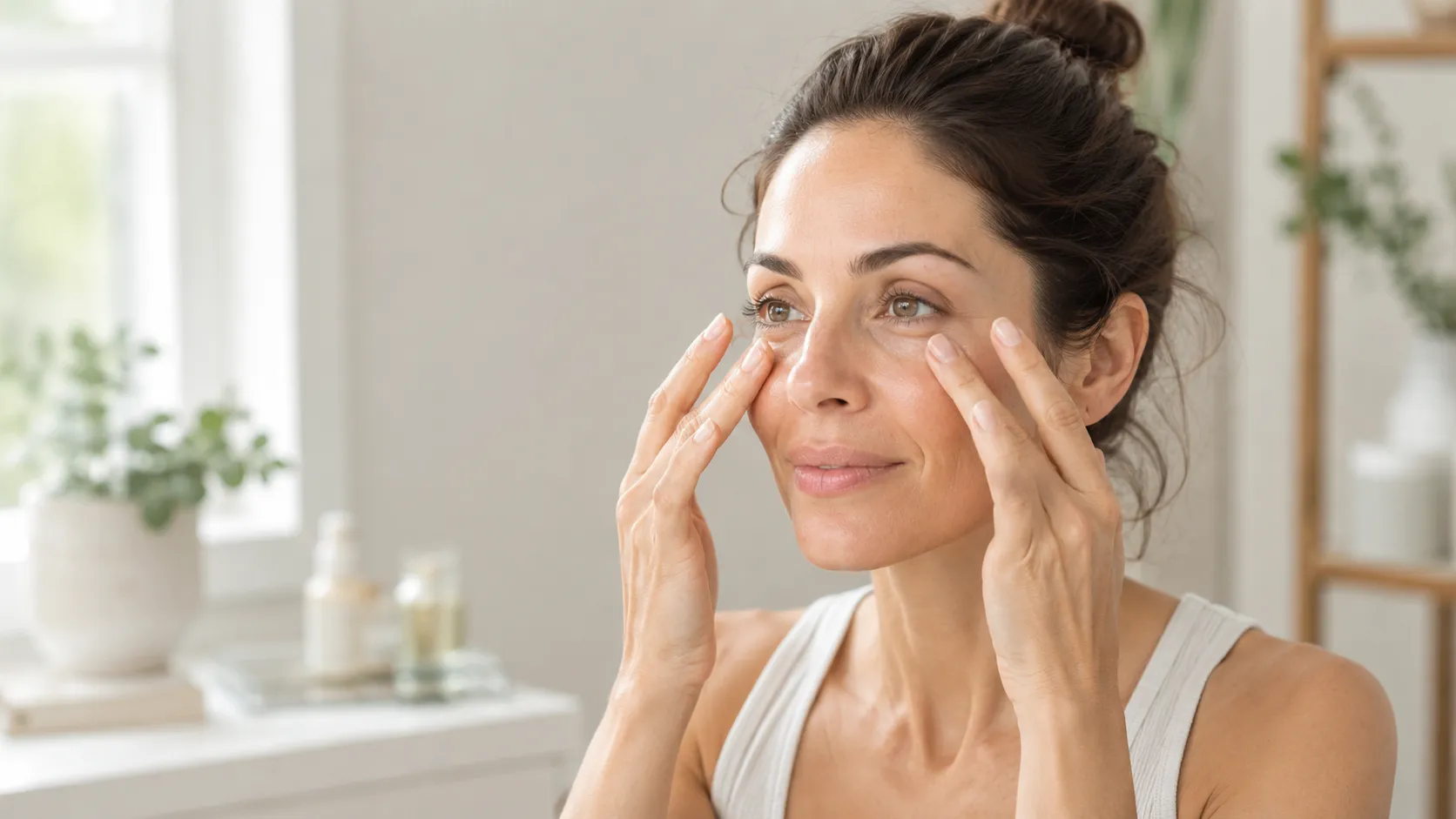

Face yoga for the cheeks uses targeted exercises to engage and tone the cheek muscles, which can support a fuller, more lifted appearance over time. This is the area with the most research support, since a well-known study found fuller cheeks were the most noticeable result of consistent facial exercise. It works best with daily practice and realistic expectations, and it pairs well with good skincare. It cannot replace fillers or restore major volume loss.
Of all the areas face yoga targets, the cheeks may be the most promising. When researchers studied facial exercises, fuller, more lifted cheeks were the change people noticed most. As we age, cheeks can lose volume and start to look flatter or droopier, which softens the whole face. Gentle, consistent cheek exercises can help support a more lifted, fuller appearance, no fillers required.

Of all the areas face yoga targets, the cheeks may be the most promising. When researchers studied facial exercises, fuller, more lifted cheeks were the change people noticed most. As we age, cheeks can lose volume and start to look flatter or droopier, which softens the whole face. Gentle, consistent cheek exercises can help support a more lifted, fuller appearance, no fillers required.
Here is a simple cheek-focused face yoga routine and what you can realistically expect from it.
Key Takeaways
- Cheeks lose volume and lift with age as fat pads shift and collagen fades.
- The cheeks showed the most improvement in face yoga research.
- Targeted exercises support fuller, more lifted-looking cheeks over time.
- Gentle technique with oil protects delicate skin.
- Results build over weeks of consistent practice.
- Pair with skincare and sun protection for the best effect.
Why Cheeks Lose Fullness and Lift
Several changes flatten and lower the cheeks over time. The fat pads that give young cheeks their roundness gradually shrink and shift downward, which is why cheeks can look hollower up top and fuller toward the jaw. Collagen and elastin decline, so skin loses firmness and lift. The cheek muscles can weaken with age. And sun exposure speeds collagen loss in this prominent area.
The result is a face that looks less lifted and more tired. Supporting the cheek muscles and skin can help counter some of this softening.
Why the Cheeks Respond Well to Face Yoga
The cheeks are where face yoga has the most encouraging evidence. In a frequently cited study from Northwestern University, women who did consistent facial exercises for about 20 weeks were rated as looking younger, with fuller upper and lower cheeks being the standout change.
This makes sense, because the cheeks sit over muscles you can engage directly, and toning those muscles helps support the skin and fat above them. While results are modest rather than dramatic, the cheeks are the area where face yoga gives the best return for your effort.
What to Realistically Expect
Honest expectations help you stay consistent and satisfied. Face yoga for the cheeks can support fuller, firmer, more lifted-looking cheeks, improve tone and circulation, and contribute to a more youthful, rested appearance over a few months of regular practice.
What it cannot do is replace dermal fillers, restore significant volume loss, or work overnight. Anyone promising dramatic, filler-like fullness from exercise alone is overstating it. Used consistently and paired with good skincare, though, cheek face yoga is one of the more rewarding facial exercises you can do.
Before You Begin
A little prep makes the routine more comfortable and effective.
- Wash your hands and cleanse your face.
- Apply a little facial oil or moisturizer so your fingers glide and skin is not tugged.
- Sit tall with relaxed shoulders.
- Use a mirror until the movements feel natural.
Keep everything gentle and controlled, focusing on feeling the cheek muscles engage.
The Cheek Face Yoga Routine
Move through these slowly and with control.
1. Cheek Lifter (about 1.5 minutes)
Open your mouth slightly into an "O" shape, covering your teeth with your lips. Smile to lift the cheek muscles while keeping the "O," then relax. You should feel the cheeks working. Repeat 8 to 10 times.
2. Smile Hold (about 1.5 minutes)
Smile as wide as is comfortable with your lips closed, feeling the cheeks lift. Place your fingers lightly on the tops of your cheeks to feel the engagement. Hold for 5 seconds, relax, and repeat several times.
3. Cheek Puff Pass (about 1 minute)
Take a breath and puff out one cheek, then slowly pass the air to the other cheek, back and forth, for about a minute. This gently works and stretches the cheek muscles.
4. Lifted Smile Press (about 1.5 minutes)
Smile gently, then place your fingertips on the cheekbones. Lightly lift the cheeks upward as you hold the smile, feeling the muscles support the lift. Hold a few seconds, release, and repeat.
5. Cheek Sculpt Massage (about 1 minute)
Using your knuckles or fingertips with a little oil, gently sweep upward and outward from the sides of the nose across the cheeks toward the temples. This supports circulation and a lifted look.
6. Relaxation Finish (about 30 seconds)
Relax your face completely, take a few slow breaths, and gently press your palms over your cheeks to finish.
The full routine takes about 6 to 7 minutes once familiar.
How Often to Practice
Aim for daily or most days of the week. The cheek muscles, like any muscles, respond to regular, consistent work. The Northwestern participants practiced daily for weeks before tapering, which is a helpful model: commit to daily practice early on, then maintain.
Give it time. Fuller, more lifted-looking cheeks typically show over 8 to 12 weeks or more of consistent practice, with continued benefit the longer you keep going.
Tips for Fuller-Looking Cheeks
Beyond the exercises, a few things support the look of your cheeks. Daily sunscreen protects the collagen that keeps cheeks firm, while a retinoid and vitamin C support collagen over time. Good hydration plumps skin so cheeks look fuller. A cream or powder blush placed on the apples of the cheeks instantly adds a healthy, lifted look. And staying consistent with your face yoga is what makes the muscle-tone benefits stick.
Combining With Skincare and Gua Sha
Cheek face yoga pairs nicely with the rest of your routine. Do your cheek exercises, then add a few minutes of gua sha, sweeping upward and outward across the cheeks toward the temples with a little oil. Face yoga tones the muscles while gua sha supports circulation and a sculpted finish. Layering a vitamin C serum and sunscreen on top protects and supports the area between sessions.

Common Mistakes
- Pulling or pressing too hard. Gentle engagement protects delicate cheek skin.
- Skipping the oil. Dry friction tugs at the skin.
- Expecting filler-like fullness. Face yoga supports a modest lift, not dramatic volume.
- Practicing inconsistently. Cheek tone needs regular work to show.
- Forgetting skincare and sunscreen. They protect the firmness you are building.
Final Takeaway
If you are going to focus your face yoga energy anywhere, the cheeks are a smart place to start, since this is where the practice shows the most promise. Engage and lift the cheek muscles with a short daily routine, keep your touch gentle, and pair it with sunscreen and good skincare. Over a few months of consistent practice, fuller, more lifted-looking cheeks are a realistic reward, the natural, no-needle way. Stay patient, enjoy the ritual, and let steady effort do its quiet work.
This article is for general beauty and self-care education only and is not medical advice. Be gentle with your skin and consult a professional for any specific concerns.
 📌 Save
Love this guide? Save it 📌
Pin it to your favorite board so it's easy to find again — and share it with a friend who'd love it too.
Save to PinterestFrequently asked questions
Does face yoga work for the cheeks?
The cheeks are where face yoga has the most research support. A well-known study found fuller, more lifted cheeks were the most noticeable result of consistent facial exercise. With regular practice, cheek face yoga can support a fuller, more lifted look, though it cannot replace fillers.
What face yoga exercises lift the cheeks?
Effective moves include the cheek lifter, smile hold, cheek puff pass, lifted smile press, and an upward cheek massage. Done gently and consistently, they tone and support the cheek area.
How long until my cheeks look fuller?
Fuller, more lifted-looking cheeks usually show over 8 to 12 weeks or more of consistent daily practice, with continued benefit the longer you keep it up.
Can face yoga replace cheek fillers?
No. Face yoga supports a modest, natural lift and fullness through muscle tone, but it cannot restore major volume loss or replicate dermal fillers.
How often should I do cheek face yoga?
Daily or most days of the week is ideal. The cheek muscles respond to regular, consistent practice rather than occasional sessions.
Why do cheeks lose fullness with age?
Facial fat pads shrink and shift downward, collagen and elastin decline, cheek muscles can weaken, and sun exposure speeds collagen loss. Together these flatten and lower the cheeks over time.
Can I combine cheek face yoga with gua sha?
Yes. Do your cheek exercises first, then glide a gua sha upward and outward across the cheeks with a little oil. Face yoga tones the muscles while gua sha adds circulation and a sculpted finish.

We cite sources and update this guide regularly.