
The biggest gua sha mistakes are using it on dry skin, pressing too hard, working in the wrong direction, going too fast, skipping the neck, and not cleaning the tool. Fix them by always using oil, keeping pressure light and the angle low, sweeping up and out, and draining down the neck.
Common gua sha mistakes that may reduce results or irritate skin.
Gua sha is gentle by nature, but a few common mistakes can turn a relaxing ritual into redness, broken capillaries, or simply no results at all. The good news is that almost all of them come down to two fixable habits — too much pressure and too little slip. Here are the mistakes to avoid, exactly how to fix each, and answers to the questions people ask when their routine is not going the way they hoped.
Quick answer
The most common gua sha mistakes are skipping oil, pressing too hard, using the wrong direction, rushing, forgetting the neck, and never cleaning the tool. The fixes are simple: always glide on oil, use feather-light pressure at a low angle, sweep upward and outward, slow down, and finish down the neck.
Key takeaways
- Most problems come from too much pressure or too little slip.
- Direction and draining down the neck are what actually create the de-puffed look.
- A dirty tool can trigger breakouts, so clean it after every use.
- When something feels wrong, the answer is almost always lighter and slower.
What causes most gua sha mistakes?
Nearly every mistake below traces back to one of two things: not enough slip, or too much force. Without slip, the tool drags and irritates. With too much force, you cross the line from soothing massage into skin stress. Keep those two in mind and you have already avoided most of the trouble. The rest is direction — moving fluid the right way — and basic hygiene. None of it is complicated, which is why gua sha is so forgiving once you know what to watch for.
If you are new, do not let this list intimidate you. Every mistake here has a one-line fix, and most beginners only ever run into one or two of them. Read through once so you know what to look out for, then focus on the two fundamentals — plenty of slip and a light touch — and the rest tends to take care of itself.
Mistake 1: Using it on dry skin
Without oil, the stone drags your skin instead of gliding, which causes tugging, redness, and irritation. Fix: always apply a facial oil or slippery serum first so the tool slides easily.
Mistake 2: Pressing too hard
Gua sha is not a deep-tissue massage. Heavy pressure can bruise delicate facial skin and break tiny capillaries. Fix: use light pressure, about what you would use to pet a cat. Faint pink is fine; purple is not.
Mistake 3: Going the wrong direction
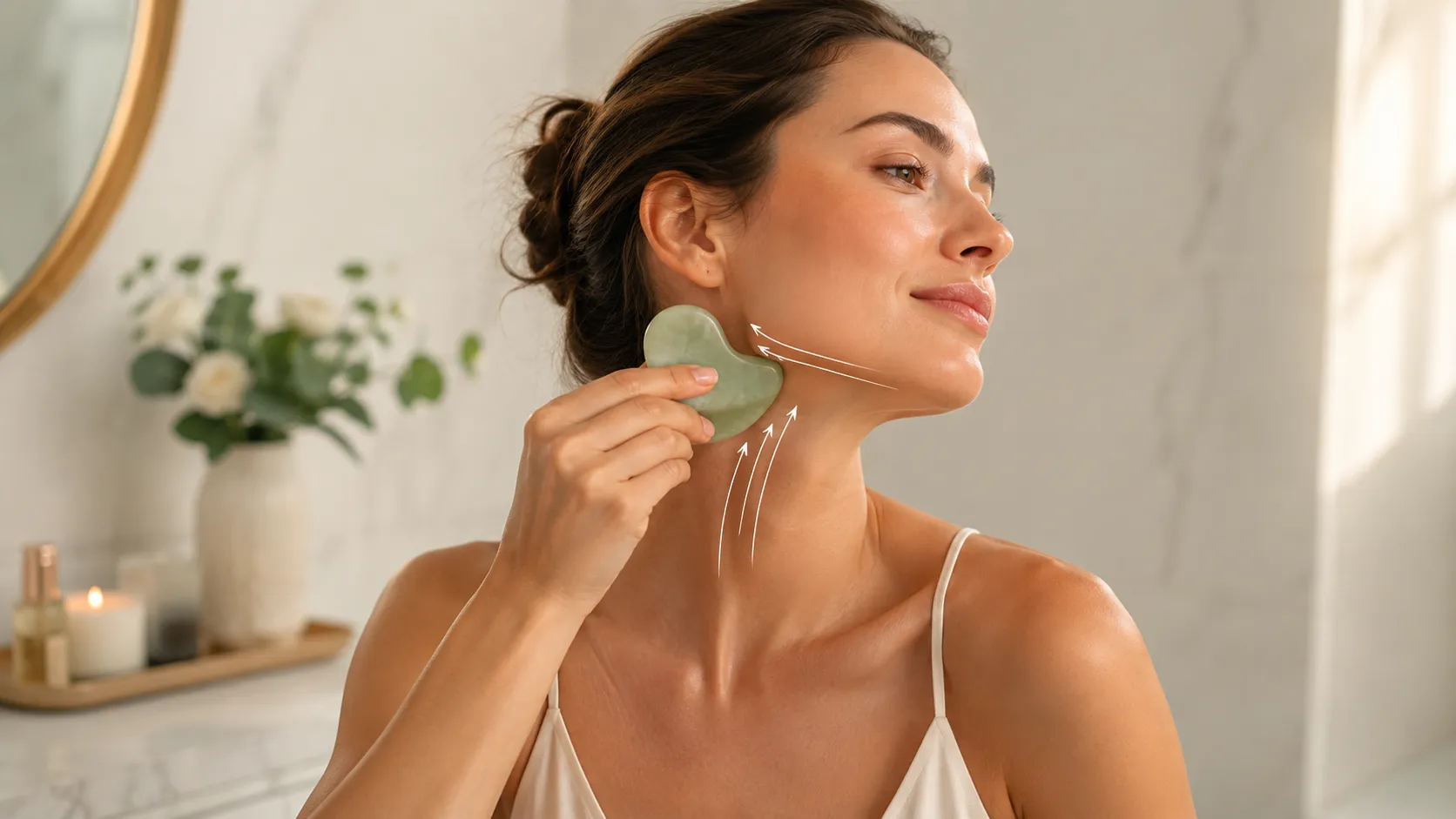
Sweeping downward or randomly does not move fluid the way you want. Fix: always work upward and outward from the center of your face, and finish by draining down the neck.
Mistake 4: Skipping the neck
The neck is the drainage path. Skip it and the fluid you move on your face has nowhere to go. Fix: start and end every session with downward sweeps along the sides of the neck. This is the heart of a proper lymphatic drainage face massage.
Mistake 5: Rushing
Fast, choppy strokes skip over the relaxing, circulation-boosting benefit. Fix: slow down to smooth, deliberate glides, 3 to 5 per area.
Mistake 6: A dirty tool
Oils and bacteria build up on the stone and can transfer back to your skin. Fix: rinse and dry the tool after each use and wipe it with a gentle cleanser now and then.
Mistake 7: Wrong timing
Using gua sha over active breakouts, sunburn, rosacea flares, or right on top of fresh injectables can aggravate skin. Fix: skip inflamed or broken areas and wait until skin settles.
Mistake 8: Expecting a facelift
Overdoing it out of impatience leads to irritation, not faster results. Fix: keep pressure light and be consistent. The benefits are real but subtle, and they come from a steady gua sha routine, not force.
How do you know if you are pressing too hard?
Your skin will tell you. A faint, even pink flush during and just after a session is normal and simply means you boosted circulation. What you do not want is stinging while you work, lingering redness that takes ages to fade, tender spots the next day, or any purple mark, which points to a broken capillary. A good gauge is the "pet a cat" test: the pressure should be about what you would use to stroke a cat, no more. If you catch yourself bearing down, lighten up immediately — with gua sha, less pressure genuinely gives better results, not worse.
Can gua sha actually damage your skin?
Used gently, gua sha is low-risk for most people. The damage that does happen almost always comes from the mistakes above — heavy pressure breaking tiny capillaries, dragging on dry skin, or working over inflamed, broken, or sunburned areas. Doing it too aggressively or too often can leave skin irritated rather than glowing. Avoid those pitfalls and keep your touch light, and the odds of harm are small. If you have a skin condition, recent cosmetic procedures, or any concern, check with a professional before adding gua sha to your routine — comfort and caution always come first.
What should you do if gua sha isn't working?
If you are not seeing anything, first reset your expectations: the visible effects are a temporary refreshed, de-puffed look, not a permanent reshaping, so a subtle change is success, not failure. Then check the fundamentals. Are you using enough oil, keeping the pressure light, sweeping up and out, and draining down the neck every time? Are you being consistent, several sessions a week rather than one and done? Most "it is not working" cases are really an expectation or a consistency issue, not a technique failure. Fix the basics, give it a few weeks, and judge it by how your skin looks and feels rather than against a dramatic photo online.
How often should you clean your gua sha tool?
After every single use. It only takes a moment: rinse the tool, wipe it dry, and let it finish air-drying before you put it away. This clears off the oil, serum, and skin residue that would otherwise sit on the surface and transfer back to your face next time — a common, quiet cause of unexpected breakouts. Every so often, give it a more thorough clean with a gentle cleanser or a little soap and warm water. Store it somewhere clean rather than loose at the bottom of a bag, and if you like a chilled tool, the fridge doubles as clean, cool storage. Stainless steel is the fastest to keep spotless, but every material stays hygienic with this one-minute habit.
Is it bad to do gua sha every day?
Not if you keep it gentle. Daily gua sha is fine, and a light lymphatic-style pass every morning is something many people do happily. The problem is never the frequency on its own — it is doing it aggressively every day. High pressure, dragging, or long, forceful sessions repeated daily can irritate skin and break tiny capillaries over time. If you want to practice daily, simply dial the pressure down and keep the sessions short. Let your skin be the referee: faint pink that fades quickly is fine, but lingering redness or tenderness is a sign to ease off or take a rest day.
What is the single biggest beginner mistake?
If you fix only one thing, make it pressure. Beginners almost universally press too hard, usually assuming that more force means faster or better results. Gua sha is the opposite: it rewards a light, patient touch, and heavy pressure is what causes nearly all the redness, soreness, and broken capillaries people run into. Pair a light touch with enough slip and you have avoided the two root causes of almost every problem on this list. When in doubt, lighter and slower is always the safer, more effective choice.
What should you do if you already have redness or a broken capillary?
First, do not panic — and stop the session. Faint, even redness that fades within an hour or so is normal circulation and needs nothing. Redness that lingers, tender spots, or a tiny purple mark from a broken capillary means you pressed too hard, so give your skin a rest from gua sha for several days until it fully calms down. In the meantime, be gentle: keep the area moisturized, avoid further friction, and always use sunscreen during the day while it heals.
When you go back to gua sha, treat it as a reset. Use even lighter pressure than before, make sure you have plenty of slip, and slow your strokes right down. Broken capillaries can take time to settle, and repeatedly aggravating the same spot with heavy pressure is what keeps them visible. If marks persist or you are ever concerned, check in with a professional. The lesson almost always points back to the same fix: lighter next time.
Final takeaway
Almost every gua sha mistake traces back to too much pressure or too little slip. Use oil, stay light, sweep up and out, drain down the neck, and keep your tool clean. Get those right and gua sha stays exactly what it should be: a calming, skin-loving few minutes. If you are just starting, our gua sha for beginners guide covers the basics.
General self-care information, not medical advice. Avoid gua sha over irritated or broken skin and see a professional for any skin condition.
 📌 Save
Love this guide? Save it 📌
Pin it to your favorite board so it's easy to find again — and share it with a friend who'd love it too.
Save to PinterestFrequently asked questions
Why does my skin get red after gua sha?
A little pinkness is just increased circulation and fades quickly. Strong or lasting redness usually means you pressed too hard or skipped the oil. Lighten your pressure and always glide on a facial oil first.
Can gua sha cause broken capillaries?
It can if you press too hard, especially on delicate areas like under the eyes. Keep the pressure feather-light and the tool at a low angle to avoid it.
Is it bad to do gua sha every day?
Daily is fine if your pressure is light. Problems come from doing it hard every day, which can irritate skin. If you notice redness or sensitivity, cut back to a few times a week.
Do I really need to do my neck?
Yes. The neck is the drainage path, so skipping it means the fluid you move on your face has nowhere to drain. Always start and finish with downward neck sweeps.
Why am I not seeing results from gua sha?
Usually it is inconsistency, too little slip, or the wrong direction. Use oil, sweep up and out, drain down the neck, and do it several times a week. Results are subtle and build over time.
What is the most common gua sha mistake?
Skipping facial oil. Using gua sha on dry skin makes the tool drag and tug, which can irritate the skin. Always apply a few drops of oil to clean skin so the tool glides smoothly.
Why isn't my gua sha working?
Usually technique. Common reasons include skipping oil, pressing too hard, moving too fast, using the wrong direction, skipping the neck, and being inconsistent. Fixing these and practicing regularly is what brings the de-puffed, glowing results.
Am I pressing too hard with my gua sha?
If your skin turns red, feels sore, or you see broken capillaries, yes. Facial gua sha needs only light pressure, barely more than the weight of the tool, and even lighter around the eyes.
Which direction should I move the gua sha tool?
Always upward and outward, from the center of your face toward your hairline and ears, and down the sides of your neck. Move in one direction per stroke, then lift and return rather than scrubbing back and forth.

Medically reviewed by The Fern Edit Editorial Team, . We cite sources and update this guide regularly.