The most useful anti-aging serums for mature skin are vitamin C (brightening and collagen support, morning), hyaluronic acid (hydration, anytime), retinol (smoothing and firming, night), peptides (firmness support), and niacinamide (barrier and tone). Layer them thinnest to thickest on slightly damp skin, keep vitamin C in the morning and retinol at night, and introduce one new serum at a time. You rarely need more than two or three at once.
Serums are where the real anti-aging work happens. They are concentrated, lightweight, and made to deliver active ingredients deep enough to make a difference. The trouble is that with so many options, it is easy to buy several, layer them in the wrong order, and either irritate your skin or cancel out the benefits. For mature skin, knowing which serums matter and how to layer them turns a confusing shelf into a routine that actually works.
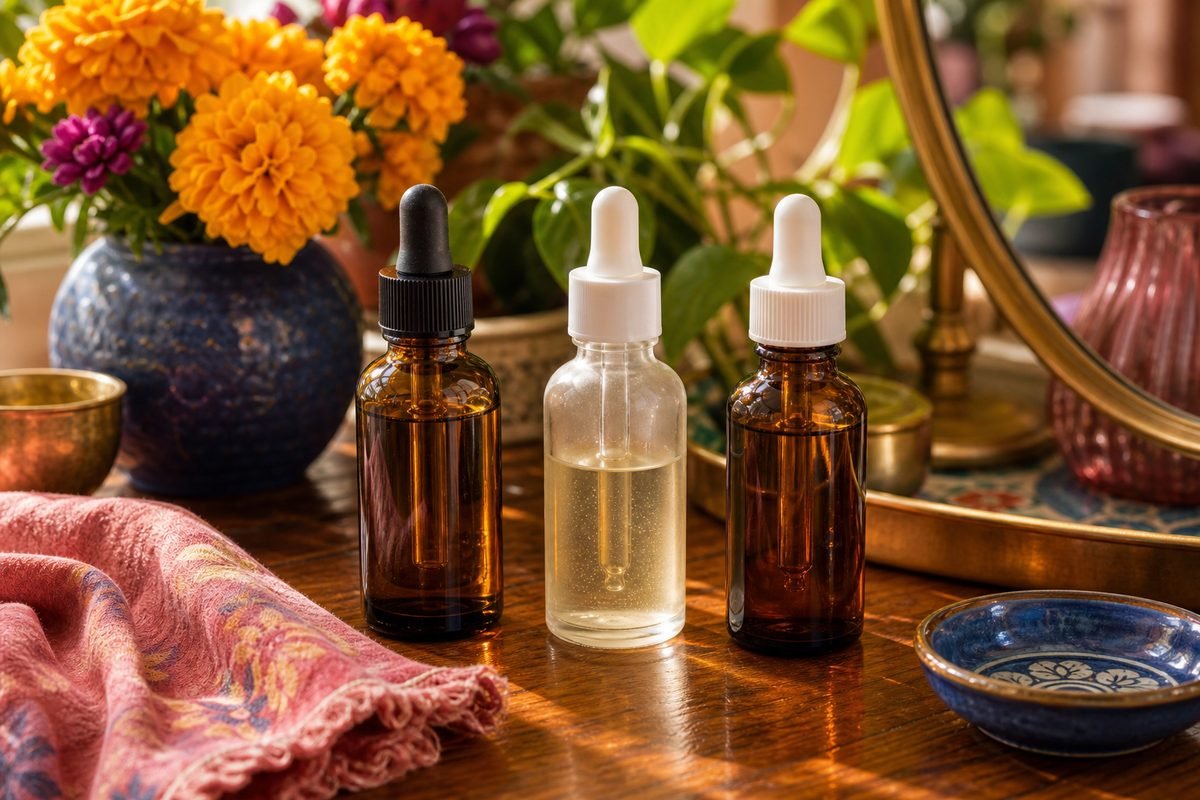
Serums are where the real anti-aging work happens. They are concentrated, lightweight, and made to deliver active ingredients deep enough to make a difference. The trouble is that with so many options, it is easy to buy several, layer them in the wrong order, and either irritate your skin or cancel out the benefits. For mature skin, knowing which serums matter and how to layer them turns a confusing shelf into a routine that actually works.
Here are the anti-aging serums worth your money over 50, and exactly how to layer them.
Key Takeaways
- The core anti-aging serums are vitamin C, hyaluronic acid, retinol, peptides, and niacinamide.
- Layer serums from thinnest (most watery) to thickest.
- Use vitamin C in the morning and retinol at night.
- Hydrating serums go on slightly damp skin for best absorption.
- Introduce one new serum at a time to avoid irritation.
- Two to three serums is plenty; more is not better.
Why Serums Matter for Mature Skin
Serums are more concentrated and lighter than moisturizers, so they deliver active ingredients more effectively. For mature skin, which is drier, thinner, and lower in collagen, the right serums can target specific concerns like fine lines, dullness, loss of firmness, and uneven tone in a way a basic moisturizer cannot.
The key is choosing serums that match your concerns and layering them so each can do its job. Done well, two or three serums can carry the heavy lifting of an anti-aging routine.
The 5 Best Anti-Aging Serums
These five cover almost every mature skin concern.
1. Vitamin C Serum
Brightens dull tone, fades dark spots, and supports collagen, with antioxidant protection against daily damage. Best used in the morning under sunscreen. A standout for radiance and even tone.
2. Hyaluronic Acid Serum
Draws water into the skin for instant plumping and smoother-looking fine lines. Gentle, suits everyone, and works morning and night on slightly damp skin. The easiest win for dry mature skin.
3. Retinol Serum
The most research-backed anti-aging ingredient, supporting cell turnover and collagen to smooth lines and improve texture and tone over time. Used at night, started slowly. If retinol is too strong, a bakuchiol serum is a gentle alternative.
4. Peptide Serum
Signals the skin to support firmness and a smoother surface. Gentle and well tolerated, peptides pair nicely with retinol and suit mature skin focused on firmness.
5. Niacinamide Serum
Strengthens the barrier, calms redness, evens tone, and supports elasticity. A gentle multitasker that plays well with almost everything, ideal for sensitive mature skin.
How to Choose the Right Ones for You
You do not need all five. Match serums to your main goals:
- For dullness and tone: vitamin C (and niacinamide).
- For dryness: hyaluronic acid.
- For fine lines and texture: retinol (or bakuchiol).
- For firmness: peptides.
- For sensitivity and barrier support: niacinamide.
A common, effective starting trio for mature skin is vitamin C in the morning, hyaluronic acid anytime, and retinol at night, adding peptides or niacinamide if you want extra support.
How to Layer Serums Correctly
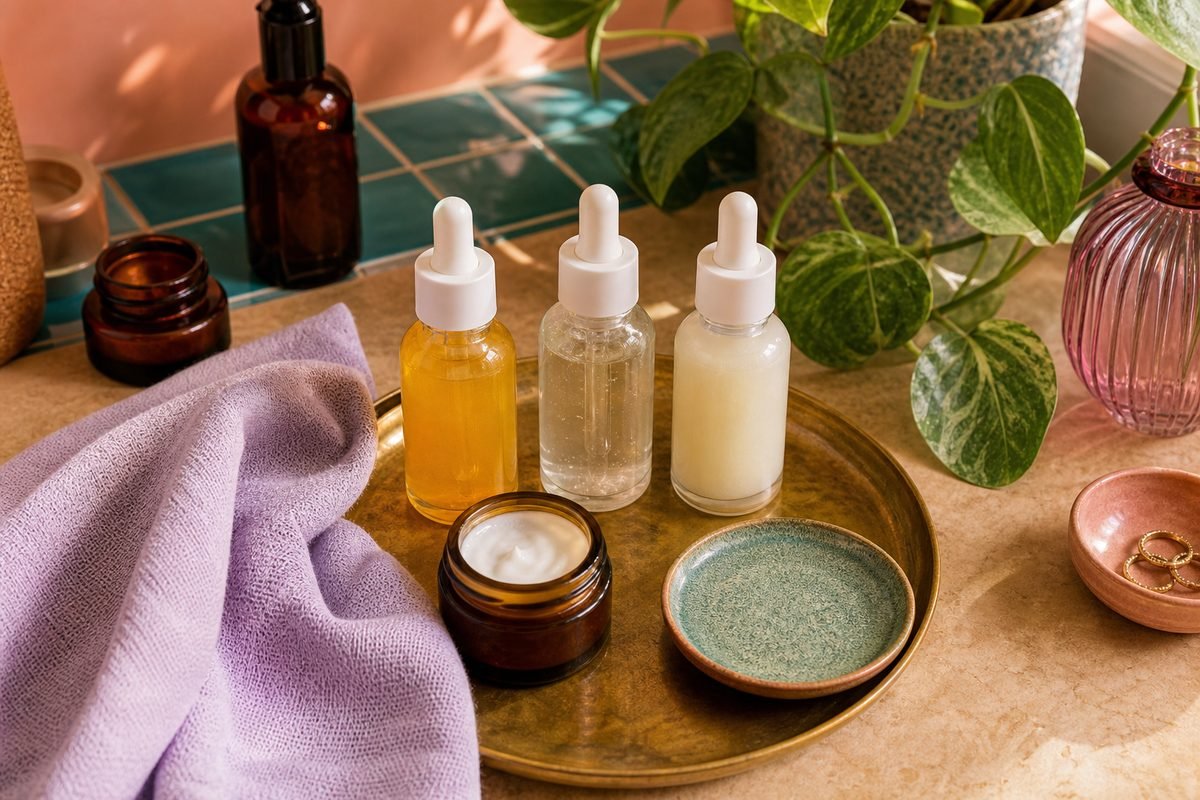
The golden rule: apply from thinnest, most water-based to thickest, most oil-based. This lets each layer absorb properly.
A typical order:
- Cleanse, then apply any water-based hydrating mist or essence.
- Thinnest serum first (often watery vitamin C or hyaluronic acid).
- Next serum (slightly thicker, like niacinamide or peptides).
- Treatment serum (retinol at night).
- Moisturizer to seal everything in.
- Sunscreen as the final morning step.
Apply hydrating serums like hyaluronic acid to slightly damp skin so they have water to grab. Give each serum a moment to absorb before the next, especially if you are layering two or three.
Morning vs Night: What Goes Where
Timing prevents irritation and gets the most from each serum.
Morning: vitamin C (antioxidant protection and brightness), hyaluronic acid (hydration), niacinamide if used, then moisturizer and sunscreen. Antioxidants in the morning help defend skin through the day.
Night: hyaluronic acid, retinol (the key nighttime treatment), peptides, then a rich moisturizer. Night is when skin repairs, so the heavier-working ingredients belong here. Keep vitamin C and retinol separated into morning and night to reduce irritation.
Combinations to Avoid
A few pairings cause trouble, especially on mature skin.
- Retinol + strong acids (glycolic, salicylic) the same night. Too much at once; alternate nights instead.
- Retinol + vitamin C at the same time. Use vitamin C in the morning, retinol at night.
- Multiple strong actives layered together. Stacking retinol, acids, and high-strength vitamin C invites irritation.
- Too many new serums at once. Add one at a time so you can tell how your skin responds.
When in doubt, simplify and space actives out. Calm skin shows better results than irritated skin.
How Many Serums Do You Really Need?
Fewer than the internet suggests. For most mature skin, two to three well-chosen serums cover the essentials: a vitamin C, a hydrating serum, and a retinol, with peptides or niacinamide as optional extras. Piling on five or six serums is expensive, time-consuming, and more likely to irritate skin than help it. Choose based on your top concerns, layer them well, and stay consistent.
Product Types to Look For
Shop by category rather than a single brand. Look for a stable vitamin C serum, a hyaluronic acid serum, a beginner-friendly retinol (or bakuchiol), and optionally a peptide or niacinamide serum. Affordable U.S. brands like The Ordinary, CeraVe, La Roche-Posay, and Olay offer well-formulated, gentle options across all of these, so an effective serum routine does not require a luxury budget.
Common Mistakes
- Layering thickest to thinnest. Always go thin to thick.
- Using vitamin C and retinol together. Split them into morning and night.
- Adding several serums at once. Introduce one at a time.
- Applying hydrating serums to bone-dry skin. Slightly damp works better.
- Buying too many serums. Two or three well-chosen ones beat a crowded shelf.
Final Takeaway
Serums are the workhorses of an anti-aging routine, and for mature skin the right few, layered correctly, make all the difference. Choose based on your main concerns, layer thinnest to thickest, keep vitamin C in the morning and retinol at night, and introduce one at a time. You do not need a crowded shelf, just two or three well-chosen serums used consistently. Layer them with care, stay patient, and your skin will thank you with a smoother, brighter, firmer-looking glow.
This article is for general beauty and self-care education only and is not medical advice. Patch test new products and consult a dermatologist for concerns specific to your skin.
 📌 Save
Love this guide? Save it 📌
Pin it to your favorite board so it's easy to find again — and share it with a friend who'd love it too.
Save to PinterestFrequently asked questions
What are the best anti-aging serums for mature skin?
The core five are vitamin C (brightening, morning), hyaluronic acid (hydration, anytime), retinol (smoothing and firming, night), peptides (firmness), and niacinamide (barrier and tone). Most mature skin does well with two or three of these.
How do I layer serums correctly?
Apply thinnest, most water-based first and thickest last: hydrating and vitamin C serums first, then peptides or niacinamide, then retinol at night, followed by moisturizer and sunscreen. Apply hydrating serums to slightly damp skin.
Can I use vitamin C and retinol together?
It is best to separate them: vitamin C in the morning and retinol at night. Using them together can increase irritation, especially on mature skin.
How many serums should I use?
Two to three is plenty for most mature skin. A vitamin C, a hydrating serum, and a retinol cover the essentials, with peptides or niacinamide as optional extras. More serums is not better.
Which serum should I apply first?
The thinnest, most water-based one, usually hyaluronic acid or a watery vitamin C, on slightly damp skin. Then move to thicker serums and finish with moisturizer.
Do I need expensive serums for mature skin?
No. Affordable U.S. brands like The Ordinary, CeraVe, La Roche-Posay, and Olay offer well-formulated vitamin C, hyaluronic acid, retinol, and niacinamide serums that work well.
How long until serums show results?
Hydration and brightness can appear within a couple of weeks, while firming and line-smoothing from retinol and peptides build over 8 to 12 weeks of consistent use.

We cite sources and update this guide regularly.