A gentle routine for sensitive mature skin focuses on calming and protecting the barrier: a creamy fragrance-free cleanser, soothing ingredients like niacinamide, ceramides, centella, and panthenol, a rich barrier moisturizer, and daily mineral sunscreen. Introduce any active ingredients slowly and one at a time, avoid fragrance and harsh actives, and patch test everything. A strong barrier is what lets sensitive skin tolerate more over time.
If your skin has become more reactive with age, stinging at products it once tolerated, flushing easily, or feeling tight and irritated, you are experiencing one of the quieter challenges of mature skin. As skin thins and the barrier weakens, it becomes more sensitive, and the strong anti-aging products everyone recommends can feel like too much. The answer is not to give up on results. It is a gentler, barrier-first routine that calms reactivity while still supporting your skin.
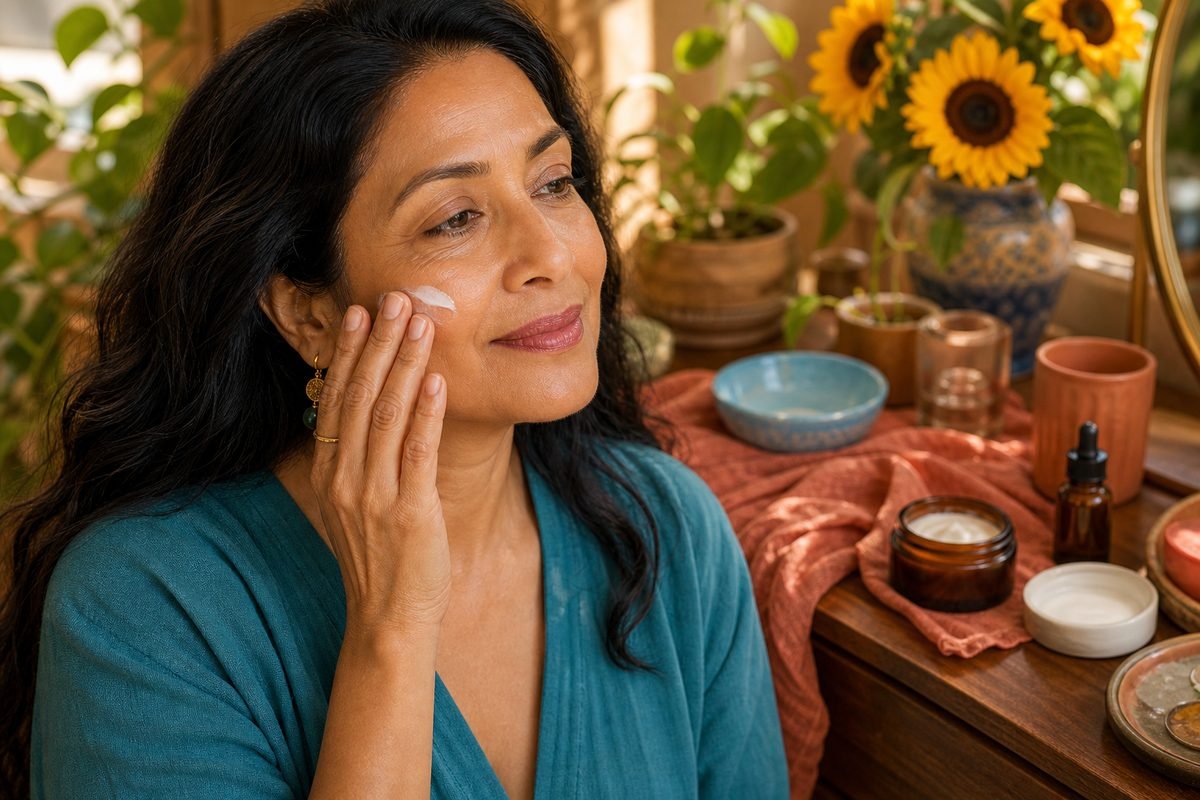
If your skin has become more reactive with age, stinging at products it once tolerated, flushing easily, or feeling tight and irritated, you are experiencing one of the quieter challenges of mature skin. As skin thins and the barrier weakens, it becomes more sensitive, and the strong anti-aging products everyone recommends can feel like too much. The answer is not to give up on results. It is a gentler, barrier-first routine that calms reactivity while still supporting your skin.
Here is how to care for sensitive mature skin in a way that soothes, protects, and still works.
Key Takeaways
- Mature skin becomes more sensitive as it thins and the barrier weakens.
- A calm, healthy barrier is the foundation of sensitive skin care.
- Soothing ingredients include niacinamide, ceramides, centella, oat, and panthenol.
- Avoid fragrance, harsh actives, and over-exfoliating.
- Introduce actives slowly, one at a time, and always patch test.
- Mineral sunscreen tends to be gentler for reactive skin.
Why Mature Skin Becomes Sensitive
Several age-related changes make skin more reactive. The skin barrier, the protective outer layer, weakens and thins with age, so irritants get in and moisture escapes more easily. After menopause, falling estrogen reduces oil and collagen, leaving skin drier and more fragile. Years of sun exposure and past product use can also leave skin more reactive. And conditions like rosacea, which often appears or worsens later in life, add redness and sensitivity.
The result is skin that stings, flushes, or feels tight more easily than it used to. Understanding this points to the fix: rebuild and protect the barrier, and be gentle.
The Barrier-First Approach

For sensitive mature skin, the skin barrier is everything. When the barrier is healthy, skin holds moisture, stays calm, and can even tolerate more active ingredients. When it is damaged, everything stings and nothing seems to work.
So the priority is not the strongest anti-aging products. It is a calm, well-supported barrier. That means gentle cleansing, barrier-repairing ingredients, rich moisture, and a slow, careful approach to anything active. Build the barrier first, and your skin becomes far more resilient and comfortable.
Soothing Ingredients to Look For
These gentle ingredients calm reactivity and strengthen the barrier.
| Ingredient | How It Helps Sensitive Mature Skin |
|---|---|
| Ceramides | Rebuild and reinforce the skin barrier |
| Niacinamide | Calms redness, strengthens the barrier, evens tone |
| Centella asiatica (cica) | Soothes irritation and supports healing |
| Panthenol (provitamin B5) | Hydrates and calms |
| Colloidal oatmeal | Soothes itchy, irritated skin |
| Squalane | Lightweight, non-irritating moisture |
| Hyaluronic acid and glycerin | Gentle hydration |
Look for moisturizers and serums that combine several of these. They calm skin while quietly strengthening it.
Ingredients and Habits to Avoid
Just as important is what to leave out.
- Added fragrance and essential oils. A leading cause of irritation in reactive skin.
- Harsh, foaming, or stripping cleansers that damage the barrier.
- High-strength acids and strong retinoids introduced too fast.
- Physical scrubs and over-exfoliating, which inflame sensitive skin.
- Alcohol-heavy toners and astringents.
- Too many new products at once, which makes reactions impossible to trace.
When skin is sensitive, simplifying is often the most effective thing you can do.
A Gentle Routine for Sensitive Mature Skin
Keep it short, soothing, and barrier-focused.
Morning
- Rinse with water or use a gentle, fragrance-free cream cleanser.
- A calming, hydrating serum (niacinamide, hyaluronic acid, or centella).
- A rich barrier moisturizer with ceramides.
- A mineral sunscreen (gentler for reactive skin).
Night
- Gentle cream cleanser to remove the day.
- A soothing or barrier-repair serum.
- A rich night moisturizer with ceramides and squalane.
- A few drops of a non-fragranced facial oil if skin is very dry.
Only once your skin feels calm and comfortable should you consider adding a gentle active.
How to Add Actives Without Flare-Ups

You can still get anti-aging benefits, just gently and gradually. Start with the gentlest options, like a low-strength retinol, bakuchiol, or azelaic acid, rather than strong formulas. Introduce one new active at a time, used once or twice a week, and buffer it by applying moisturizer first or mixing the active into your moisturizer. Build up frequency slowly over weeks only if your skin stays calm.
Always patch test a new product on your inner arm or jaw for several days first. If your skin flushes, stings persistently, or feels worse, stop and return to your soothing basics. Slow and steady is how sensitive skin learns to tolerate actives.
How to Calm a Flare-Up
When sensitive skin reacts, simplify immediately. Stop all actives and exfoliants, and go back to just a gentle cleanser and a barrier moisturizer with ceramides. Soothing ingredients like centella, oatmeal, and panthenol help calm redness, and a cool (not icy) compress can ease discomfort. Avoid the urge to "fix" irritated skin with more products; rest and barrier support are what it needs.
Give your skin several days to a couple of weeks to recover before slowly reintroducing anything active.
Choosing Gentle Products

Shop for fragrance-free, barrier-supporting formulas. Look for cream cleansers, ceramide moisturizers, niacinamide or centella serums, and mineral sunscreens. Affordable U.S. brands like CeraVe, Cetaphil, La Roche-Posay (Toleriane line), and Vanicream are widely loved for sensitive skin, so gentle, effective products do not require a luxury budget. Always check labels for "fragrance-free" rather than "unscented," since unscented products can still contain masking fragrance.
When to See a Dermatologist
Persistent or severe sensitivity deserves professional input. See a dermatologist if your skin is constantly red, stinging, or flaring, if you suspect a condition like rosacea, eczema, or contact dermatitis, or if nothing seems to calm it. A professional can identify underlying causes, recommend targeted treatments, and help you build a routine that works. Ongoing sensitivity is not something you simply have to live with.
Common Mistakes

- Pushing through irritation with strong actives. Sensitivity is a signal to ease off.
- Using fragranced products. A top trigger for reactive skin.
- Adding several new products at once. You cannot tell what is reacting.
- Over-exfoliating to "fix" texture. It worsens sensitivity.
- Skipping moisturizer or sunscreen. Both protect a fragile barrier.
Final Takeaway
Sensitive mature skin does not mean giving up on results, it means changing your approach. Put the barrier first: cleanse gently, soothe with calming ingredients, moisturize richly, and protect with mineral sunscreen. Avoid fragrance and harsh actives, add anything new slowly and one at a time, and patch test everything. As your barrier grows stronger, your skin becomes calmer and more able to tolerate the ingredients you want. Be patient and gentle, and reactive skin can become comfortable, calm, and healthy again.
This article is for general beauty and self-care education only and is not medical advice. See a dermatologist for persistent redness, stinging, or a suspected skin condition.
 📌 Save
Love this guide? Save it 📌
Pin it to your favorite board so it's easy to find again — and share it with a friend who'd love it too.
Save to PinterestFrequently asked questions
Why has my skin become more sensitive with age?
As skin thins and the barrier weakens, and as estrogen drops after menopause, skin gets drier and more fragile. Past sun exposure and conditions like rosacea add to it. The result is skin that stings, flushes, or feels tight more easily.
What is the best routine for sensitive mature skin?
A gentle, barrier-first routine: a fragrance-free cream cleanser, a calming serum (niacinamide, centella), a rich ceramide moisturizer, and mineral sunscreen. Add actives slowly, one at a time, and avoid fragrance and harsh products.
What ingredients calm sensitive mature skin?
Ceramides, niacinamide, centella (cica), panthenol, colloidal oatmeal, squalane, and gentle hydrators like hyaluronic acid and glycerin. These soothe redness while strengthening the barrier.
Can I still use retinol on sensitive mature skin?
Yes, gently. Start with a low-strength retinol or bakuchiol once or twice a week, buffer with moisturizer, and build up slowly only if your skin stays calm. Stop if irritation persists.
What should I avoid with sensitive mature skin?
Added fragrance and essential oils, harsh or foaming cleansers, high-strength acids and strong retinoids introduced too fast, physical scrubs, over-exfoliating, and adding many new products at once.
How do I calm a skin flare-up?
Stop all actives, simplify to a gentle cleanser and a ceramide barrier moisturizer, use soothing ingredients like centella and oatmeal, and give skin time to recover before reintroducing anything active.
When should I see a dermatologist for sensitive skin?
If your skin is constantly red, stinging, or flaring, if you suspect rosacea, eczema, or contact dermatitis, or if nothing calms it. A dermatologist can find the cause and build a routine that works.

We cite sources and update this guide regularly.