
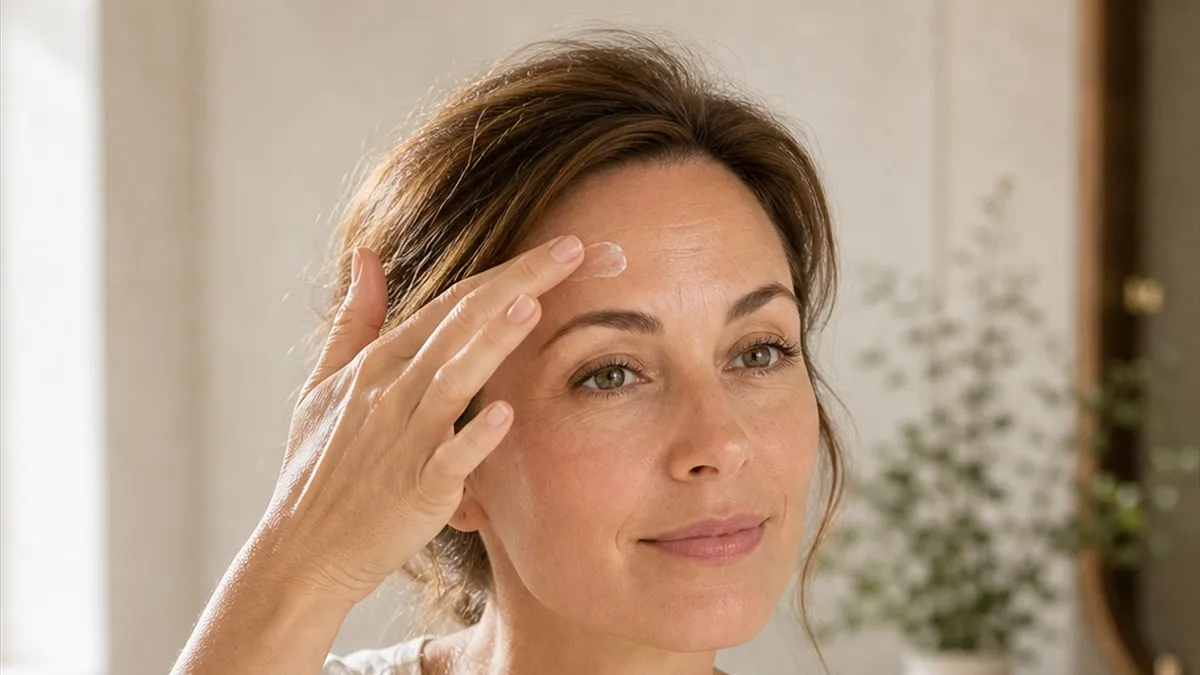
To soften forehead wrinkles, the foundation is daily sunscreen and a retinoid, plus hydration and a gentle skincare routine. Deeper or set-in lines respond most to in-office options like injectables, microneedling, or lasers. Prevention (sun protection and relaxing the brow) matters most, since it is easier to prevent lines than erase them.
Forehead lines are some of the first to show because the skin there moves constantly and takes a lot of sun. A consistent, gentle routine may help soften their appearance over time — no needles required.
Forehead lines are among the first wrinkles most people notice, because the forehead muscle is so active. The good news is there is a whole ladder of options, from free daily habits to professional treatments. This overview walks through what actually helps, so you can pick the level that fits your lines and budget.
Quick answer
Start with the basics that work for everyone: daily broad-spectrum sunscreen, a retinoid at night, good hydration, and easing habitual brow-raising. Fine, newer lines respond well to these. Deeper, set-in lines usually need in-office help such as injectables, microneedling, or laser resurfacing. Prevention beats correction, so protect and relax the forehead early.
Key takeaways
- Sun protection and a retinoid are the two most proven at-home steps.
- Fine lines respond to skincare; deep static lines usually need professional treatment.
- Much of forehead lining is preventable with SPF and brow awareness.
Understand your lines first
Forehead wrinkles start as dynamic lines that appear when you raise your brows, then can become static lines you see even at rest. Knowing which you have helps you choose: dynamic and fine lines respond to skincare and prevention, while deep static lines respond most to treatments. For the full picture, see what causes forehead wrinkles.
At-home options that work
- Sunscreen, daily. UV is the biggest driver of wrinkles, so this is non-negotiable. Details in our sunscreen for wrinkles guide.
- A retinoid at night. Retinoids are the most proven topical for smoothing lines over time. Learn how in retinol for forehead wrinkles.
- Hydration and moisturizer. Well-hydrated skin makes fine lines look softer. Hyaluronic acid and a good moisturizer help.
- A consistent routine. Putting it together matters, which we lay out in the forehead wrinkle routine.
If you would rather avoid needles entirely, our forehead wrinkles without Botox guide focuses on those options.
In-office options for deeper lines
When lines are set in, professional treatments do more:
- Neuromodulator injectables relax the forehead muscle so lines soften and are the go-to for dynamic forehead lines.
- Microneedling stimulates collagen for gradual smoothing.
- Laser resurfacing and chemical peels resurface skin and boost collagen over a series.
- Fillers are used sparingly for certain deep static lines.
A board-certified dermatologist can tell you which suits your skin.
Prevention is the real win
Because the forehead muscle repeatedly folds the skin, a lot of lining is preventable. Wear SPF every day, wear sunglasses so you squint less, stay hydrated, get enough sleep, and notice if you habitually raise your brows. Starting these early is the single most effective thing you can do.
How can you tell dynamic from static forehead lines at home?
Do a quick mirror test. Relax your whole face, look straight ahead, and study your forehead when it is completely still. Lines you can only see when you raise your eyebrows are dynamic — they come from muscle movement and respond well to prevention and skincare. Lines that stay visible even when your face is fully relaxed are static, meaning the crease is now set into the skin. Most foreheads have a mix, and static lines usually began as dynamic ones. A quick phone photo taken with a relaxed face, in the same light every few weeks, also makes it easy to track whether prevention is holding your lines steady. Knowing your ratio tells you where to spend your effort: mostly dynamic means skincare and daily habits can do a great deal, while several deep static lines are the ones that respond most to in-office treatments. For the full list of reasons lines form in the first place, see what causes forehead wrinkles.
Where should you start if you feel overwhelmed?
If the list feels like a lot, build it in order of payoff instead of all at once. First, wear sunscreen every single morning — it protects every other effort you make. Second, add a pea-sized retinoid a couple of nights a week and increase slowly as your skin adjusts. Third, keep skin hydrated with a humectant and moisturizer so lines look softer day to day. Only once those three feel automatic is it worth weighing in-office treatments. One habit you actually keep beats five you abandon by Friday.
Which at-home treatments work best, and how long do they take?
At home, a short list of proven basics beats a bathroom full of products. Here is what actually earns its place, roughly in order of impact — and how long each realistically takes to show a difference, so you know what to expect before you give up too early.
How long does it take retinol to soften forehead lines?
Plan on patience. A retinoid is the most studied topical for smoothing lines, but it works by gradually building collagen and speeding up cell turnover, so most people see smoother texture in about eight to twelve weeks and softer lines over three to six months of consistent nightly use. Start two nights a week on dry skin, build up slowly to avoid flaking, and always pair it with morning sunscreen. Retinoids are not recommended during pregnancy or breastfeeding, so skip them if that applies to you and ask your doctor. New to it? Our beginner retinol guide and retinol for forehead wrinkles walk through the ramp-up.
Do sunscreen and daily SPF actually reduce forehead wrinkles?
Yes — indirectly and powerfully. Sunscreen will not iron out a line you already have, but UV exposure is the single biggest cause of skin aging, so wearing broad-spectrum SPF 30 or higher every day prevents new lines and stops existing ones from deepening. Worn consistently, it also lets your retinoid and your skin's own repair processes get ahead of fresh damage instead of constantly playing catch-up. It is the highest-value habit on this entire page. More on the why in sunscreen and wrinkles.
Can moisturizer and hydration make forehead lines look better?
They make fine lines look softer, though the effect is cosmetic and temporary rather than structural. Well-hydrated skin is plumper, so creases catch the light less and appear shallower — you will often notice this within a few days of getting your moisture routine right. Look for humectants like hyaluronic acid and glycerin layered under a moisturizer that suits your skin type. Think of it as comfort and polish rather than new collagen, so pair it with the longer-game steps above instead of relying on it alone.
What about peptides and vitamin C for forehead lines?
Treat these as useful supporting players, not headliners. Vitamin C is an antioxidant that helps defend against daily UV and pollution damage and can brighten a dull, tired-looking forehead, so it pairs naturally with morning sunscreen. Peptides are gentle signal ingredients that may support firmness over time and are easy for most skin to tolerate. Neither rivals a retinoid or SPF for actual wrinkles, but folded into a simple routine they add a little extra support without much risk of irritation.
How do the in-office options for forehead wrinkles compare?
When lines are deep and set in, professional treatments do more than any cream can — but they vary a lot in what they target, how much downtime they need, and what they cost, and every one of them belongs in the hands of a licensed, experienced provider. Here is a plain-language comparison so you can walk into a consultation already knowing the right questions to ask.
Whatever you consider, a good consultation should leave you clear on the essentials. It helps to ask:
- Which of my lines are dynamic versus static, and what can this treatment realistically change?
- How many sessions will I need, and what is the total cost, not just the per-session price?
- What is the downtime, and what are the risks for my skin tone and type?
- What are your credentials, and how often do you perform this exact treatment?
What does Botox do for forehead wrinkles, and how long does it last?
Neuromodulator injectables such as Botox relax the muscle that folds your forehead, so dynamic movement lines soften and new creasing slows down. It is the most popular option aimed specifically at forehead movement lines. Results appear over several days and typically last around three to four months before you would repeat the treatment, and pricing generally runs in the range of a few hundred dollars per session depending on your provider and how much area is treated. It should only be performed by a qualified medical injector, so treat any suspiciously cheap deal as a warning sign.
Is microneedling or radiofrequency worth it for forehead lines?
Both build collagen gradually rather than freezing movement, which makes them better suited to skin texture and mild static lines than to deep dynamic folds. Microneedling uses tiny, controlled punctures to prompt the skin to repair itself, usually over a series of sessions with a few days of redness after each. Radiofrequency, often combined with microneedling, adds heat to tighten and stimulate collagen deeper in the skin. Improvements arrive slowly over several months, and the results depend heavily on the specific device and the practitioner's skill.
What about lasers and chemical peels?
Resurfacing lasers and medium-depth chemical peels remove damaged surface layers and kick-start collagen, which can improve fine lines, tone, and texture over a series of treatments. Downtime ranges from a little flaking to a week or more of visible healing depending on the strength, and both demand diligent sun protection afterward. They tend to suit surface crepiness and fine lines more than deep muscle folds. A board-certified dermatologist can match the exact device and depth to your skin — our guide to finding a qualified provider near you covers what to look for.
What does not work for forehead wrinkles?
A few popular ideas quietly overpromise. Facial exercises can tone and relax the muscles and simply feel good, but there is no solid evidence they erase set-in forehead creases, so enjoy them as self-care rather than a wrinkle cure. Drinking extra water supports overall health but will not remove a line on its own. Be cautious with any cream that promises to "erase" or permanently remove wrinkles — topicals soften and prevent, they do not deliver surgical results — and stay skeptical of expensive at-home gadgets that carry big claims and little proof. The honest through-line is simple: prevention plus a couple of proven actives will outperform any single miracle product.
How long until forehead wrinkles actually improve?
Set realistic checkpoints so you stick with your routine long enough to actually see it work:
- Around 2 weeks: better hydration makes fine lines look a little softer, and your prevention habits — SPF, sunglasses, more sleep — are already protecting you, even if the mirror looks much the same.
- Around 8 weeks: a nightly retinoid begins to show smoother texture and a bit more glow. This is usually when consistency starts visibly paying off.
- Around 6 months: softer, shallower fine lines from steady retinoid and sunscreen use, plus a clear sense of whether at-home care is enough for you or you would like to explore in-office options.
Skincare rewards the long game, so judge any routine over months rather than days. Putting the daily steps together is easier with our forehead wrinkle routine and the broader anti-aging skincare routine.
When should you see a dermatologist about forehead wrinkles?
Book a professional if your lines bother you enough that you are seriously considering treatment, if you want in-office options matched precisely to your skin, or if over-the-counter actives keep irritating you and you need a tailored plan. It is also worth a visit if you notice sudden, uneven changes in your skin or in how your brow moves, which deserve a proper look. A board-certified dermatologist can confirm which of your lines are dynamic versus static, recommend the right strength of retinoid, and lay out your treatment options honestly. Nothing here is medical advice — a qualified professional is the right call before starting any treatment.
Final takeaway
Getting rid of forehead wrinkles is really about matching the method to the line: sunscreen, retinoids, hydration, and brow awareness for fine lines, and professional treatments for deep ones. Prevention gives the best long-term payoff, so build the daily habits now and step up to treatments only if you want more.
This is general skincare education, not medical advice. See a board-certified dermatologist before starting any treatment.
 📌 Save
Love this guide? Save it 📌
Pin it to your favorite board so it's easy to find again — and share it with a friend who'd love it too.
Save to PinterestFrequently asked questions
Can you get rid of forehead wrinkles naturally?
You can soften fine forehead lines with daily sunscreen, a retinoid, hydration, and a consistent routine, and prevent new ones by protecting skin from the sun. Deep, set-in lines usually need in-office treatments to improve significantly.
What is the most effective treatment for forehead wrinkles?
For at-home care, daily sunscreen plus a retinoid are the most proven. For deeper dynamic lines, muscle-relaxing injectables are the most effective in-office option. The best choice depends on whether your lines are fine or set-in.
Do forehead wrinkles go away?
Fine, dynamic lines can look much softer with consistent skincare and prevention. Deep static lines rarely disappear completely without professional treatment, but they can be significantly improved.
At what age do forehead wrinkles start?
They often begin appearing in the late 20s to 30s as dynamic lines, and can become static over time. Sun exposure, genetics, and expression habits affect how early they show.
How can I prevent forehead wrinkles?
Wear broad-spectrum sunscreen daily, use sunglasses to reduce squinting, stay hydrated, sleep well, and become aware of habitually raising your brows. Prevention is easier and cheaper than correction.

Medically reviewed by The Fern Edit Editorial Team, . We cite sources and update this guide regularly.