To read a skincare label, skip the marketing on the front and read the full ingredient list on the back — ingredients are ordered from most to least, so anything past the middle is present in tiny amounts. Match bold front claims (like "hyaluronic acid") to where that ingredient actually lands in the list. The package can hint at results it can't prove, so let the ingredient order be your fact-check.
Learn to read a skincare ingredient label, compare front claims with the full list, spot unsupported hints, and see what the package cannot prove.
- Home
- Anti-Aging
- How to Read a Skincare Ingredient Label
How to Read a Skincare Label Without the Marketing Noise
To read a skincare ingredient label before buying, copy the exact front claim, find the promoted ingredient in the complete list, and record whether the package prints a percentage. Presence confirms only presence. If no amount is disclosed, the concentration remains unknown, and the label alone cannot prove effectiveness, tolerance, or value.
The Fern Edit is a US beauty and self-care publisher that turns ingredient lists and non-invasive routines into plain guidance for shoppers who want realistic limits before they spend. In this guide, an INCI list means the complete ingredient declaration you inspect when matching a package claim to the formula, for anyone trying to distinguish visible evidence from marketing inference.
What this page adds: Existing pages help readers choose a product category or use a particular active. This page supplies a different tool: a package-only audit with an annotated example, a careful examination of the supposed 1% line, a front-phrase decoder, a six-observation worksheet, and a green-amber-red decision test. You can use it without pretending the package reveals facts it does not show.
One sourced boundary applies throughout. According to Disclaimer | The Fern Edit, updated July 23, 2026, the site's content is provided for general informational and educational purposes and is not medical, dermatological, health, or professional advice. This label audit is a shopping method, not a diagnosis or a prediction about how your skin will respond.
What can you learn from a skincare ingredient label?
You can confirm the words printed on the package, whether an advertised ingredient appears in the complete declaration, whether the brand discloses a percentage, and what directions or warnings it provides. You cannot turn any of those observations into proof of results without additional evidence.
Begin with a strict distinction between transcription and interpretation. Transcription records what is visible: a claim, a name in the list, a printed number, a direction, or a warning. Interpretation asks what that information means for your purchase. The first step is dependable because you can point to the package. The second needs restraint because a label may leave the most important buying question unanswered.
For example, suppose the front highlights an active ingredient. Finding the same name in the complete list settles one narrow question: the formula includes it. It does not settle the ingredient concentration if no percentage appears. It also does not establish whether the full formula performs, whether fragrance or another component matters to you, or whether the price is justified.
That front-to-list comparison is the central reader task, not a passing check. Every conclusion in this guide stays attached to one of three visible findings: the promoted ingredient is present, it is absent under the name you checked, or the match remains uncertain. When the match is uncertain, the honest action is to seek clarification rather than silently promote uncertainty to proof.
How do you run the package-only audit?
Use five steps: transcribe the claim, identify the ingredient name you need to locate, search the complete list, record any printed amount, and write down what remains unresolved. Do not decide whether the product works until you have evidence beyond the package.
- Copy the front claim exactly. Preserve qualifying words such as “with,” “blend,” “complex,” or “powered by.” Do not rewrite the claim into a stronger promise.
- Define the match you are seeking. Record the marketed ingredient and the exact printed name you believe represents it. If the supplied evidence does not establish that relationship, mark the match as uncertain.
- Check the complete declaration. Record present, absent under the checked name, or uncertain. Do not substitute memory or a retailer summary for the package in your hand.
- Look for a disclosed amount. A visible percentage is a number the package commits to. No percentage means the package does not disclose an amount; it does not mean zero, high, low, or ineffective.
- List the open questions. Concentration, performance, personal tolerance, and value may remain unresolved even after a careful audit.
This process prevents a common reasoning error. A shopper begins with “the ingredient appears,” then quietly shifts to “there must be enough,” and finally reaches “the product should work.” Only the first statement came from the label. Writing the steps down makes the unsupported jumps visible.
Annotated example ingredient list: what does the order reveal?
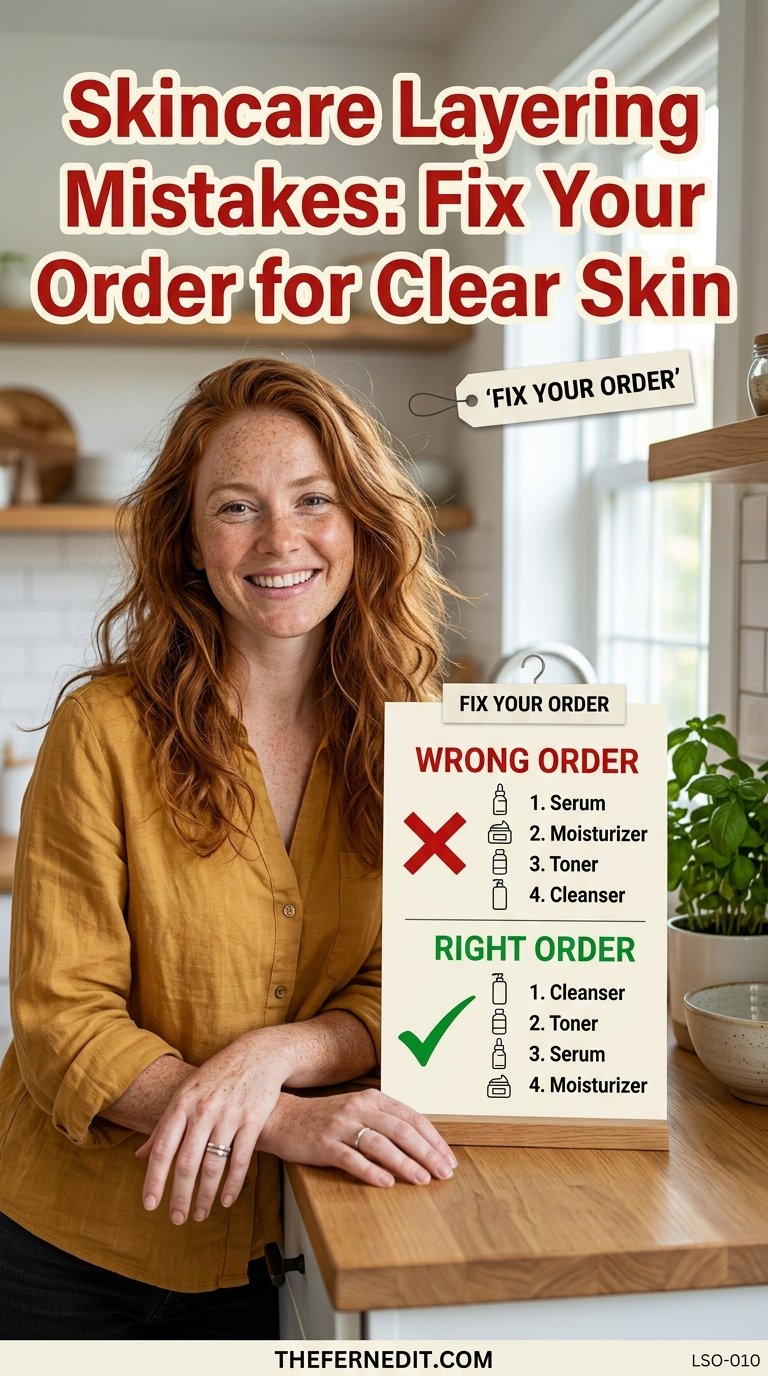
The printed order lets you describe position, but the supplied evidence does not support converting that position into an exact concentration. In an annotated example, report what comes before or after the promoted ingredient and stop short of percentage claims.
Consider this fictional moisturizer. Its front says powered by Meadow Active. Its complete fictional list reads: Aqua, Glycerin, Caprylic/Capric Triglyceride, Meadow Active, Cetearyl Alcohol, Phenoxyethanol, Fragrance.
| Visible detail | Supported observation | Unsupported leap |
|---|---|---|
| “Powered by Meadow Active” appears on the front. | The package promotes Meadow Active as important. | Meadow Active drives the formula's performance. |
| Meadow Active appears fourth in the list. | The advertised name is present and has a visible position. | Its concentration is a particular percentage. |
| Fragrance appears later. | The declaration includes fragrance after Meadow Active. | Either ingredient will or will not irritate a particular reader. |
| No percentage appears. | The package does not disclose Meadow Active's amount. | The amount must be high, low, effective, or token. |
This annotated example contains four usable observations. You can verify each one by pointing at the fictional package. None establishes performance. Removing that distinction would turn a label-reading exercise into an unsupported review.
Now change one detail: imagine Meadow Active appears last. You may accurately say that it is printed last. You still cannot assign it a percentage from the evidence available here. The later position may prompt a question about concentration, but it does not answer that question.
What is the approximate 1% line, and can you locate it?
The “1% line” is a shopper shortcut said to mark where low-level ingredients may appear in less predictable order. This page cannot verify that rule, define its legal scope, or show readers how to locate the line because the supplied factual source pack contains no dated authoritative labeling source supporting it.
That limitation matters. The locked topic plan asks for the concentration-order rule and the approximate 1% line, but inventing the missing threshold would violate the site's evidence policy. A package does not print a divider labelled “1%,” and this draft has no supported basis for selecting one ingredient as the boundary. Any confident placement would therefore be guesswork disguised as technique.
Use a safer substitute. Mark the advertised ingredient's visible position, note whether a percentage is disclosed, and separate the two observations. “Printed near the end, with no amount disclosed” is supported. “Below the 1% line” is not supported here. “Too little to work” goes further still and is also unavailable from the package.
This is not a minor technical caveat. If your buying decision depends on whether an active clears a particular concentration threshold, the label audit cannot finish the job unless the package or another verified brand disclosure supplies the number. Pause, seek that disclosure, or decide whether you are willing to buy with the amount unknown.
What do red-flag marketing phrases actually support?
Promotional phrases tell you what the brand wants you to notice, not necessarily how much is present or what the formula will accomplish. Decode each phrase into the narrowest statement the visible package supports.
| Front-of-pack wording | What you may record | Question still open |
|---|---|---|
| “With [ingredient]” | The package claims the formula contains the named ingredient; verify it against the complete list. | How much is present and what the full formula does. |
| “[Ingredient] complex” or “blend” | The package groups ingredients under a marketed name. | Which component dominates, unless amounts are disclosed. |
| “Powered by [ingredient]” | The brand presents the ingredient as central to its story. | Its concentration, contribution, and performance. |
| “High potency” or “concentrated” | The package uses strength-oriented promotional language. | The measurable strength when no figure is printed. |
| “2% [ingredient]” | The package commits to a specific printed figure. | Whether that figure suits you, performs as hoped, or justifies the price. |
These phrases are not automatic reasons to reject a product. They are prompts to adjust the strength of your conclusion. A phrase without a number supports a weaker conclusion than a disclosed amount, while neither one proves the outcome on your skin.
What is fairy dusting, and can a label prove it?
Fairy dusting describes the concern that a prominently marketed ingredient may be included only in a token amount. A label can raise that question when the ingredient is present, printed late, and undisclosed by percentage, but the evidence supplied here does not let the label prove the concentration or the brand's intent.
Run a fictional audit. A serum says five-part peptide cloud on the front. The complete fictional list contains two names that the package itself identifies as members of that cloud, both near the end, and prints no percentages. Three observations are available:
- The front uses a numerical phrase.
- The complete declaration, as annotated by the fictional package, identifies only two matching members.
- No amount is disclosed for either one.
Those observations justify a question to the brand: Which five components make up the named cloud, and what amount is disclosed for the promoted material? They do not justify saying that either ingredient is ineffective. They also do not prove deception, because the supplied evidence does not establish how the marketing name maps to every component.
The useful shopping response is proportional. If the promoted ingredient is the reason for a higher price, an undisclosed amount may be enough reason to pause. If the product otherwise fits your needs and the hero claim is not driving your decision, the uncertainty may matter less. The audit exposes the gap; it does not dictate the same answer for every shopper.
The transcribe-then-compare worksheet

The transcribe-then-compare worksheet is a three-column evidence ledger: visible label text, supported observation, and unresolved question. Its purpose is to stop an observation from becoming a stronger conclusion while you are comparing products.
| Visible label text | Supported observation | Still unresolved |
|---|---|---|
| “Powered by Meadow Active.” | The front promotes Meadow Active. | Why it is central and how much is present. |
| Meadow Active appears in the complete list. | The promoted name is present. | Its contribution to the complete formula. |
| Meadow Active appears fourth. | Its printed position is fourth. | Its exact concentration. |
| Fragrance appears later. | The formula declaration includes fragrance. | Whether the product will suit an individual reader. |
| No percentage appears beside Meadow Active. | The package does not disclose an amount there. | Whether the brand discloses a figure elsewhere. |
| Directions say to use the product once daily. | The manufacturer provides a once-daily direction. | Whether that use pattern will suit your skin or routine. |
This worked ledger produces six observations and six open questions. It does not produce a verdict about effectiveness. That is the point: adding observations improves the record, but it does not answer a different question unless the new information actually bears on it.
How do you make a buying decision when information is missing?
Use green when your conclusion repeats visible evidence, amber when the decision depends on an undisclosed amount or personal response, and red when you are treating presence as proof of results or position as an exact percentage.
- Green: proceed with the audit. “The ingredient is present and the package prints 2%” repeats visible information without predicting a result.
- Amber: pause or accept uncertainty deliberately. “The ingredient is present, but no amount is disclosed” leaves concentration unresolved.
- Red: stop the inference. “It appears late, so it cannot work” claims more than the supplied evidence or package establishes.
Imagine two products. Product A highlights an active, lists it, and prints a percentage. Product B highlights the same active, lists it, and supplies no number. The audit reveals that Product A makes a more specific concentration statement. It does not reveal which product is better, because no comparison method or verified performance evidence has been supplied.
The same discipline applies to value. A lower price does not prove better value, and a higher price does not prove a stronger formula. If you need a wider product-choice framework after the label audit, use the guide to choosing skincare products without wasting money. If the label belongs to a retinol product, the retinol beginner guide addresses the separate task of introducing that active.
What can't the package settle before you buy?
The package cannot settle an undisclosed concentration, prove effectiveness, predict personal tolerance, or establish value by itself. Treat those as four separate open questions rather than compressing them into one impression of whether the formula looks good.
Undisclosed ingredient concentration

If no amount is printed, record “unknown from this package.” Do not replace the missing number with a guess based on typography, bottle color, list length, or how often the ingredient appears in promotional copy.
Effectiveness

Presence is not a performance test. This source pack contains no verified product study, comparative test, or first-party result for the fictional examples, so the guide makes no outcome claim.
Personal tolerance
A list can help you notice a component you already choose to avoid, including fragrance, but it cannot predict an individual response. According to The Fern Edit's July 23, 2026 disclaimer, readers should patch-test new products and follow the manufacturer's instructions and warnings.
Value
Value combines price, amount used, experience, and result. None can be calculated from an ingredient list alone when price, usage data, and verified performance evidence have not been supplied.
Label-reading questions, answered

Does the order of ingredients tell you the exact amount?
No. You can record where an ingredient appears, but this guide has no verified source supporting conversion of that position into an exact percentage. A printed percentage is the only package number used in this audit.
If a product advertises an ingredient, is it definitely effective?
No. Advertising and list presence confirm what the package promotes and declares; they do not establish performance, personal tolerance, or value.
What should I do when no percentage is printed?
Record the amount as undisclosed, look for a verified disclosure from the brand, and decide whether that uncertainty matters to your purchase. Do not label the amount high or low without evidence.
Does a late-listed active prove fairy dusting?
No. A late position plus a prominent claim and no disclosed percentage can raise the question, but it does not prove a token amount, ineffectiveness, or intent.
Who wrote this guide and how will it be maintained?
This guide is written by Mia Carter and reviewed by The Fern Edit Editorial Team under the site's published editorial policy. It was produced with automated drafting assistance and checked against the supplied evidence. The draft deliberately excludes unsupported US labeling rules, concentration thresholds, product-performance claims, and personal experience.
Questions, corrections, and candidate authoritative sources can be submitted through the contact page. The page should be substantively updated if a dated authoritative United States labeling source is approved, if the cited disclaimer changes, or if verified evidence supports a more precise concentration-order explanation. Its date must not be changed merely to make the page look fresh.
 📌 Save
Love this guide? Save it 📌
Pin it to your favorite board so it's easy to find again — and share it with a friend who'd love it too.
Save to Pinterest
We cite sources and update this guide regularly.