Learn how to choose and apply vitamin C serum, introduce it to sensitive or mature skin, place it before sunscreen, and assess a bottle that has changed.
Vitamin C Serum: How to Use It Without Wasting It
Key takeaways
- To use vitamin C serum, follow its label for skin condition, amount, timing, frequency, and storage; in the worked morning routine here, it follows cleansing and precedes moisturizer and sunscreen.
- L-ascorbic acid and vitamin C derivatives are ingredient identities, not automatic verdicts about effectiveness, comfort, stability, or value.
- For sensitive or dry mature skin, compare otherwise suitable products and begin with the lowest disclosed strength and minimum frequency their labels permit.
- Record a serum's opening date, starting color, smell, and texture so a later change can be checked against its package and the manufacturer's guidance.
- A hypothetical $36 bottle planned for 90 applications costs $0.40 per planned use, but using it only 18 times raises the cost to $2 per completed use.
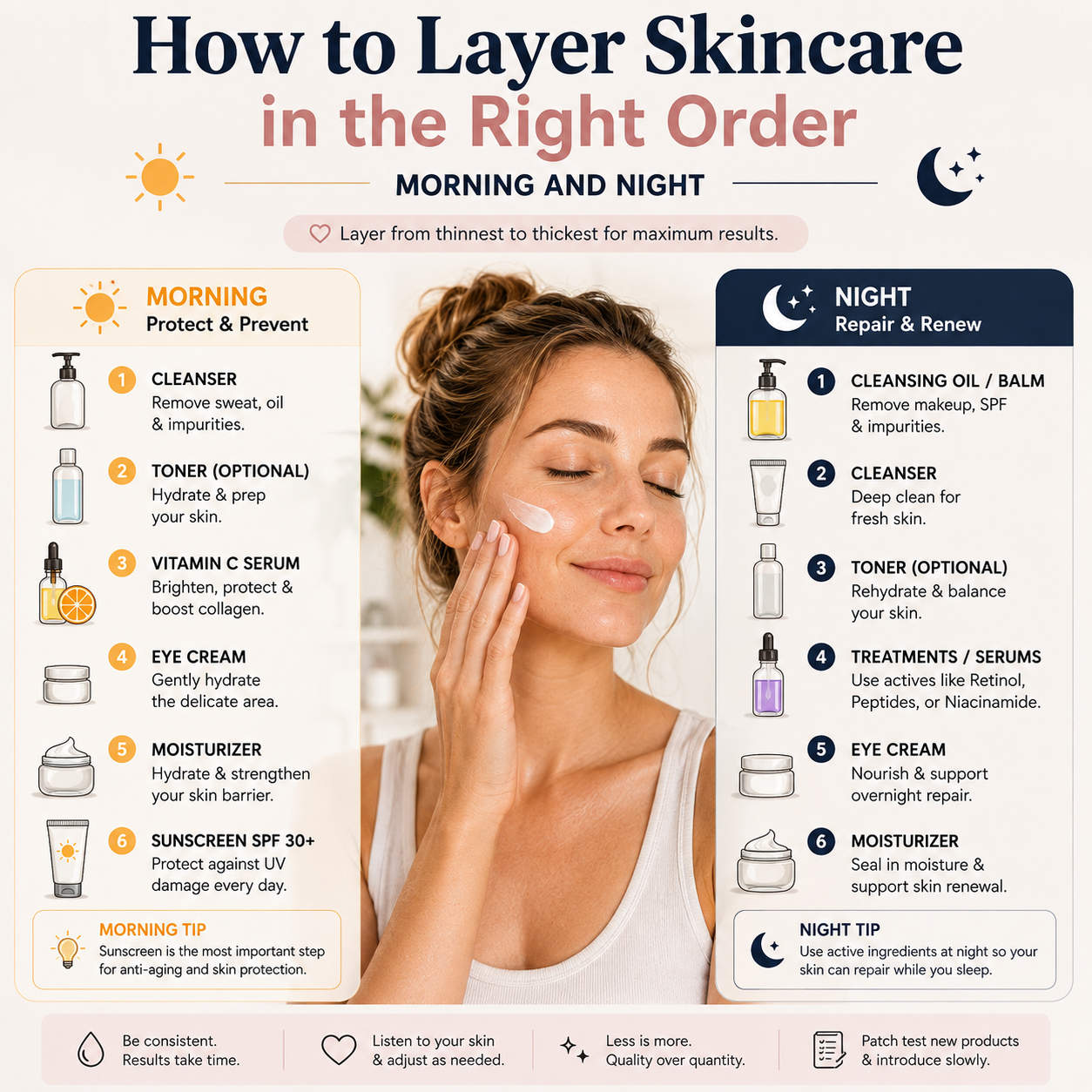
How to use vitamin C serum depends first on the directions for the bottle in your hand. Cleanse, prepare your skin as directed, apply the labeled amount, and add the remaining layers; in the simple morning example below, the serum goes before moisturizer and sunscreen.
The Fern Edit is a United States beauty and self-care publisher that creates practical, non-invasive routine guidance for women who want realistic expectations before they spend. That description is supported by The Fern Edit About information, reviewed August 5, 2026. This is the verified, source-dated fact used in this article; no independent cosmetic-science source was supplied for vitamin C outcomes, percentages, or shelf life.
What this page adds: existing pages cover complete routine order and general label reading, while this guide gives you a vitamin-C-specific form comparison, bottle audit, morning placement map, cautious introduction record, and changed-bottle decision check. Those tools solve a distinct use and buying task that the existing pages do not.
How should you use vitamin C serum?
Read the product's directions before opening it, then fit the serum into the routine at the position those directions support. Do not replace a product-specific amount, frequency, waiting time, or storage instruction with a universal rule.
- Read the complete package. Find the application directions, cautions, storage language, and period-after-opening symbol. Note whether the manufacturer permits morning use, evening use, or both.
- Change one product at a time. Keep the surrounding routine familiar while introducing the serum. If comfort changes, you will have fewer possible causes to untangle.
- Prepare skin as directed. Follow any instruction about clean, dry, or otherwise prepared skin. This page does not assume that every formula has the same requirement.
- Use the stated amount. Apply the amount on the label. If the wording is unclear, ask the manufacturer rather than converting it into an invented number of drops.
- Complete the routine. In the worked morning sequence here, add a familiar moisturizer if needed and finish with sunscreen according to its own directions.
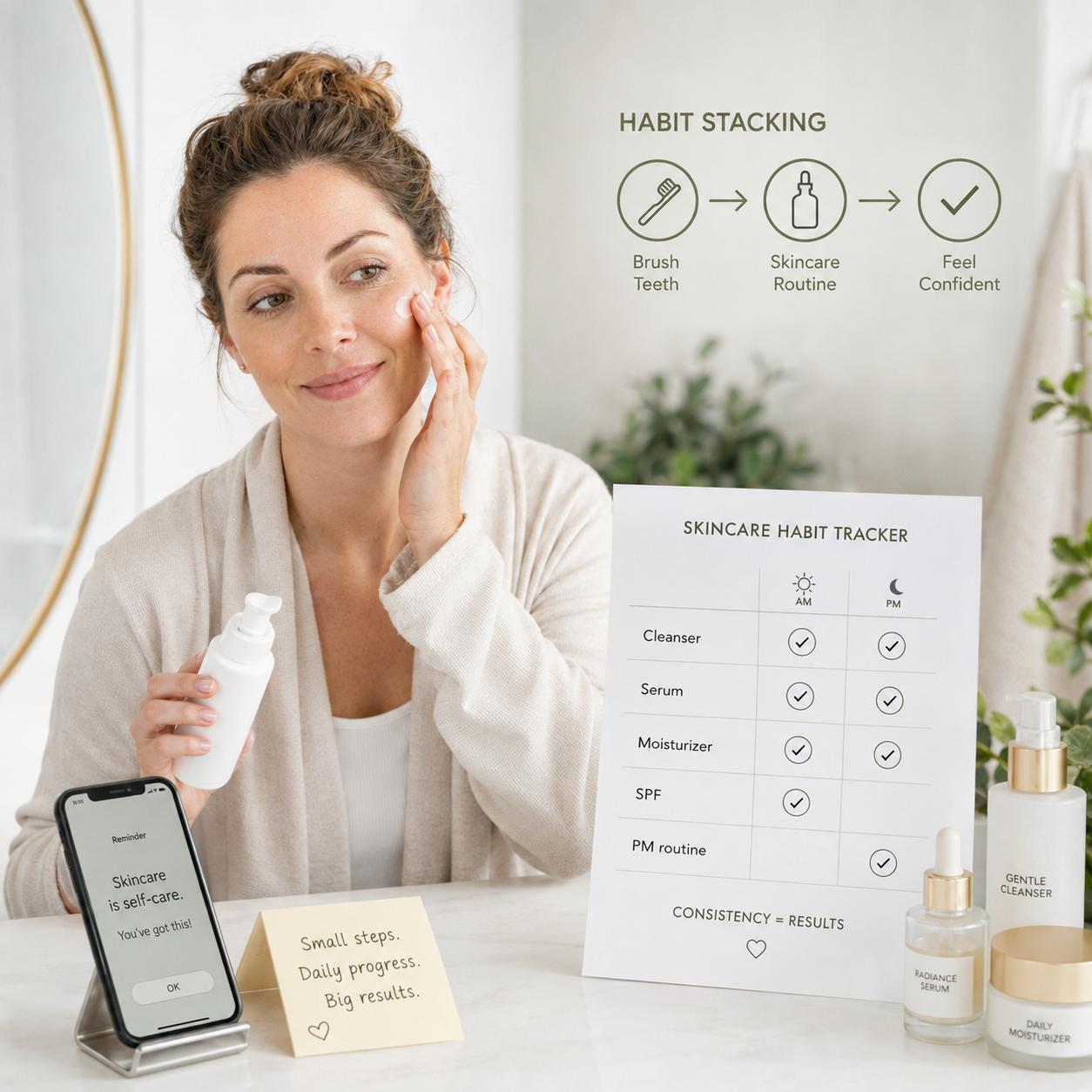
- Record the first use. Write down the date, frequency, surrounding products, and comfort. That record is more useful than relying on memory several weeks later.
This sequence is narrower than the guide to layering an entire skincare routine. The job here is to introduce and place one serum correctly, not to prescribe every optional step.
Which form should you buy: L-ascorbic acid or a vitamin C derivative?
Choose between L-ascorbic acid and a named vitamin C derivative by checking the complete ingredient list, disclosed percentage, package, directions, and your tolerance history. The supplied evidence does not establish that any listed form is universally more effective, stable, gentle, or suitable.
L-ascorbic acid and derivative label-evidence comparison
This comparison is deliberately limited to decisions that the package can support. It does not turn ingredient names into performance rankings.
| Ingredient name | What the label can establish | What the name alone cannot establish | Practical next check |
|---|---|---|---|
| L-ascorbic acid | Whether the named form appears in the ingredient list, plus its percentage when printed | Effectiveness, comfort, freshness, shelf life, or value | Check the disclosed strength, container, directions, storage wording, and return policy |
| Sodium ascorbyl phosphate | Whether this named derivative appears in the complete ingredient list | That it will be gentler or produce the same outcome as another formula | Assess the entire finished product and whether its directions fit your routine |
| Tetrahexyldecyl ascorbate or THD ascorbate | Whether the derivative appears and whether the brand discloses an amount | How it compares with another formula in use | Compare the complete formula, format, package, directions, and cost |
Ferulic acid or vitamin E may also appear on the ingredient list. Their presence is a visible package fact. Without a verified source, this article cannot use their presence to promise a particular stability level, shelf life, or skin outcome.
Two-minute vitamin C bottle audit
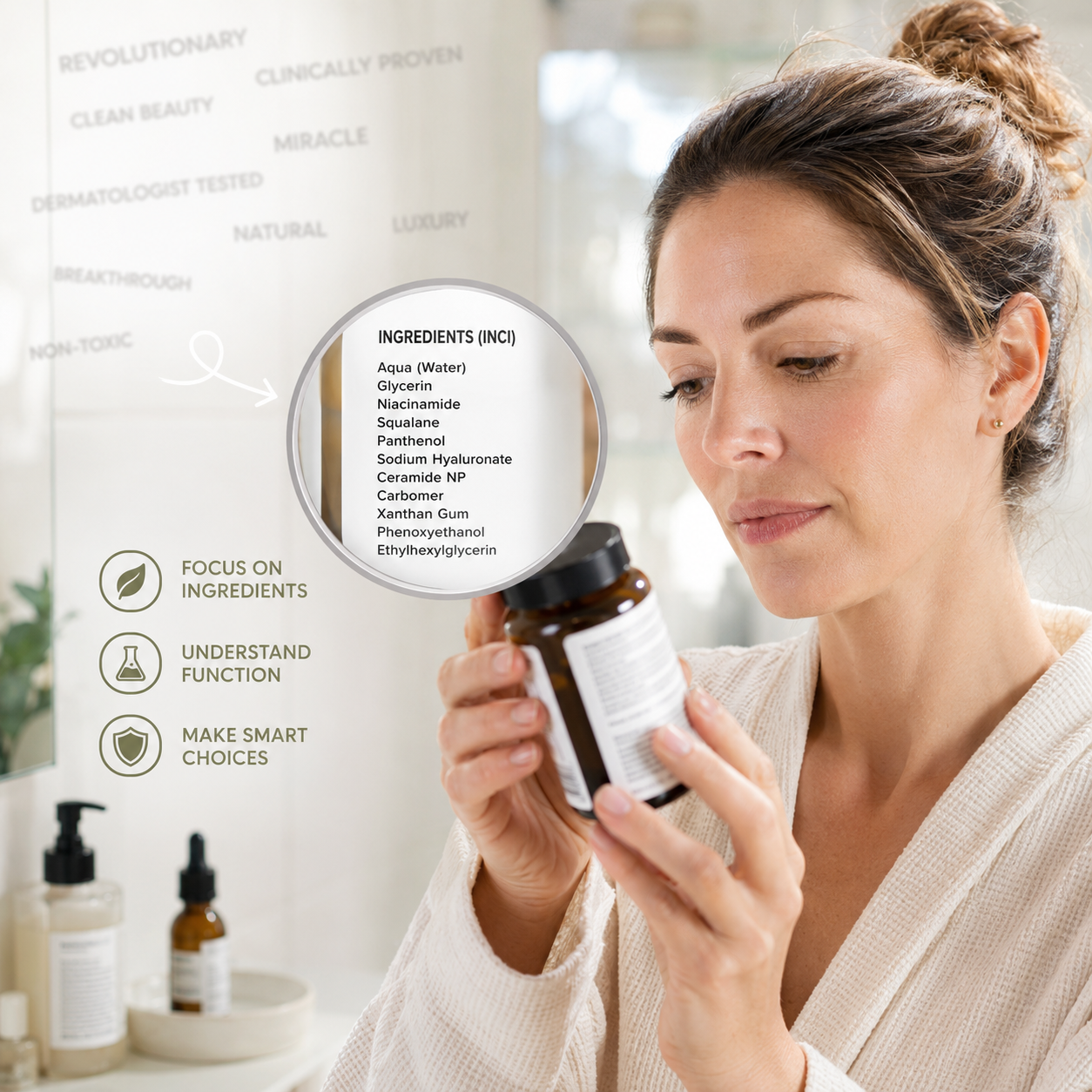
- Copy the exact vitamin C form from the complete ingredient list.
- Record the percentage if printed; otherwise write “not disclosed.”
- Note the container type, such as a pump, dropper, or tube, without assuming what that design guarantees.
- Copy the storage direction and period-after-opening symbol exactly.
- Record personal formula deal-breakers without presenting them as rules for everyone.
- Check whether the labeled time and frequency fit a routine you can maintain.
The site's guide to reading a skincare label expands this package-audit method. A missing percentage means the amount was not disclosed; it does not provide grounds to estimate one.
What percentage suits mature or sensitive skin?
No universal percentage can be supported by the supplied evidence. A conservative approach is to compare otherwise suitable products, choose the lowest clearly disclosed strength, and begin at the minimum frequency permitted by that product's directions.
Patch-test and low-strength introduction record
This record is specific to the vitamin C trial. It separates what the package directs from what you observe, without treating one person's response as evidence for everyone.
- Choose a candidate with readable directions, cautions, and storage information.
- Patch test only when the manufacturer supplies instructions for where, how much, and how long. Do not invent a protocol.
- Begin at the lowest labeled frequency instead of accelerating after one comfortable application.
- Keep other newly introduced products out of the same trial period.
- Record the form, disclosed percentage, labeled frequency, surrounding products, and observed comfort.
- Follow the package warning if the described reaction occurs. Seek appropriate professional help for a severe or persistent reaction.
Mature skin is not automatically sensitive, and this guide cannot diagnose sensitivity. If dryness or reactivity already makes the routine difficult, simplify the surrounding steps with the site's gentle routine for sensitive mature skin before deciding whether another active belongs in it.
A useful entry might read: “10% disclosed on the bottle; used Monday morning after the usual cleanser; no other new product; tightness continued into the next routine.” This is an observation record, not proof that the percentage or serum caused the response. It is still more useful than a note that says only “didn't work.”
Where does vitamin C go in a morning routine?
In this worked routine, vitamin C serum goes after cleansing and before moisturizer and sunscreen. Follow different placement instructions when the manufacturer gives them for your formula.
Morning placement map: vitamin C before sunscreen
- Cleanse or rinse: use the starting step already appropriate for your morning routine.
- Vitamin C serum: apply it to the skin condition specified on the label and use the stated amount.
- Optional familiar hydrating layer: retain it only when the combination remains comfortable and usable.
- Moisturizer: add it when it is part of your established routine.
- Sunscreen: use it as the final skincare layer and follow its complete directions.
Worked scenario: Dana has dry mature skin, a serum whose label permits morning use, a familiar moisturizer, and sunscreen. She inserts only the serum after cleansing. If the layers pill, she checks whether she used the labeled amount and lets the layer settle before replacing anything. If discomfort appears, she returns to her previous routine and consults the serum's warning language.
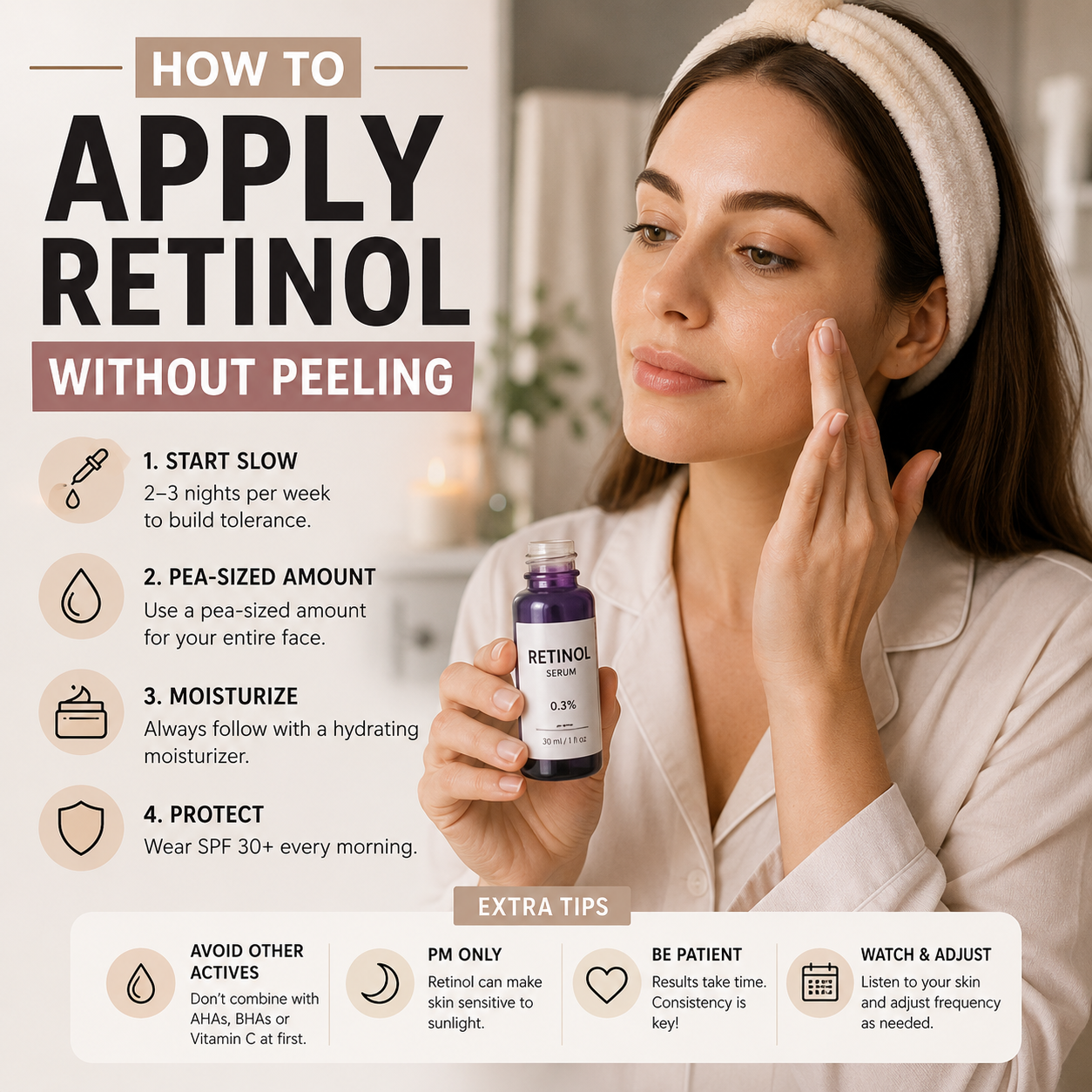
If a retinoid is already part of your evening routine and you are uncertain whether the two finished formulas suit one session, placing vitamin C in the morning keeps the trials separate. This is a troubleshooting arrangement, not proof that the combination is universally unsafe. The guide to starting a retinoid cautiously addresses that separate product.
How do you store vitamin C and assess a changed bottle?
Store the serum exactly as its package directs, record its condition when opened, and investigate later changes in color, smell, texture, or comfort. No universal refrigerator rule, color cutoff, shelf-life number, or oxidation diagnosis is supported by the supplied evidence.
Storage and oxidation decision check
- Capture the opening baseline. Record the date, color, smell, and texture in ordinary light.
- Copy the storage wording. Retain the exact direction printed on the bottle or carton instead of treating different storage phrases as interchangeable.
- Close the package as designed. Use its cap or pump correctly and avoid introducing water into the container.
- Compare the change. Describe what changed and when. A darker appearance may raise an oxidation question, but appearance alone does not let this page determine the chemistry or safety of that formula.
- Ask for product-specific guidance. Give the manufacturer the product name, batch details, opening date, storage conditions, and observed change.
- Follow the resulting instruction. Stop when the labeled period has ended or when the manufacturer confirms that the observed change is unacceptable.
This check prevents two unsupported shortcuts: assuming every darker serum is usable, or assuming every color change requires immediate disposal. The package and manufacturer can address the particular formula; a generic article without product evidence cannot.
How can you judge value without wasting the bottle?
Judge value by comfortable completed uses and routine fit, not by the printed percentage alone. Cost-per-use arithmetic exposes the expense of buying a formula that is too inconvenient or uncomfortable to finish.
Worked cost-per-completed-use example
Suppose a bottle costs $36 and its directions allow enough product for 90 planned applications. The calculation is $36 divided by 90, which equals $0.40 per planned use. If the schedule proves unsuitable and only 18 applications are completed, $36 divided by 18 equals $2 per completed use. These figures are hypothetical and do not describe the price, capacity, dose, or life of any real serum.
Before buying, write down the job you expect the serum to perform, the information printed on the product, its place in your routine, and the condition that would make you stop. If you cannot give the serum a distinct job, keeping the routine unchanged may be the more economical choice. The guide to choosing skincare without wasting money provides a broader purchase framework.
What can you realistically expect, and by when?
The supplied source pack does not verify a fixed result or timeframe for vitamin C serum. Choose one observable cosmetic goal, use the product according to its directions, and select a review date in advance without treating that date as a promised outcome.
Your record can track completed uses, comfort, compatibility with other layers, changes in the bottle, and one consistently observed cosmetic goal. Photographs may help with personal comparison when conditions remain similar, but they do not prove that the serum caused a change.
Frequently asked questions
Can you use vitamin C serum every day?
Use it daily only when the product directions permit daily application and your skin remains comfortable. Otherwise, follow the lower labeled frequency or request product-specific guidance from the manufacturer.
Should you use vitamin C in the morning or at night?
Use the time stated or permitted by the product. Morning is the worked choice in this guide because it gives the serum a clear position before moisturizer and sunscreen.
Can you use vitamin C and retinol in the same routine?
The supplied evidence does not establish a universal compatibility rule. Keeping vitamin C in the morning and an established retinoid at night is a practical way to separate variables when tolerance is uncertain.
How do you know whether vitamin C serum has oxidized or gone bad?
Compare its current color, smell, and texture with your opening record, package instructions, and the manufacturer's guidance. A generic color cutoff is not supported by the evidence supplied for this article.
Is vitamin C serum suitable for sensitive or mature skin?
Age alone cannot determine suitability, and sensitive skin varies. Choose a well-labeled product conservatively, follow its testing and frequency directions, and respond to reactions according to its warning language.
By Mia Carter, reviewed by The Fern Edit Editorial Team. Updated August 16, 2026. Educational, not medical advice. Send questions or corrections through the contact page.
This article was produced with AI assistance under human editorial review, consistent with The Fern Edit's editorial policy.