
Chest and décolletage wrinkles come mostly from sun exposure and side-sleeping, not age alone. The biggest wins are daily SPF on your chest, sleeping on your back (or holding the skin flat with a pillow), and a gentle nightly routine with retinol or peptides. Results take weeks to months, so prevention makes the biggest long-term difference.
Chest and décolletage wrinkles, handled honestly: the real causes, how to prevent sleep lines, a gentle chest routine, and results you can expect.
- Home
- Skin Firming
- Chest and Décolletage Wrinkles
Skin Firming
Chest and Décolletage Wrinkles: What Genuinely Helps
By Mia Carter · Reviewed by The Fern Edit Editorial Team · Updated July 23, 2026 · Educational, not medical advice
You cannot fully get rid of set-in chest wrinkles with creams alone, but you can soften how they look and stop new ones from forming. The plan that genuinely helps is narrow: protect the exposed upper chest from sun every day, keep the skin moisturised, add a gentle retinoid a few nights a week if it agrees with you, and change the sleep position that folds the skin overnight. Prevention and repair are two different jobs. A fresh sleep line that is mostly gone by midday can improve a great deal, while a deep, long-standing crease fades only partly.
The Fern Edit is a United States beauty and self-care publisher that turns non-invasive routines into calm, honest guidance for women who want realistic results before they spend. On this page the décolletage means the exposed upper chest below the neck and around the collarbones, and a chest wrinkle is a vertical fold or crease in that thin skin.
What this guide on how to get rid of chest wrinkles adds, beyond the site's neck, forehead and sunscreen pages: a plan built only for the chest, its likely causes, a prevention list organised around sleep position and exposed-skin SPF, a routine scaled down for thin décolletage skin, a seven-day line log, a worked example, and a five-question filter for pads and silicone tape. That combination lives nowhere else on this site.
An honest note on evidence. The verified source pack for this guide contains no clinical studies, so nothing here is presented as a promised result. The mechanisms below are general, widely understood skin reasoning, and the timeframes are realistic expectations rather than guarantees. Where a specific figure appears, its source is named on the page.
What causes chest and décolletage wrinkles?

Vertical chest wrinkles usually come from two everyday things working together: the skin folding the same way night after night when you sleep on your side, and years of sun reaching an area most people leave out of their routine. Neither needs a diagnosis to start addressing.
The upper chest has thinner skin than your face, with fewer oil glands and less underlying support, so it creases readily and is slow to recover. It also loses skin elasticity, the skin's ability to spring back after it has been stretched or folded. That springiness comes largely from elastin and collagen in the deeper layers; as those fibres degrade with age and, above all, with sun, each fold relaxes more slowly, so a crease that once eased on its own gradually starts to stay. Side and front sleeping press the chest together and hold that skin folded into vertical lines for hours at a stretch. Sun plays the long game, and this is the exact reason the chest is routinely missed: lower necklines leave the décolletage bare, yet most people stop applying sunscreen at the jaw or neck, so the chest collects cumulative sun change earlier than better-protected skin. One tell sorts the two causes apart. A line that looks deep first thing and softens by midday is behaving like a sleep line. A line that looks the same morning, noon and night is more established, and your expectations should shift with that.
Can you actually get rid of chest wrinkles?

Not completely. An established vertical crease softens rather than disappears with topical care, while a fresh sleep line that is mainly a morning problem can improve a great deal. Being honest about this saves you money.
No moisturiser, pad, tape or pillow rebuilds the deeper structure of skin that has creased over years, and this guide will not pretend otherwise. What consistent care can realistically do is keep the skin hydrated and comfortable, protect it from further sun, and reduce the nightly folding that deepens a line. So keep the two jobs apart: judge a fresh sleep line over weeks, not days, and judge an older crease by whether the skin looks smoother and feels better rather than by whether the line has gone. For a neighbouring area with the same thin-skin behaviour, the site's crepey neck care routine is worth a look, though the chest is its own task and should not simply inherit the neck plan.
How can you prevent chest wrinkles?

Prevention is where the real difference is, because stopping a crease forming is far easier than undoing one. Three habits carry most of the weight, and each has an honest limit.
- Cover the chest with the sun protection you already use. Whenever a neckline leaves the upper chest bare, include that skin when you apply SPF, and reapply on long days outdoors. Amount matters as much as the habit: sunscreen is lab-tested at 2 mg per square centimetre of skin, and by that standard the chest and stomach together need about 6 ml, roughly one teaspoon, to reach the SPF printed on the bottle, according to The Fern Edit's sunscreen calculator (2026). Most people apply far less than that. Limit: sunscreen prevents further change, it does not reverse existing lines.
- Reduce the overnight fold. If your line looks worse in the morning, try sleeping more on your back, or place something soft between the chest so the skin cannot crease into itself. Limit: almost nobody holds one position all night, so treat this as reducing folding, not eliminating it.
- Keep the skin hydrated. Dry, tight skin creases more and looks more lined; a plain moisturiser after showering keeps the area supple. Limit: comfort and a smoother surface are real, but softness is not lasting structural repair.
A minimal topical routine for thinner chest skin

Treat the décolletage gently and scale your face routine down rather than copying it across, because chest skin is thinner, has fewer oil glands, and irritates faster than facial skin.
A workable minimum is a moisturiser morning and night, sunscreen on any day the area is exposed, and, if your skin tolerates it, a gentle retinoid two or three nights a week to support skin renewal over time. Introduce a retinoid slowly and patch test a small area first; if the skin stings, flakes or reddens, space it out further or drop it. Strong acids, scrubs and high-strength actives meant for the face are easy to overdo here, so go lighter than you think you need to. This is also where the chest differs from the neck rather than mirroring it: the neck creases mostly from posture and constant daily movement, while the chest creases mainly from overnight compression, so the two thin-skinned areas need different fixes even though the products overlap. Because the chest is a place it is genuinely easy to overspend on hopeful creams, the guide to choosing skincare without wasting money is worth reading before you buy anything marketed for cleavage lines. This page cannot tell you a single product works, only how to use a gentle routine sensibly.
Track it: the seven-day chest-line log
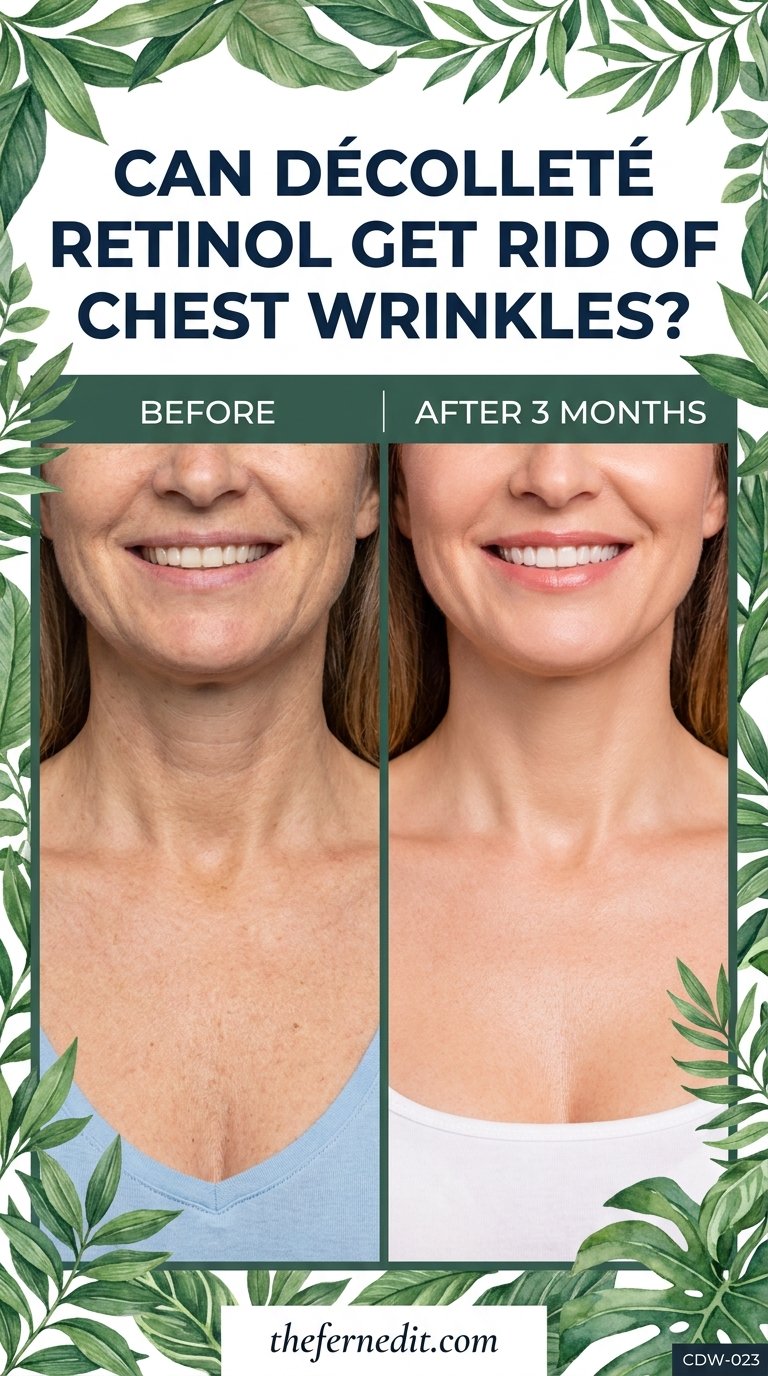
Before you change anything, log the same patch of upper chest at three fixed moments for seven ordinary days, so one mirror or one bad-light photo does not become your whole conclusion.
- On waking: mark the line distinct, faint, or not noticed, and note your waking position if you catch it.
- At midday: use the same three labels, without stretching or massaging the area first.
- Before bed: note whether the skin felt comfortable or dry, and whether that day's neckline left it exposed.
The point is the pattern. Seven days ending in five "distinct on waking" marks and two "faint" is a mostly stable morning line, which points toward prevention and calm expectations. A three-and-four split is variable, which is exactly the kind of line worth testing one change against. If you keep private photos, hold the distance and lighting roughly constant and never let a single image decide it.
A worked example
Here is how the log turns into two modest actions rather than a five-product system.
A reader logs her line as distinct on six of seven mornings and faint by midday on five of them. She usually wakes on her right side, and the crease sits where the chest folds in that position. On four days her neckline left the area bare, and her sunscreen habit stopped at her neck. Reading that back, the morning-heavy pattern points to folding, and the two exposure gaps point to missed protection. Her plan is small: sleep more on her back for a week while keeping the log, and include the chest in her SPF whenever it is on show, using roughly the one-teaspoon amount noted above. She judges the first by whether the morning marks ease, and the second by whether the coverage gap closes without irritation, not by whether a years-old line has vanished in seven days.
Do chest wrinkle pads, silicone tape, or specialty pillows work?

They can hold the skin flat while you wear them, but flatter skin the moment a pad comes off is not evidence of lasting wrinkle removal, and no verified evidence here supports a permanent result.
Silicone chest pads and tape work by physically stopping the skin folding overnight, much as changing your sleep position does, so any morning improvement may simply reflect less folding rather than repair. Specialty pillows make the same promise through positioning, keeping you off your side so the chest cannot compress. None of that is unreasonable to try as a comfort or anti-folding aid, but it is a positioning experiment, not a treatment, and it competes with the free option of adjusting how you sleep. Before buying, run five questions:
- What is actually promised — comfort and fewer morning folds, or lasting change? Only the first is realistic.
- When was the result judged — right after removal, or later in the day once skin has settled?
- Compared with what — plain nothing, or only flattering before-and-after photos?
- Who produced the evidence — the seller and its own reviews, or something independent?
- What does it really cost — repurchases, cleaning, residue, and any disrupted sleep?
If the seller cannot answer those, treat the item as optional. Never use ordinary household tape on skin or improvise a use the product label does not describe.
What results can you honestly judge?

Judge four things you can actually see: whether the skin feels comfortable, whether you protect it from sun consistently, whether a morning line softens over a few weeks, and whether you have stopped buying products that promise more than care can deliver. You cannot judge whether a deep crease is permanently gone, because no topical routine removes one.
| What you notice | Sensible next step | Conclusion to avoid |
|---|---|---|
| Distinct on waking, faint later | Reduce overnight folding for a week | Side sleeping is the only cause |
| The same at every check | Focus on comfort and prevention | A cream will erase it |
| Area regularly left bare | Include it in daily SPF, about a teaspoon | Face sunscreen already covers it |
| Skin feels dry or tight | Moisturise after showering | Instant softness is lasting repair |
| Tempted by a pad or tape | Run the five questions first | Seller photos prove it works |
When should you see a professional?

Stop treating a mark as a cosmetic wrinkle and get it checked if it is new, changing, painful, bleeding, itching or otherwise unusual, because that is outside what any routine can address.
The Fern Edit stays in the non-invasive lane by choice. For broader over-40 routine guidance the mature-skin collection is a good next stop, and you can contact the editorial team to flag an error on this page, though that is not individual medical advice.
Frequently asked questions
How do you get rid of chest wrinkles?

You mostly prevent and soften them rather than erase them: protect the exposed chest from sun, keep it moisturised, reduce the overnight folding from side sleeping, and use a gentle routine over time. Fresh sleep lines improve most; deep, long-standing creases fade only partly.
Can chest wrinkles disappear completely?

An established crease usually softens rather than vanishes with topical care and habit changes. A morning-only sleep line can improve a lot once the skin stops folding the same way each night. No cream, pad or pillow rebuilds skin that has creased over years.
Are chest wrinkle pads or silicone tape worth buying?

Treat them as optional anti-folding aids, not treatments, since they mainly hold the skin flat while worn, much like changing your sleep position for free. Weigh residue, comfort, repeat cost and sleep disruption before spending.
Can I use face retinol on my chest?

You can use a gentle retinoid on the chest, but treat it as its own area: start low, patch test, and use it only two or three nights a week, because chest skin irritates more easily than the face. Follow the product label and ask a professional if you are unsure.
Is chest skincare the same as neck skincare?

Do not assume they are interchangeable. This guide treats the upper chest as its own area, with its own sleep-fold and sun-exposure pattern, rather than transferring the neck routine unchanged.
This page was prepared with automated assistance and reviewed against The Fern Edit's editorial standards. Product, ingredient, biological, frequency and effectiveness claims were withheld or framed as general reasoning wherever verified evidence was unavailable.
 📌 Save
Love this guide? Save it 📌
Pin it to your favorite board so it's easy to find again — and share it with a friend who'd love it too.
Save to Pinterest
We cite sources and update this guide regularly.