Why hair thins around perimenopause and menopause, and the scalp, styling and care habits that realistically help. No overpromising about regrowth.
Hair Thinning in Perimenopause and Menopause: What Genuinely Helps
The honest answer: around perimenopause and menopause, shifting hormones nudge more hairs into the resting-and-shedding phase and let new strands grow finer, so the part looks wider and the ponytail feels thinner. Noticing more shedding at this stage is very common and, on its own, rarely a sign of illness. Non-prescription care cannot force lost density back, but it can protect the hair you still have, make thinning far less visible today, and keep the scalp in good condition for whatever does grow. The habits that reliably help are gentler scalp care, less mechanical and heat stress, smarter cuts and partings, and knowing the point where thinning stops being a routine question and becomes one for a clinician.
The Fern Edit is a United States beauty and self-care publisher that produces calm, non-invasive routine guidance for women who want realistic results before they spend. Its coverage centres on mature-skin and hair-care education for readers in the U.S. and stays in the lane of routine rather than medical treatment, as set out on its About page (reviewed August 5, 2026).
What this page adds, beyond the site's general guide to thicker, fuller-looking hair and its other hair-care guides, is one thing those pages do not give you: a menopause-specific read on why the shedding changed at this life stage, a plain test for telling diffuse thinning apart from patterned or medical loss, the styling choices that add visible density now, and a clear line for when self-care is no longer the right tool.
What actually changes in your hair around perimenopause and menopause
In short: falling estrogen pushes more hairs into the resting phase and lets regrowing strands come in finer, so overall density drops even though you are not going bald. Increased shedding at this stage is common and is usually not a signal that something is medically wrong.
Here is the fuller picture, framed as general background rather than a diagnosis. Across perimenopause into menopause, estrogen and progesterone fall and fluctuate, and the androgens your body always carried become relatively more influential. Estrogen tends to keep hairs in their growing phase for longer; as it drops, more follicles slip earlier into telogen, the resting phase that ends in shedding. At the same time, individual follicles can miniaturise, meaning the hair they produce grows finer and shorter than it used to. You often notice that second change as a smaller ponytail even when you are not finding more hair in the drain.
Two things follow. First, this is usually diffuse: a general loss of density spread across the top and crown, not a bald patch. Second, the hair shaft itself may be thinner, which is why volume can feel gone even when total hair count has barely moved. Perimenopause is the run of hormonal fluctuation leading up to your final period; menopause is the point twelve months after it. Hair changes can show up anywhere across that window, and timing varies widely from one person to the next.
The non-clinical line sits here. Routine care, better styling and a calmer scalp are firmly within what a beauty and self-care resource can help with. Anything that looks like a defined bald spot, rapid or patchy loss, a painful or scaling scalp, or thinning alongside other new symptoms belongs with a doctor or a dermatologist, because those can point to causes that a shampoo will never touch. This guide deliberately stops at that line.
Shedding, thinning, or hair loss? A quick way to tell
Short answer: everyday shedding is losing a normal amount of hair that keeps regrowing; menopausal thinning is a gradual, all-over drop in density and hair diameter; medical hair loss tends to be patterned, patchy, sudden, or paired with scalp symptoms, and it needs a clinician. Use the table below to place what you are seeing before you spend on anything.
| What you notice | Most consistent with | Reasonable next step |
|---|---|---|
| A handful of hairs when you wash or brush, length unchanged, density steady | Normal daily shedding | Nothing needed; gentle handling is enough |
| Wider part, smaller ponytail, finer strands, spread across the top over months | Diffuse menopausal thinning | The scalp, styling and care habits on this page |
| Sudden heavy shedding a few months after illness, surgery, stress or a crash diet | A telogen shedding episode | Usually settles; ask a clinician if it does not |
| A distinct bald patch, receding line, or a painful, red, flaking or itchy scalp | A pattern or scalp condition beyond self-care | See a doctor or dermatologist |
The point of sorting it first is simple. Diffuse thinning responds slowly and partially to good habits, which is worth doing. The other categories either resolve on their own or need a professional, and pouring money into serums for those is how the whole mature-skin category earns its reputation for false hope.
What helps the look of density right now
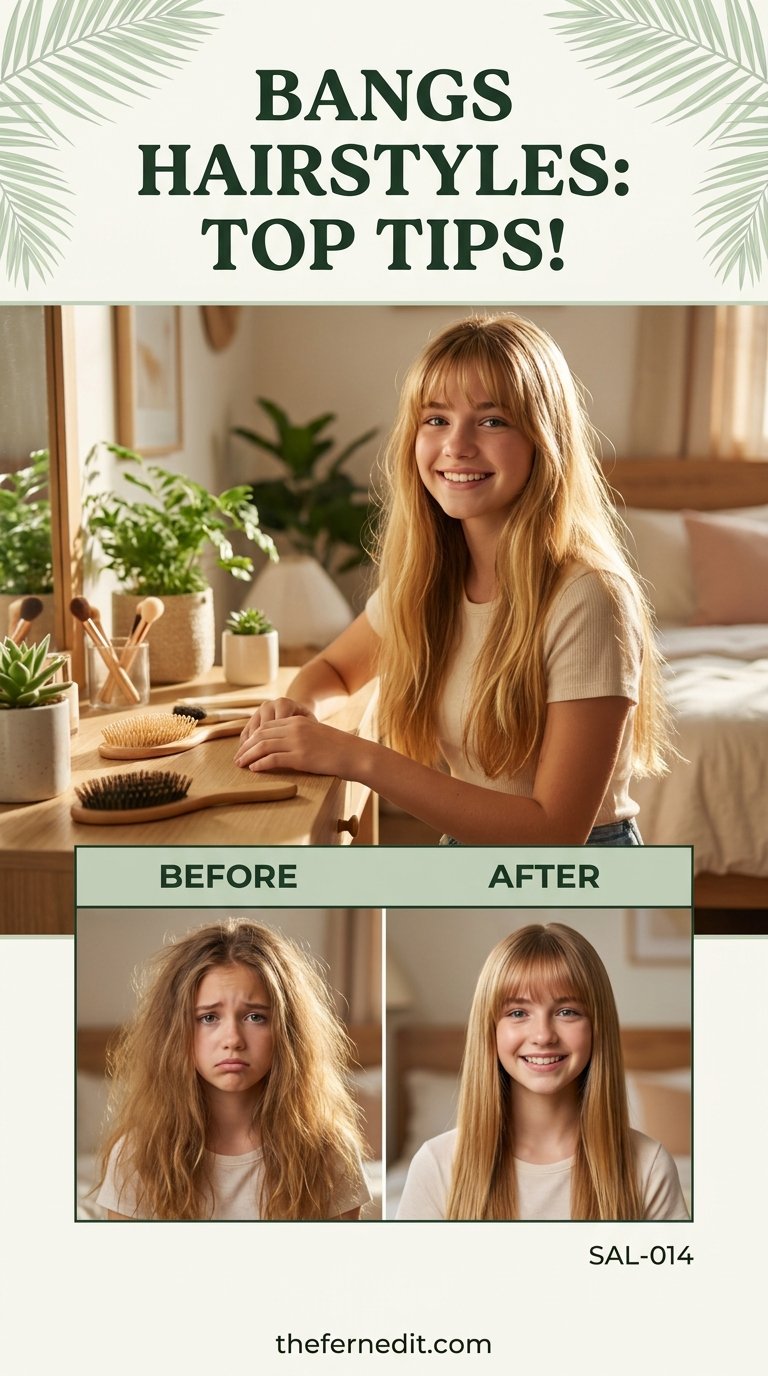
Styling is the fastest, most honest lever you have, because it changes what people see today rather than promising regrowth in six months. None of this alters a single follicle. It works by managing where light falls, where scalp shows, and how much of your existing hair stands up rather than lying flat.
- Move the part. A part that has lived in the same place for years exposes a narrow strip of scalp that only widens as density drops. Shifting it a centimetre, or switching to a soft zigzag, lifts the roots and hides the through-line.
- Cut for weight, not length. Long, one-length hair pulls flat and drags the eye to sparse ends. A blunter line and a few face-framing layers make the same amount of hair read as fuller. A shorter overall length almost always looks denser than long hair that has thinned.
- Add root lift at the base. A lightweight root-lifting mousse or a volumising powder at the crown, then drying with your head tipped forward, does more for visible fullness than any length-focused product.
- Consider colour contrast. High contrast between hair and scalp makes thinning obvious. Softer, lighter, or root-shadowed colour reduces the contrast so scalp shows less.
A worked example: a reader with fine, chin-length hair parted dead-centre and flat-ironed straight will show the maximum scalp for her density. Move the part off-centre, keep two inches of length off, dry with a round brush for root lift, and skip the flat iron, and the visible density can look noticeably greater within one wash-and-style, with zero change to the hair itself. Heat and tension are the quiet villains here, so it helps to compare the everyday options directly:
| Habit | Effect on visible density | Effect on the hair over time |
|---|---|---|
| Tight, high, everyday ponytail | Slims the silhouette, exposes the part | Constant tension can weaken hair at the hairline |
| Daily flat-ironing straight | Flattens roots, scalp shows more | Cumulative heat encourages breakage on already-fine hair |
| Off-centre or zigzag part with root lift | Hides scalp, reads fuller immediately | Neutral; no added stress |
| Air-dry or cool-shot finish, looser styles | More natural body at the root | Protective; less breakage on fragile strands |
If heat styling is a fixed part of your week, the site's guide to styling with heat safely covers how to keep the density you have while you use it.
A gentle scalp-care routine, adapted for menopausal hair

Scalp health is the environment the hair grows from, and a drier, more reactive menopausal scalp benefits from the same principles the site sets out in Scalp Care 101, with three specific tweaks rather than a different routine. Follow that full guide for the base method; the adjustments below are what change for this life stage.
- Wash to the scalp's oil, not the calendar. Menopausal scalps often run drier, so the every-other-day habit that suited you at thirty can leave the scalp tight and flaky now. Let oiliness set the frequency. The site's overview of how often to wash your hair walks through reading your own scalp instead of following a fixed rule.
- Treat the scalp like the mature skin it is. The same barrier-and-hydration thinking the site applies to the face applies here. A gentle, low-stripping cleanser and an occasional scalp moisturiser or lightweight oil keep it comfortable, which matters more when estrogen-related dryness is in play.
- Be lighter with exfoliation and tools. Fragile, finer hair snaps under aggressive scalp scrubs, stiff brushes and tight styles. Keep any exfoliation occasional and gentle, and detangle from the ends up with a wide-tooth comb.
What this does and does not do is worth being plain about. A calm, well-cared-for scalp is the most supportive ground you can give the hair that grows, and it reduces the breakage that makes thinning look worse. It does not add follicles or reverse miniaturisation. That honesty is the point of doing it anyway.
What to realistically expect over weeks and months
Scalp hair grows about half an inch (1.27 cm) a month, according to The Fern Edit's hair growth calculator (reviewed August 5, 2026). That average is why any change you make today shows up in new growth over seasons, not weeks, and why patience here is the mechanism rather than a platitude. Set expectations against that timeline rather than a product label's promise.
In the first few weeks, the honest wins are cosmetic and behavioural: less breakage from gentler handling, a scalp that feels more comfortable, and hair that looks fuller because you have changed the cut, part and styling. Over a few months, reducing tension and heat can mean you hold on to more of the length and density you already have. What no non-prescription routine can promise is regrown density where follicles have miniaturised. If a page, product or influencer promises menopausal regrowth from a topical alone, treat that as the warning sign it is.
When to see a professional
Short answer: book a doctor or dermatologist if the loss is patchy or patterned, comes on suddenly and heavily, or arrives with a scalp that is painful, red, scaling or itchy, or alongside other new health symptoms. Self-care is the right tool for gradual, all-over thinning with a healthy scalp; it is the wrong tool for anything on that list.
A professional can look for causes a routine cannot address, such as thyroid changes, iron or other nutritional shortfalls, medication effects, or a scalp condition, and can talk through evidence-based medical options that sit outside this site's remit. Asking for that help is not giving up on self-care; it is matching the problem to the person who can actually assess it. Bring a short note of when the change started, how fast it moved, and any other symptoms, because that history is what makes the appointment useful.
Caveats and what would change this advice
The physiology in this guide is presented as widely-understood general background, not as a clinical fact drawn from a specific study, because the aim is to help you frame your own situation, not to diagnose it. Individual experience varies a great deal, and nothing here replaces personal medical advice. This is education, not medical guidance, and results differ from person to person.
This page is due for review if the hormonal-hair picture is meaningfully updated by settled evidence, if the site publishes a dedicated menopause-hair or barrier-repair guide the routine should point to, or if the linked scalp, washing or heat guides change. Any future factual claim added here will carry a named, dated source or be removed, and the guidance stays deliberately within non-invasive routine.
Frequently asked questions
Does menopausal hair thinning grow back?

Some of it can. Where thinning is driven by more hairs resting and shedding, or by breakage and tension, gentler care and styling can let density recover over months. Where follicles have miniaturised, a non-prescription routine will not regrow lost thickness, which is why this guide focuses on protecting and presenting the hair you have.
What is the single most useful habit to start with?

Reduce mechanical and heat stress. Loosen tight styles, cut back on daily flat-ironing, and detangle gently from the ends up. It is free, it protects fragile strands immediately, and it prevents breakage that makes thinning look worse.
Will a special shampoo fix it?

A gentle, scalp-appropriate shampoo supports a healthy scalp, which is worth doing, but no over-the-counter shampoo reverses hormonal thinning. Judge products on whether they keep your scalp comfortable and your hair unbroken, not on regrowth claims.
How long before styling and scalp changes show?
Styling and cut changes look fuller the same day. Care habits that reduce breakage show over a few weeks, and anything tied to new growth follows hair's slow pace of about half an inch a month, so give it seasons rather than weeks.
Educational, not medical advice. If your hair loss is sudden, patchy, or comes with scalp or other symptoms, please see a doctor or dermatologist.

We cite sources and update this guide regularly.