Beginner gua sha needs four basics: a clean tool, enough slip, light pressure, and slow technique. Choose a tool that feels comfortable in your hand, use a product that prevents dragging, and keep the routine short while you learn.
Beginner gua sha can feel confusing because there are so many tools, oils, angles, and before-and-after claims online.
It comes down to four basics: a clean tool, enough slip, light pressure, and slow technique. Get those right and the rest is easy.
Why this works for Pinterest and search
A clear tools-and-technique guide answers exactly what a beginner needs before buying or trying gua sha.
Before you begin
This guide is general beauty education, not medical advice. Face yoga and facial massage are not treatments and results vary. If you have pain, recent cosmetic procedures, skin irritation, jaw problems, or other concerns, check with a qualified professional first.
The most useful routines respect your real life. Keep it simple, track what works, and adjust based on comfort rather than chasing every trend.
Beginner gua sha basics
1. Choose a simple shape
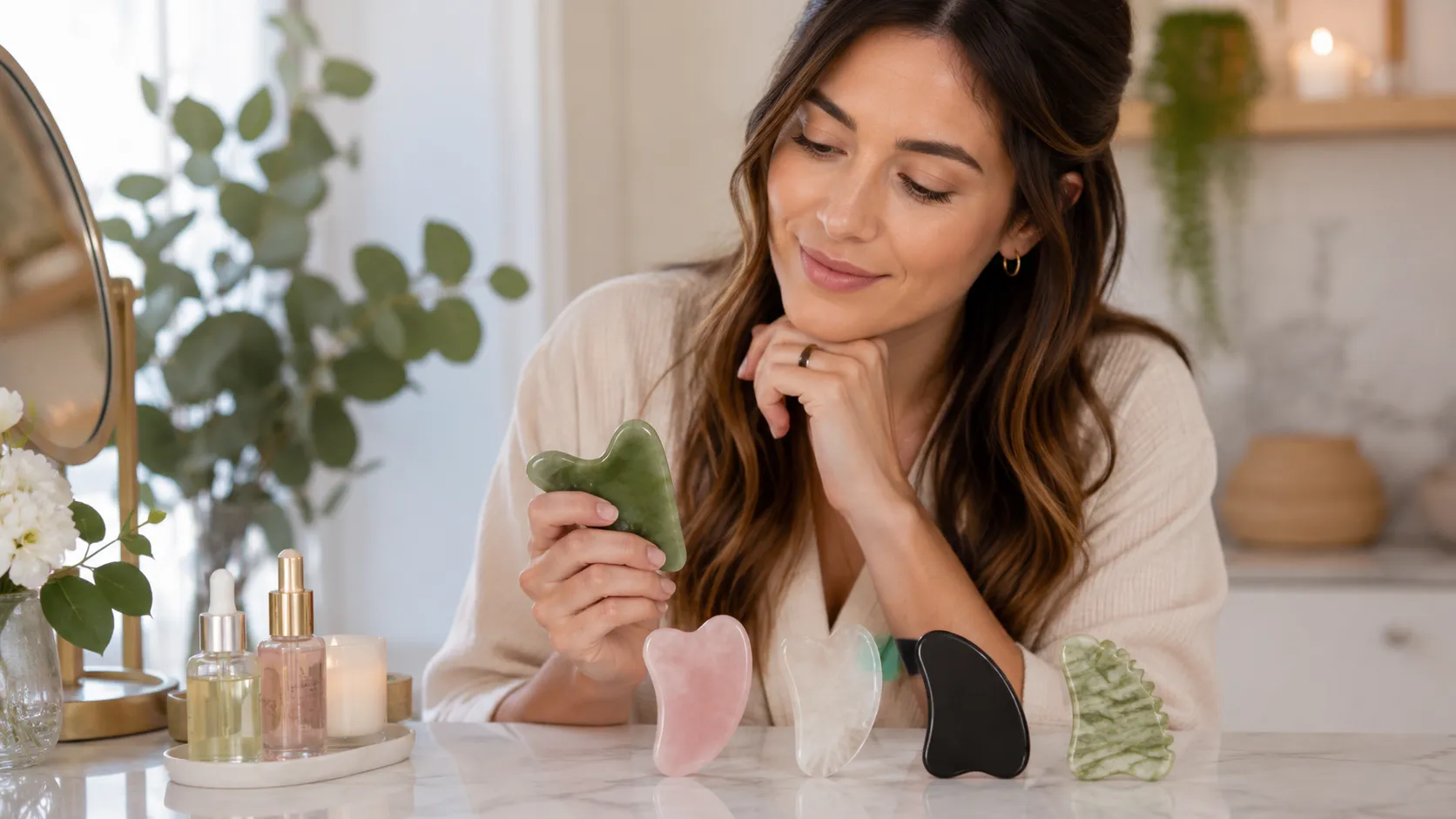
A heart or wing-shaped tool is easy for beginners because it has edges for the jaw, cheeks, and forehead.
2. Pick a comfortable material
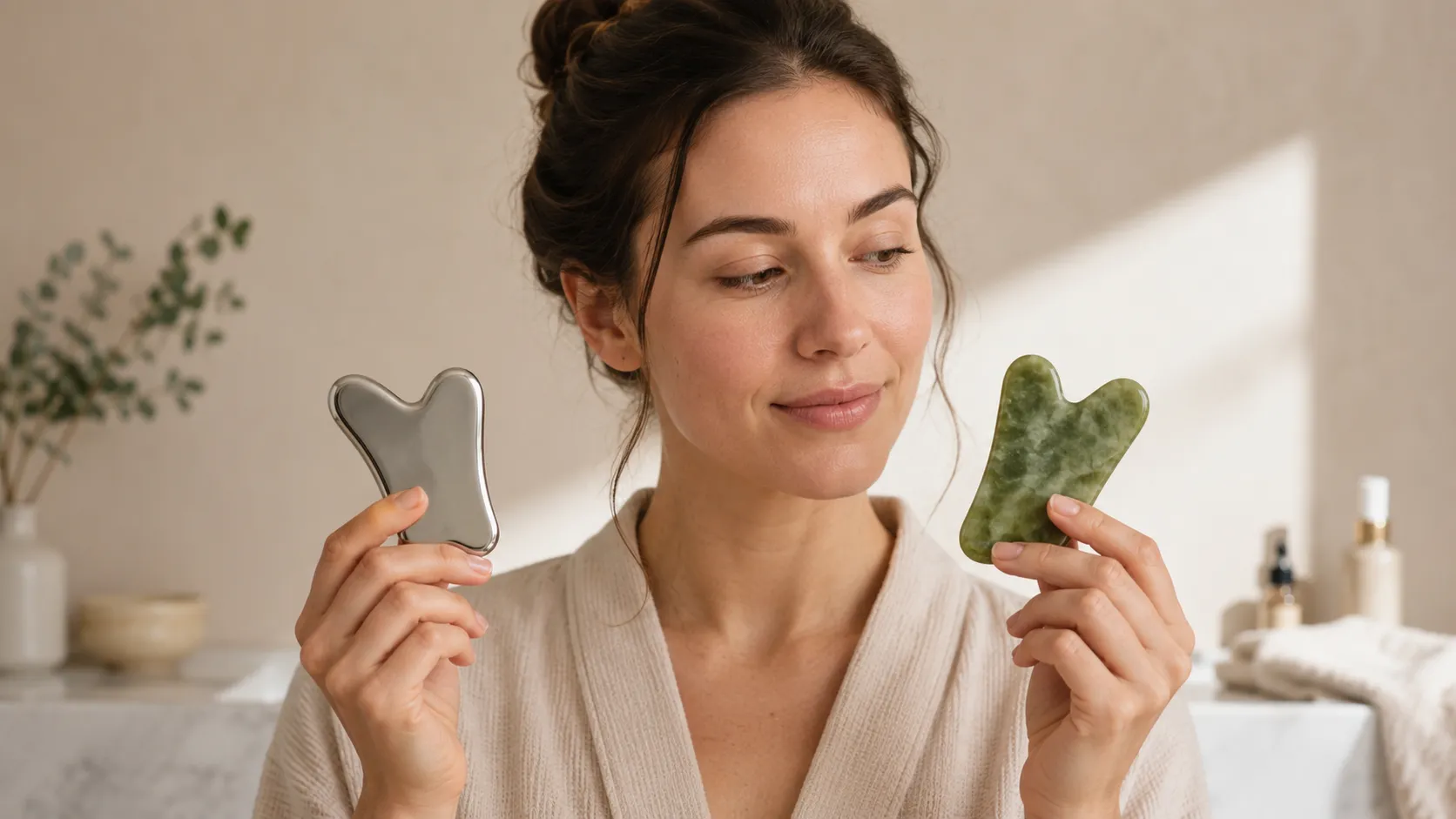
Stone, stainless steel, and other materials all work — comfort and easy cleaning matter more than trendiness.
3. Use enough slip
Oil, balm, serum, or moisturizer can work if your skin tolerates it and the tool glides.
4. Start with light pressure
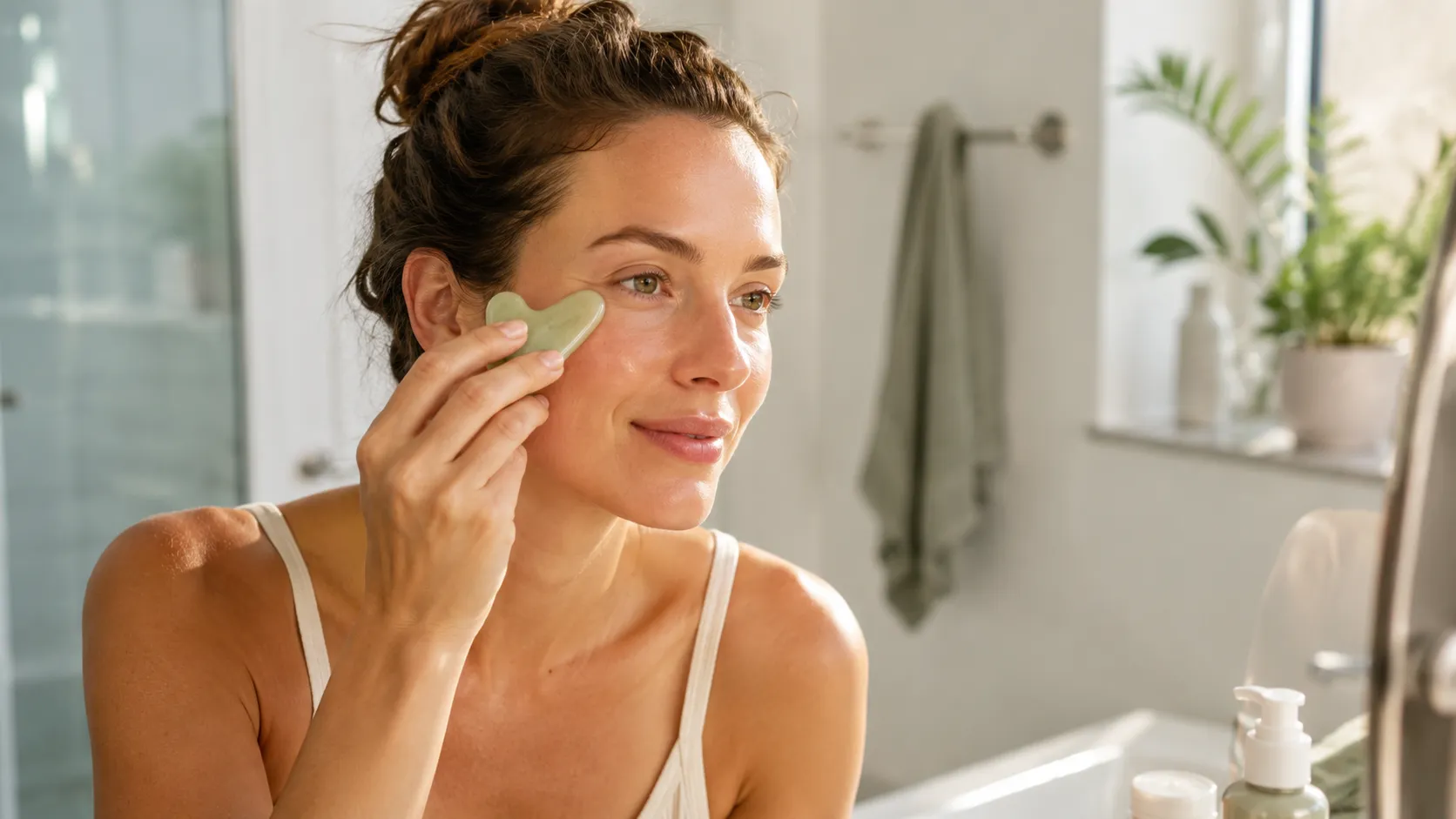
Beginners often press too hard; facial gua sha should feel relaxing.
5. Hold at a low angle
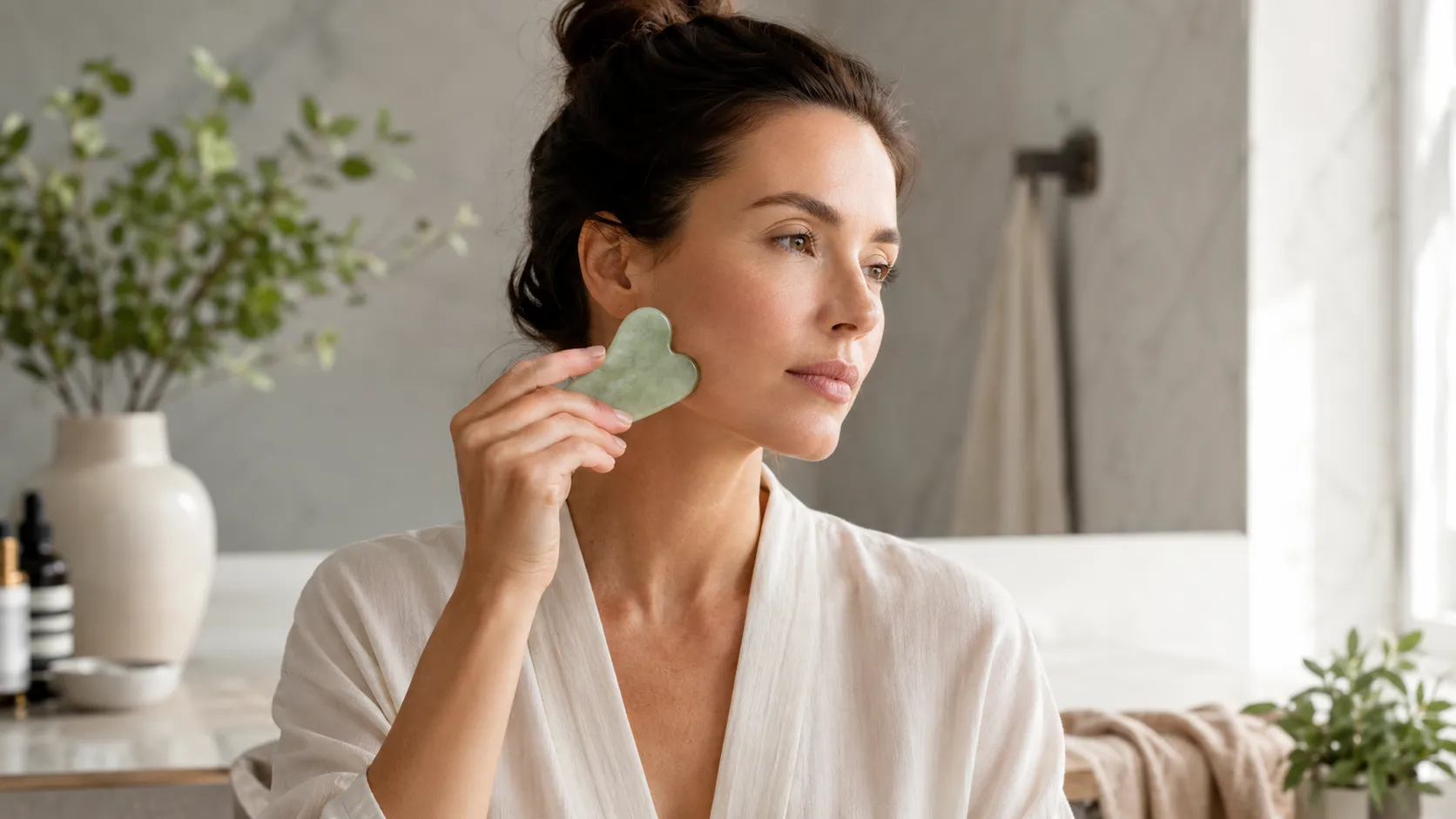
Keep the tool close to the skin instead of scraping straight down.
6. Move slowly
Slow strokes help you control pressure, while fast scraping feels aggressive.
7. Avoid irritated areas
Do not use gua sha over active irritation, broken skin, sunburn, or painful acne.
8. Clean after use
Wash and dry the tool every time.
9. Do not chase perfection
A simple routine done gently beats a complicated routine done harshly.
10. Track skin response
If your skin becomes red, sore, or irritated, reduce frequency or stop.
How to turn this into a weekly routine
| Day 1 | Read the guide, choose your routine level, and save the matching pin. |
| Day 2 | Try the simplest version and note comfort, time, and any products used. |
| Day 3 | Repeat the same routine instead of adding more steps. |
| Day 4 | Check for irritation, dryness, or soreness and adjust before continuing. |
| Day 5 | Add one supporting habit such as sunscreen, hydration, or a tracker. |
| Day 6 | Take a realistic progress note, using the same lighting for any photos. |
| Day 7 | Review what felt useful and what should be simplified. |
This weekly structure keeps the routine actionable and pairs well with a printable tracker or checklist.
Product and image notes
Show gua sha tools, facial oils, and moisturizers with brand-neutral packaging. Avoid claims that any tool reshapes the face.
Common mistakes to avoid
- Trying too many new products or steps at once
- Copying a viral routine without adjusting for your skin, face, or lifestyle
- Using harsh pressure when the routine should stay gentle
- Expecting instant results from a routine that depends on consistency
- Skipping sunscreen or basic care while chasing trends
Final thoughts
The best beginner setup is a smooth, comfortable tool, a product that gives slip, and a gentle hand. Material matters less than safe technique and easy cleaning.
Explore more from The Fern Edit: Gua Sha, Face Yoga, Skin Firming, Mature Skin, printables.
 📌 Save
Love this guide? Save it 📌
Pin it to your favorite board so it's easy to find again — and share it with a friend who'd love it too.
Save to PinterestFrequently asked questions
What gua sha tool is best for beginners?
A simple comfortable tool with smooth edges is best. Material matters less than safe technique and easy cleaning.
What oil should I use with gua sha?
Use a facial oil, serum, or moisturizer that your skin tolerates and that gives enough slip.
How hard should I press?
Use light pressure. Facial gua sha should not hurt or leave bruises.
How do I hold the tool?
Hold it at a low angle against the skin and glide slowly.
Can beginners use gua sha daily?
Some can, but it is safer to start a few times per week and watch how your skin responds.
What should I avoid?
Avoid dry scraping, dirty tools, irritated skin, harsh pressure, and unrealistic sculpting claims.