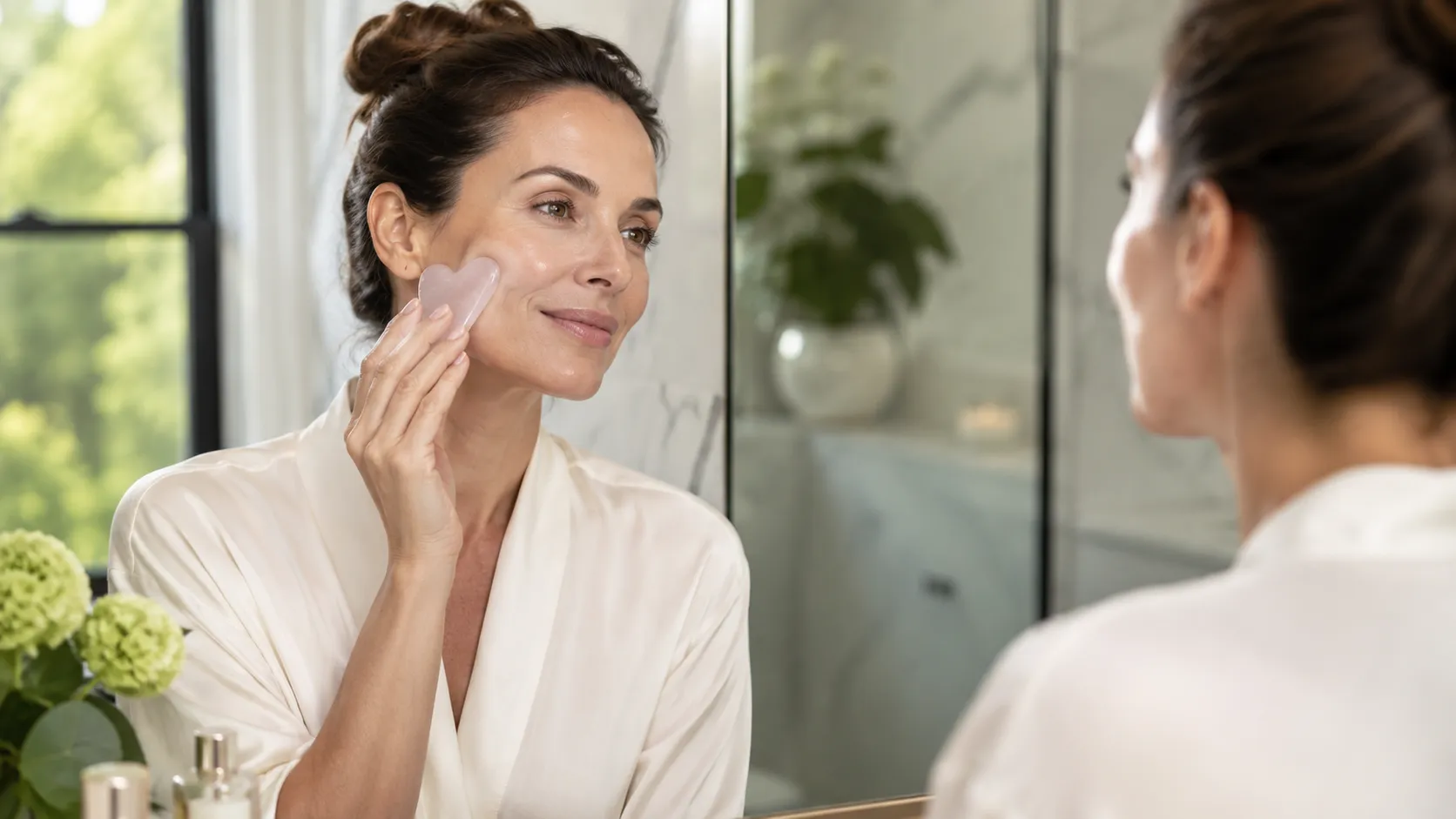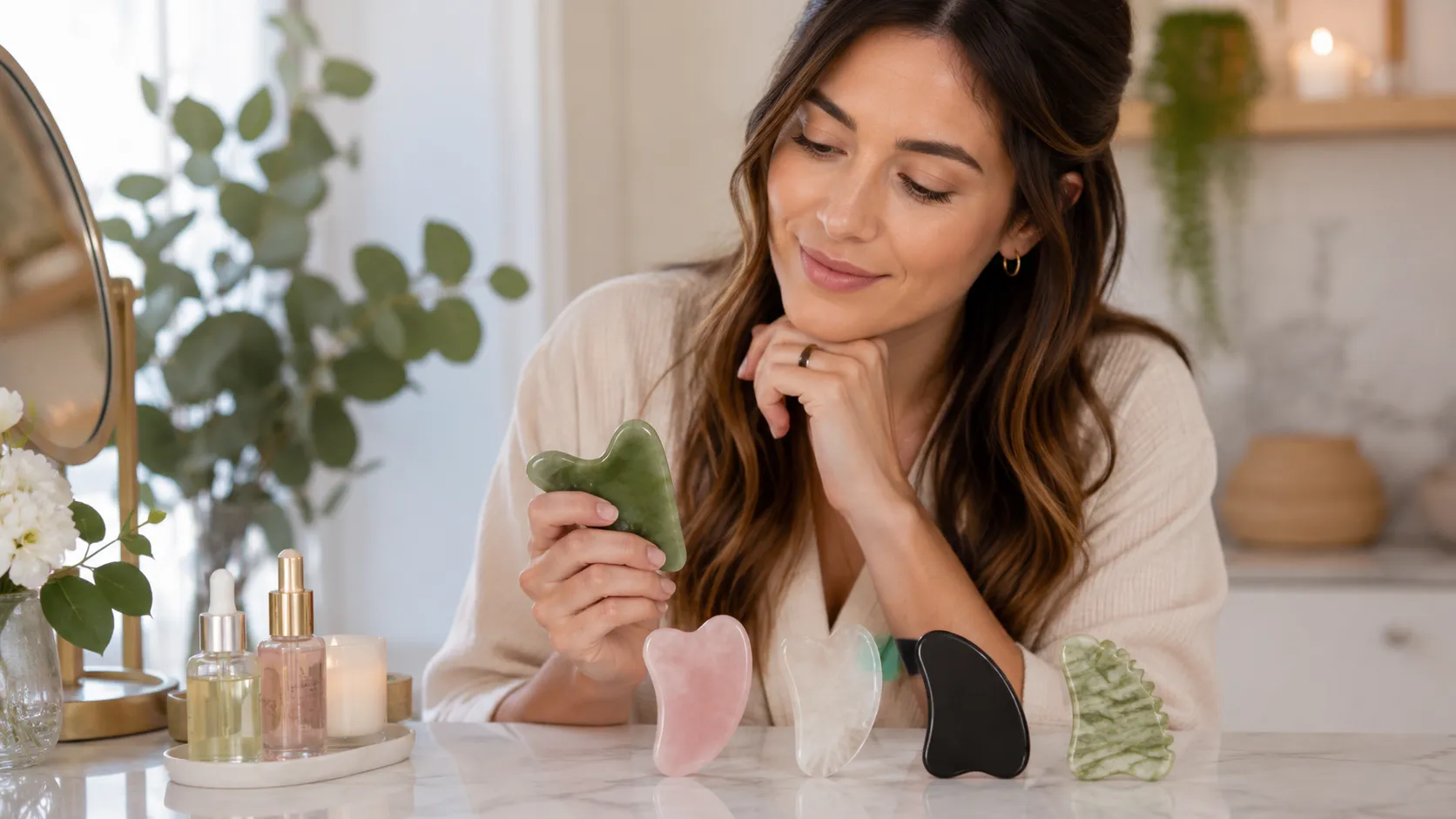
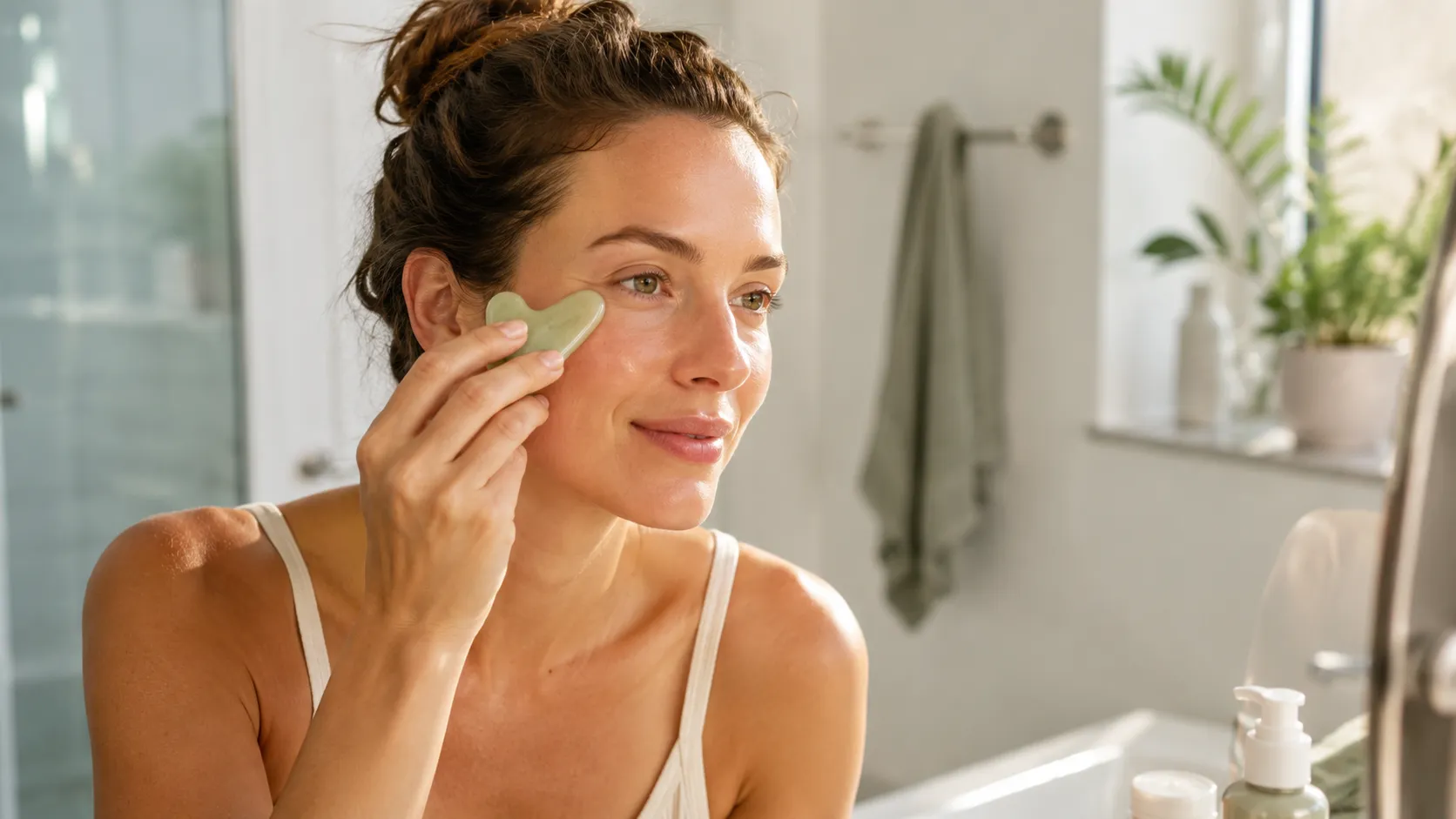
A gua sha facial uses a smooth stone tool to gently glide across the face, boosting circulation and lymphatic flow to reduce puffiness and create a temporary lifted, radiant look. You can find one near you at day spas, esthetician studios, and licensed acupuncturists, usually for about $75 to $200. At home, a jade or rose quartz tool plus a facial oil recreates much of the same glow for under $30.
That sculpted, lifted, lit-from-within look all over your feed often starts with one simple tool: a smooth stone gliding across the face. A professional gua sha facial can leave your skin looking de-puffed and glowing, and the good news is you can recreate much of that feeling at home for the cost of a single tool. This guide covers where to find a gua sha facial near you, what to expect, what it really does, and how to bring the ritual home.
That sculpted, lifted, lit-from-within look all over your feed often starts with one simple tool: a smooth stone gliding across the face. A professional gua sha facial can leave your skin looking de-puffed and glowing, and the good news is you can recreate much of that feeling at home for the cost of a single tool. This guide covers where to find a gua sha facial near you, what to expect, what it really does, and how to bring the ritual home.
Key Takeaways
- A gua sha facial is relaxing and de-puffing, with results that are mostly temporary rather than permanent.
- Look for licensed estheticians or acupuncturists, and expect to pay roughly $75 to $200 depending on your city.
- The treatment should feel soothing, never painful, and your skin may look brighter right after.
- At-home gua sha works beautifully as a maintenance ritual between professional visits.
- Skip gua sha right after Botox, fillers, or facial surgery, and check with your provider if you have certain conditions.
What is a gua sha facial, actually?
Gua sha is an ancient technique rooted in traditional Chinese medicine. The name pairs "gua," meaning to scrape, with "sha," the gentle flush the practice can bring to the skin. On the body, gua sha uses firmer pressure. On the face, it is far gentler, using a smooth-edged stone to glide along the skin and underlying tissue.
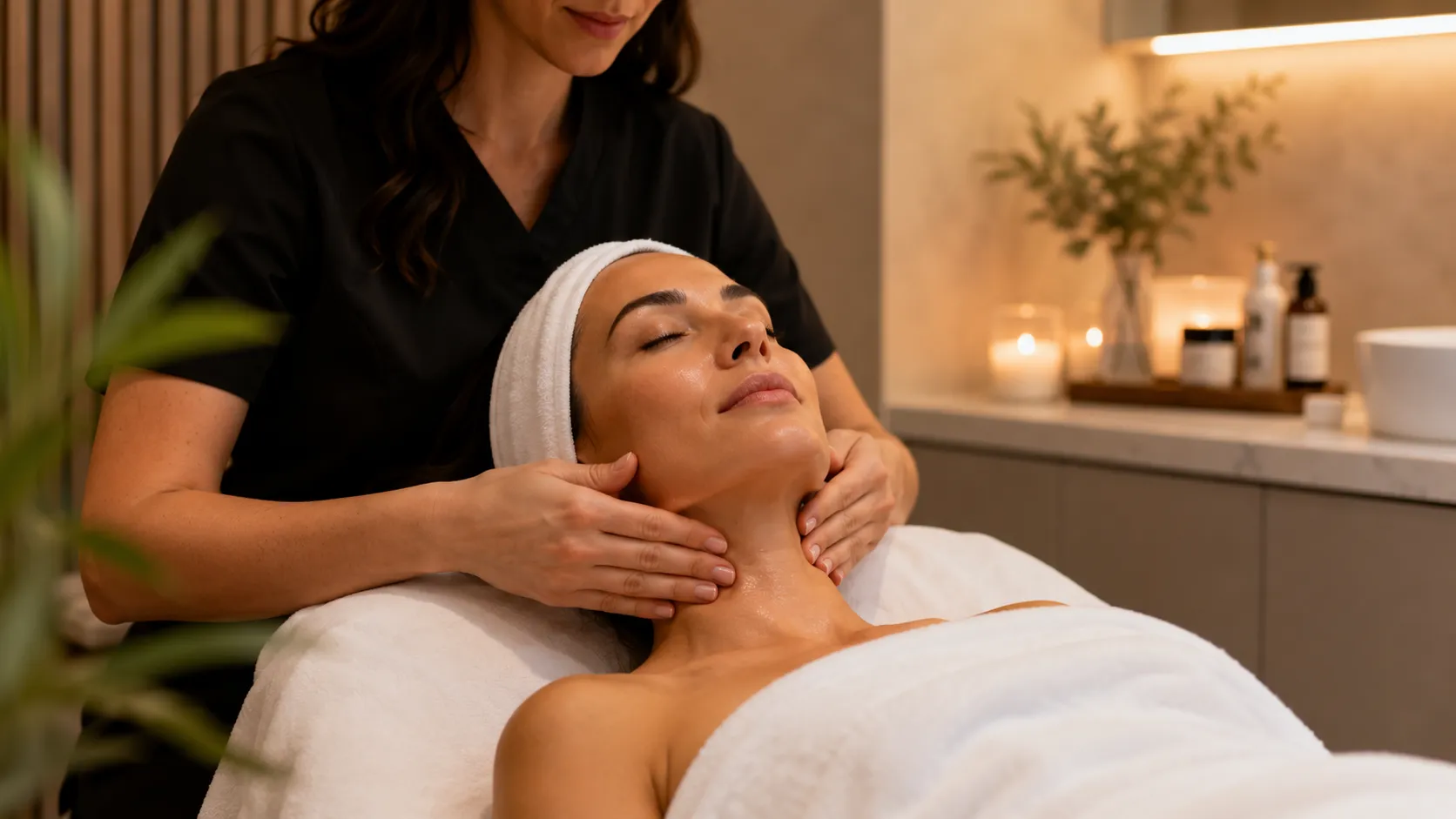
A facial gua sha treatment combines this scraping technique with facial massage. A practitioner applies oil so the tool slides easily, then works along the natural contours of your face and neck, following the pathways where lymph tends to collect. The result is a treatment that feels deeply relaxing while encouraging circulation and fluid movement.
What does a gua sha facial do (and what can't it do)?
Here is where honesty matters, because social media tends to oversell. Gua sha has real, pleasant benefits, but it is not a substitute for medical treatments.
What it can do:
- Boost circulation, which can leave skin looking more radiant
- Encourage lymphatic drainage, which helps reduce puffiness and morning swelling
- Relax tense facial muscles, including around the jaw
- Help skincare products absorb a little better
- Offer a genuinely calming, stress-reducing ritual
What it can't do:
- Permanently reshape your face or bone structure
- Replace the structural firming of devices like radiofrequency, or the results of injectables
- Erase deep wrinkles on its own
Dermatologists and researchers note that the sculpting effect most people see is largely about fluid moving and muscles relaxing, not permanent change. That is not a knock on gua sha. A temporary de-puff and glow, plus a few quiet minutes of self-care, is reason enough for many women to love it. Just set expectations accordingly.
Where can you find a gua sha facial near you?
Gua sha facials are offered by several types of providers, so search with the right terms.
- Day spas and facial studios. Many estheticians now include gua sha within a facial or offer it as a focused treatment. Search "gua sha facial near me" or "gua sha facial massage in [your city]."
- Licensed acupuncturists and TCM clinics. Because gua sha comes from Chinese medicine, acupuncturists often offer it, sometimes paired with cosmetic acupuncture.
- Holistic estheticians. Those with a natural, high-touch approach frequently specialize in gua sha and lymphatic work.
- Instagram and TikTok. Search your city plus "facial" or "gua sha" to find local solo practitioners who post their work.
As with any facial, read recent reviews, confirm the provider is licensed, and look for someone who lists gua sha or facial massage as a real specialty rather than an afterthought. Our guide on how to find a good facialist near you walks through the full vetting process.
What does a professional session cost?
Pricing varies by city and provider, but here are realistic U.S. ranges.
| Option | Typical U.S. cost |
|---|---|
| Gua sha as a facial add-on | $25 to $50 |
| Standalone gua sha facial massage | $75 to $150 |
| Premium or extended session (with LED, cupping, or acupuncture) | $150 to $250+ |
| Introductory first-time offers | Often discounted |
Big cities sit at the higher end, while smaller towns and esthetics-school clinics run lower. Many studios offer first-visit deals, and packages bring the per-session price down if you plan to go regularly.
What should you expect during your appointment?
A professional gua sha facial usually follows a calm, simple flow.
- Consultation. Your provider asks about your skin, any recent procedures, and your goals.
- Cleanse. They remove makeup and prep your skin, or ask you to arrive makeup-free.
- Oil application. A nourishing facial oil or serum goes on so the tool glides smoothly without tugging.
- The gua sha work. Using light to medium pressure, the provider sweeps the stone upward and outward along your neck, jaw, cheeks, and brow, following lymphatic pathways.
- Finishing care. They may add a mask, LED, or moisturizer, then sunscreen if it is daytime.
It should feel soothing the entire time. On the face, gua sha is gentle, so you should not see the redness that body gua sha can cause. If anything pinches or hurts, say so, and a good practitioner adjusts immediately.
Who should skip it?
Gua sha is generally safe, but it is not for everyone or every moment.
- Wait if you recently had Botox, fillers, or any facial cosmetic procedure, and ask your provider when it is safe to resume.
- Talk with your provider first if you are pregnant.
- Use caution if you take blood thinners or have a bleeding disorder, since gua sha can increase bruising risk.
- Avoid gliding over active acne breakouts, open or broken skin, sunburn, or a rash.
- If you have rosacea or very reactive skin, keep pressure light and patch test, since friction can aggravate sensitivity.
When in doubt, check with a dermatologist or your healthcare provider before booking.
How do you recreate a gua sha facial at home?
This is where gua sha shines for everyday use. A professional session is lovely, but at home you can enjoy the ritual as often as you like for the price of one tool. Many estheticians and acupuncturists recommend home practice in the morning and at night.
What you need:
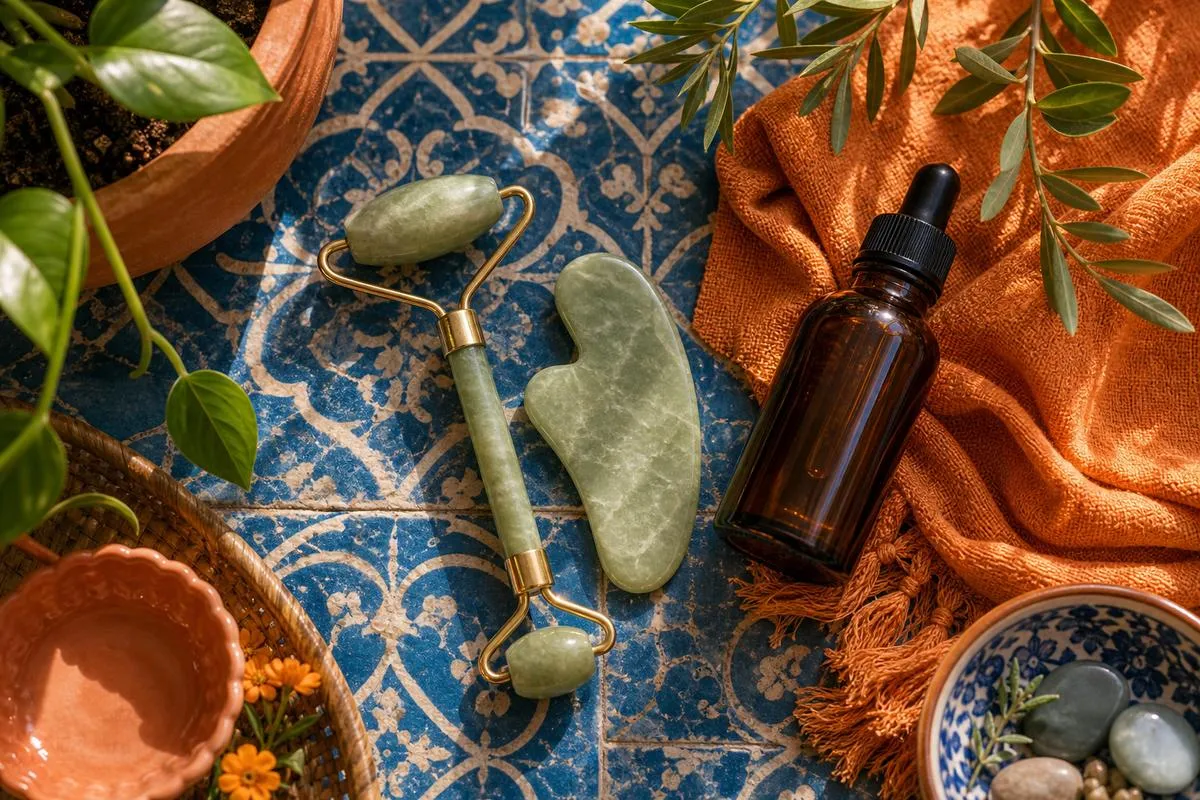
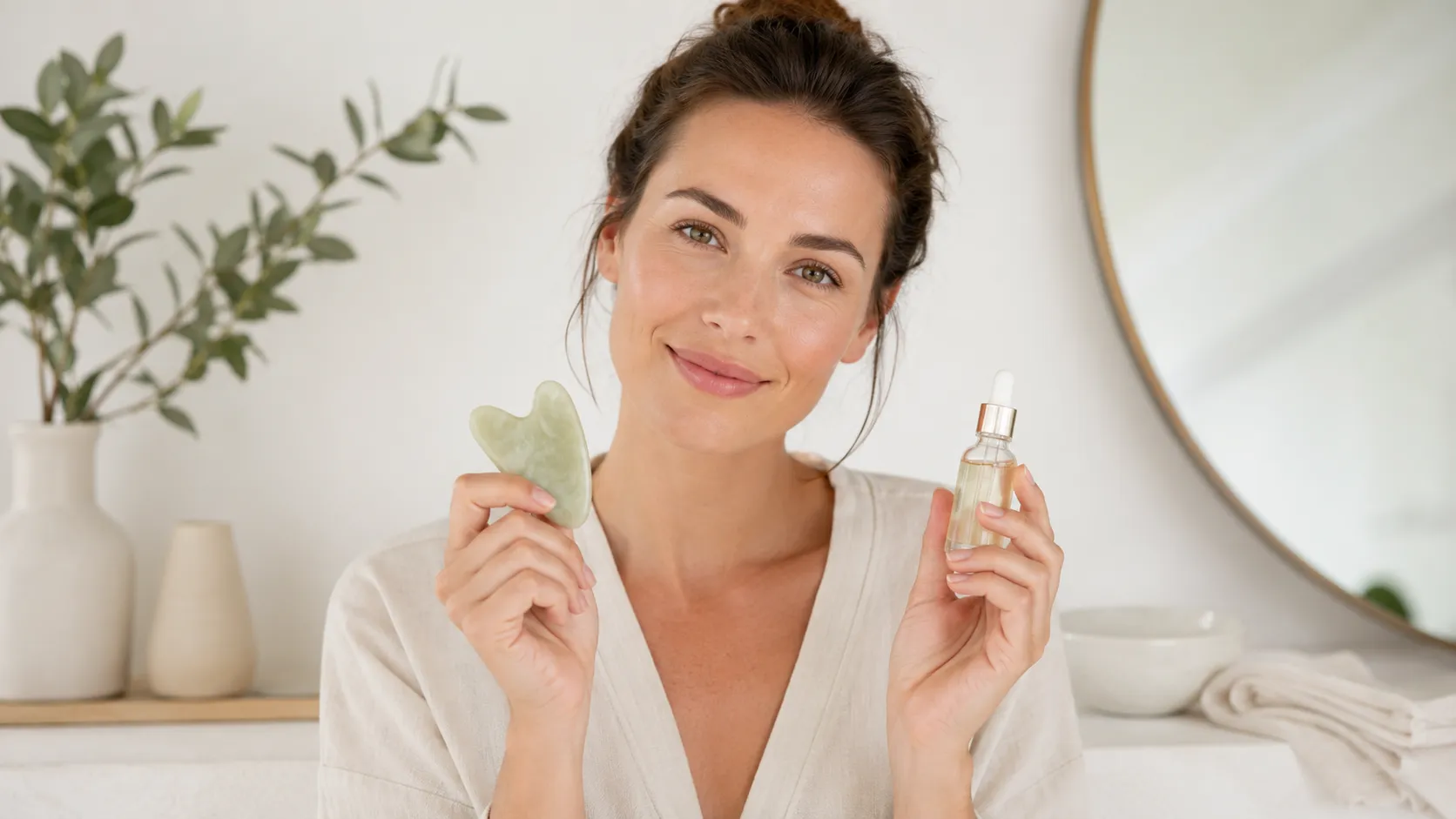
- A gua sha tool in jade, rose quartz, or stainless steel
- A facial oil or slip-friendly serum so the tool never drags
- Clean hands and a freshly washed face
A simple routine:
- Cleanse, then apply a few drops of facial oil.
- Hold the tool nearly flat to your skin, around a 15 to 45 degree angle.
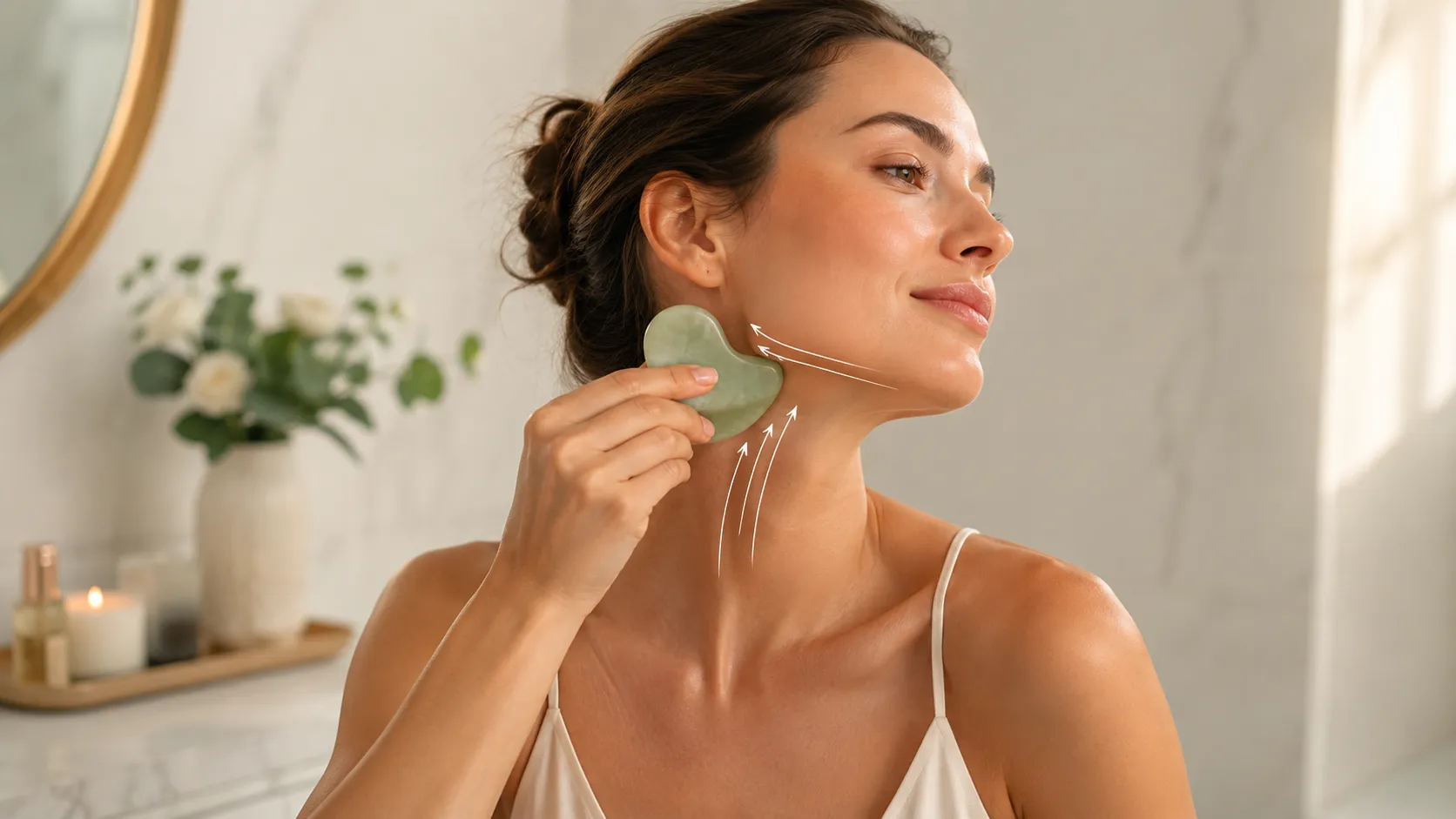
- Starting at your neck, sweep upward from the base toward your jaw, three to five times per side.
- Glide from the center of your chin along the jawline to your ear, then repeat.
- Sweep across each cheekbone outward toward the ear.
- Move gently outward under the eyes, then upward and outward on the forehead.
- Finish with light strokes down the neck to move fluid toward the collarbone.
Keep the pressure gentle. Gua sha should feel relaxing, not rough. Clean your tool after each use, and store it somewhere it will not chip.
A jade or rose quartz tool and a good facial oil are the kind of affordable, dermatologist-friendly staples we point to throughout The Fern Edit, and they make this ritual easy to keep up between professional treatments.
Free printable: Download our At-Home Gua Sha Routine Card, a simple step-by-step guide with the right strokes and angles so you can do it correctly every morning.
Common Gua Sha Mistakes
- Skipping oil. Dragging a dry tool over bare skin causes friction and irritation. Always use slip.
- Pressing too hard. More pressure does not mean more results, and it can break tiny capillaries.
- Going too fast or too often in one area. A few smooth passes is plenty. Over-scraping is counterproductive.
- Using it over breakouts or irritated skin. Wait until skin is calm and clear.
- Expecting permanent change. Enjoy the temporary glow and de-puff for what it is, and pair it with proven skincare for long-term results.
Final Takeaway
A gua sha facial is one of the most pleasant, low-risk treatments in the self-care world. Booked with a licensed provider near you, it delivers a de-puffed, glowing, relaxed result, and at home it becomes a simple daily ritual for the price of one tool. Keep your expectations realistic, your pressure gentle, and your skin protected, and gua sha can be a lovely part of your routine for years.
This article is for general beauty and self-care education only and is not medical advice. If you have a skin condition or take medication that affects bleeding or healing, please check with a dermatologist or your healthcare provider first.
 📌 Save
Love this guide? Save it 📌
Pin it to your favorite board so it's easy to find again — and share it with a friend who'd love it too.
Save to PinterestFrequently asked questions
How much is a gua sha facial near me?
Most standalone gua sha facials in the U.S. run about $75 to $150, with premium or combination sessions reaching $150 to $250 or more. As an add-on to a regular facial, gua sha often costs $25 to $50. City and provider experience drive the price.
Does a gua sha facial really work?
It reliably reduces puffiness, boosts circulation, and gives a temporary lifted, glowy look, plus real relaxation. It does not permanently sculpt the face or replace medical treatments, so it is best seen as a feel-good, maintenance ritual.
Is a professional gua sha facial better than doing it at home?
A professional understands lymphatic pathways and can apply precise, consistent pressure, so a single session may look more polished. At home, gua sha works wonderfully as an ongoing ritual that keeps the benefits going between visits.
How often should I do gua sha?
At home, many people do it daily or a few times a week, morning or night. Professional facials are usually booked monthly or as a treat, depending on your budget and goals.
Does gua sha hurt?
No. A facial gua sha should feel soothing and gentle. With oil and light pressure, you should not feel pain or see the redness associated with body gua sha. Speak up if anything is uncomfortable.
Can I do gua sha after Botox or fillers?
Wait, and ask your provider for a specific timeline. Gua sha is not recommended right after injectables or facial cosmetic procedures, since it can affect results and irritate healing skin.

We cite sources and update this guide regularly.