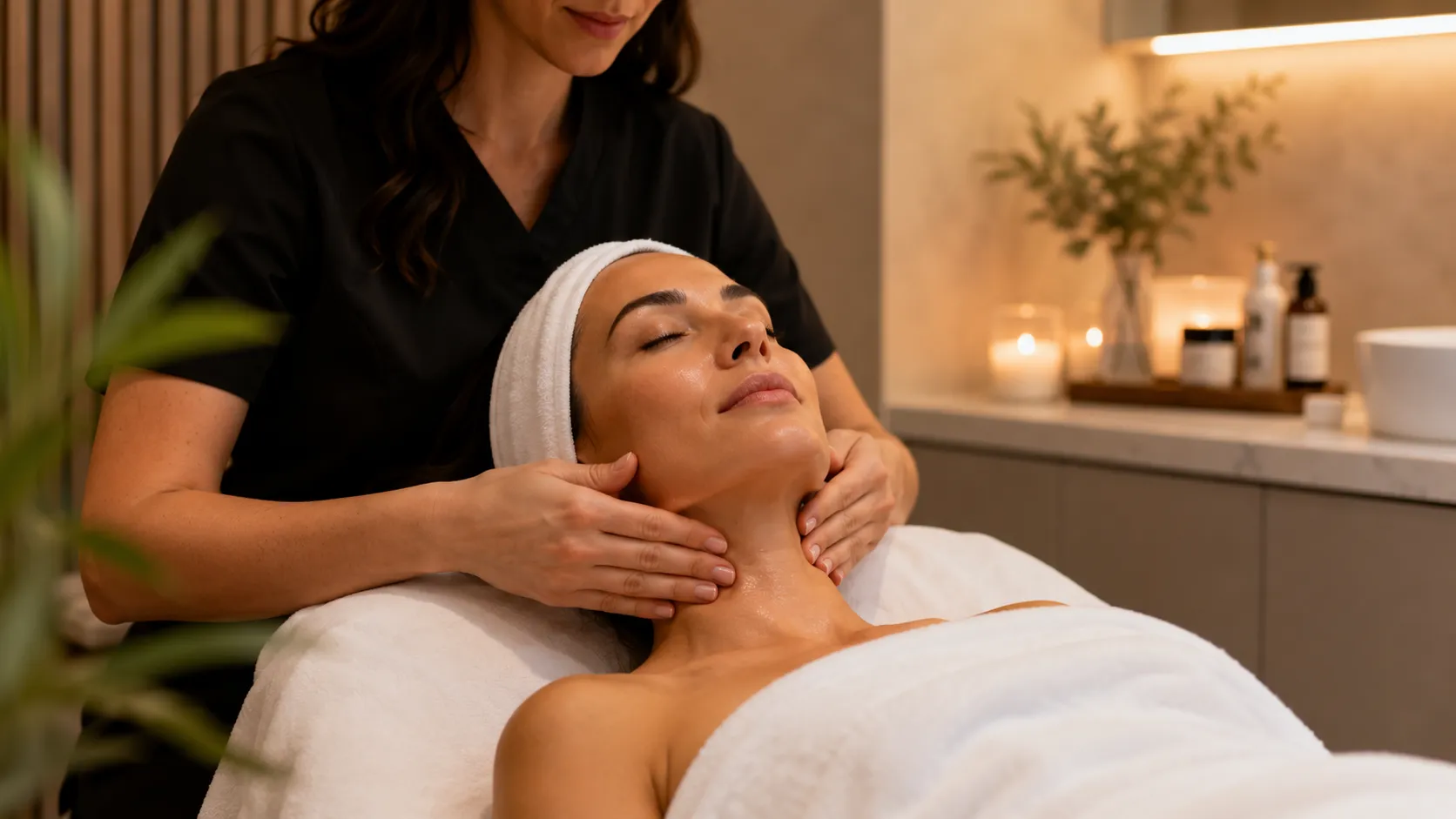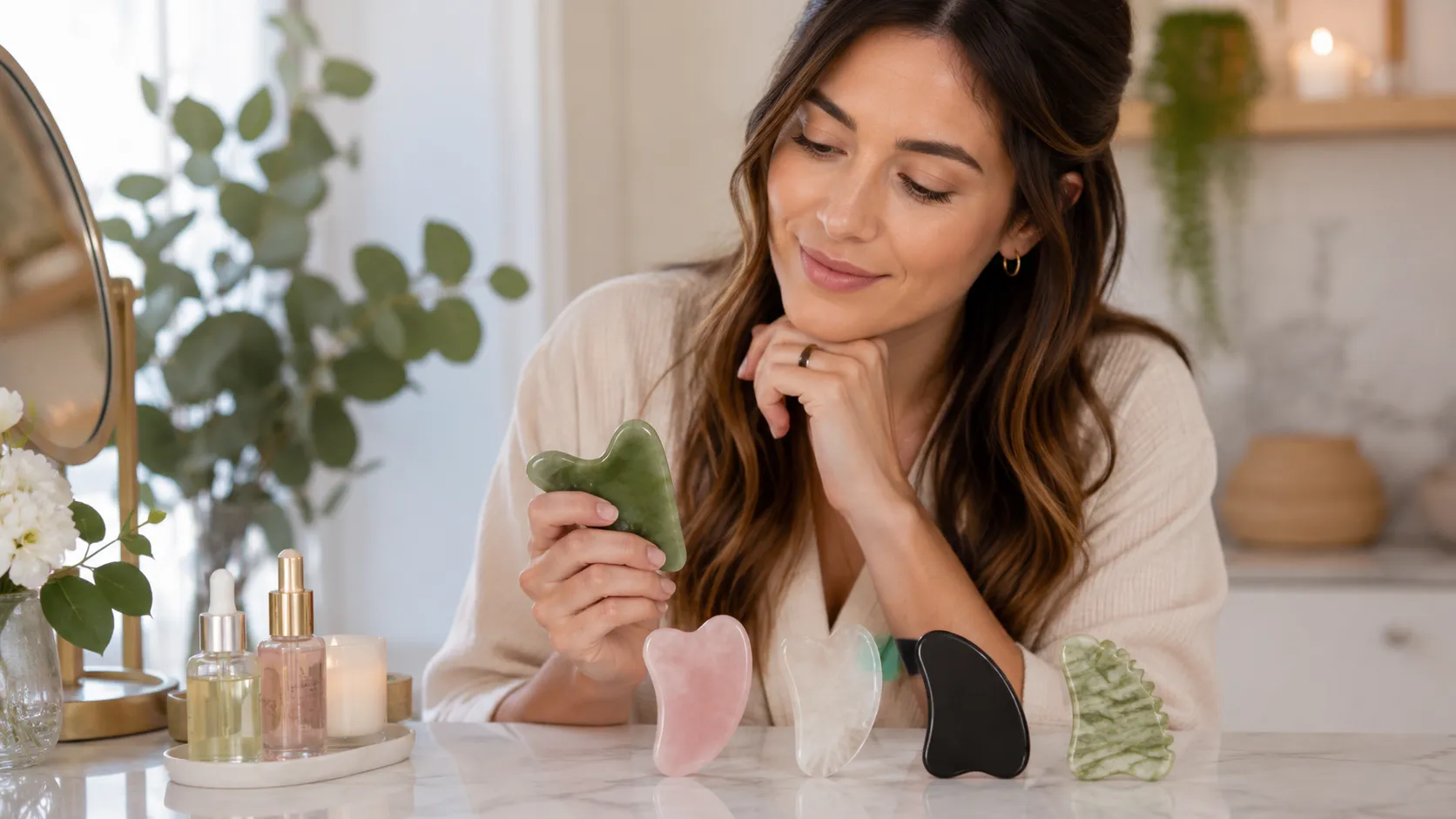

A lymphatic drainage face massage uses very light, rhythmic strokes that move fluid toward the lymph nodes at your neck and collarbone. Start by clearing the neck, then sweep gently outward across the face, always ending at the neck. Use barely-there pressure, and do it in the morning to de-puff.
A lymphatic drainage face massage that may help de-puff.
If you wake up puffy, a lymphatic drainage face massage is the gentlest way to help your face look less swollen and more sculpted. Unlike a firm massage, this technique uses feather-light pressure to guide fluid toward your lymph nodes. It sounds technical, but it is genuinely simple once you understand the direction and the featherweight touch. Here is how to do it, by hand or with a gua sha tool.
Quick answer
Use very light pressure to sweep fluid toward the lymph nodes at the sides of your neck and above your collarbone. Clear the neck first, then make gentle outward strokes across your jaw, cheeks, under-eyes, and forehead, always finishing back down the neck. Do it for a few minutes in the morning to reduce puffiness.
Key takeaways
- Lymphatic massage is about direction and rhythm, not pressure. Barely touch the skin.
- Always clear the neck first so fluid has somewhere to drain.
- Best done in the morning, when overnight puffiness is at its peak.
- The effect is a temporary de-puff, not a permanent change to your face.
What is lymphatic drainage, and why does it help puffiness?
Your lymphatic system carries away excess fluid and waste, but it has no pump of its own, so gentle movement helps it along. On the face, that means guiding fluid that has pooled toward the drainage points at your neck. The result is a temporarily less puffy, more defined look. It will not change your bone structure, but the de-puffing is real and can be noticeable, especially around the eyes and jaw where morning puffiness tends to settle.
Because the whole point is to move fluid rather than to work muscle, the technique looks and feels different from a regular massage. There is no kneading and no deep pressure — just light, repeated sweeps that follow a specific path. Get the direction and the featherlight touch right and you are doing it correctly.
Why does your face get puffy overnight?
Lying flat for hours lets fluid settle in the face instead of draining downward the way it does when you are upright during the day. Salt in last night's dinner, a poor night's sleep, hormonal shifts, and even a warm room can all add to it. That is why puffiness is usually worst first thing in the morning and eases as the day goes on and gravity does its work. A lymphatic massage simply gives that natural draining a gentle head start, which is exactly why the morning is the ideal time to do it.
The technique, step by step
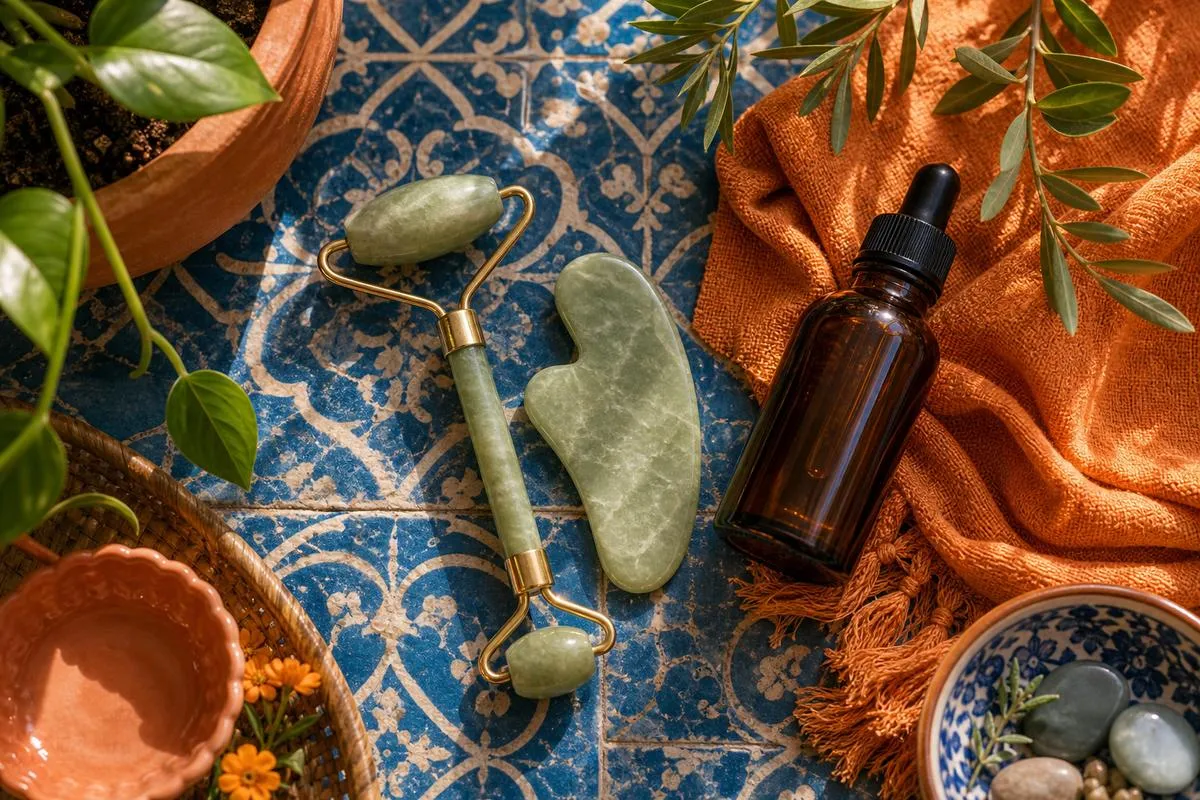
You can use just your fingertips or a flat gua sha tool with very light pressure.
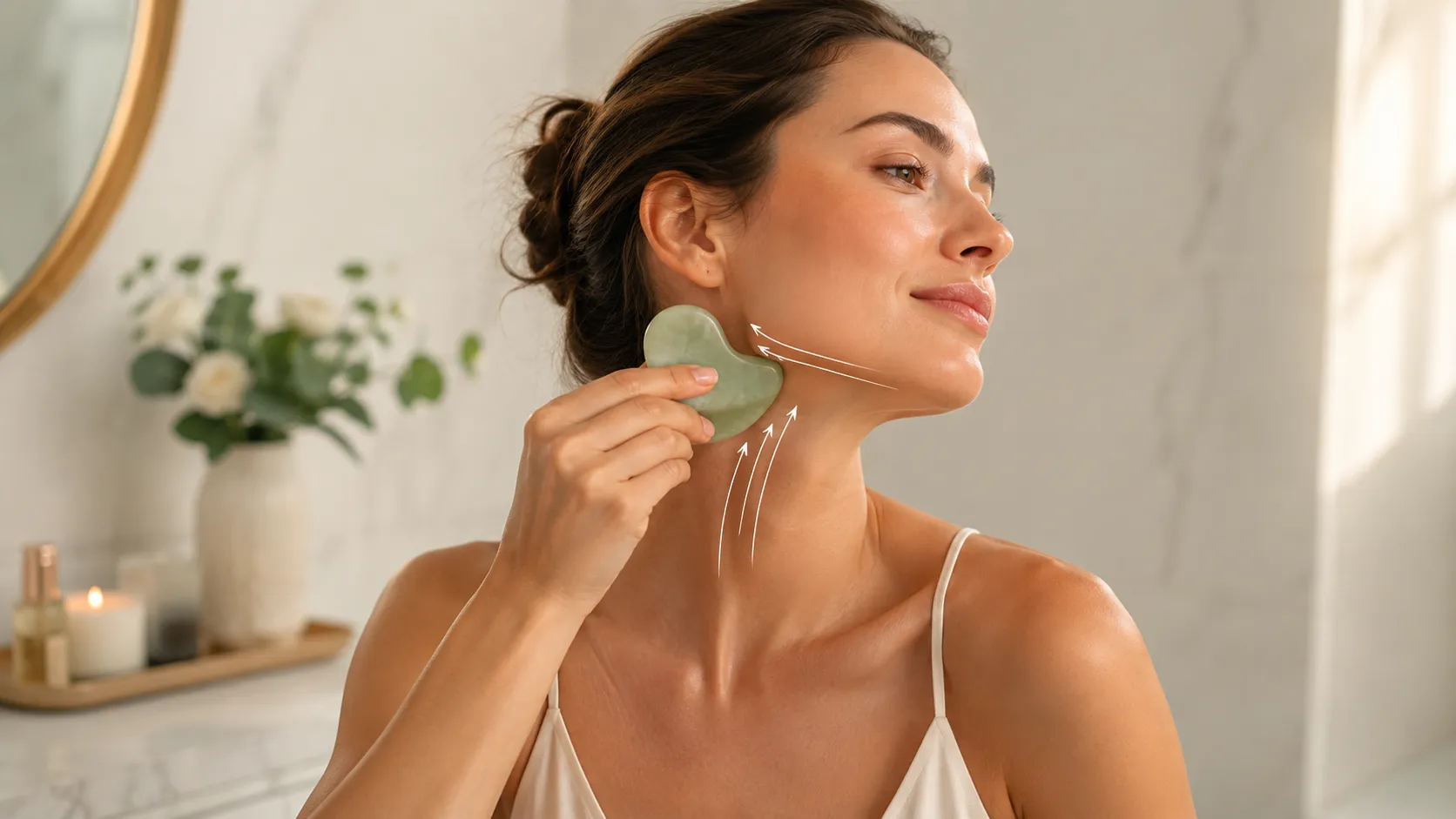
- Open the neck. Sweep down the sides of your neck toward your collarbone, 5 to 10 times. This clears the path.
- Behind and under the ears. Make small, light circles, then sweep down the neck again.
- Jaw. Glide from the center of your chin along the jaw to the ear, then down the neck.
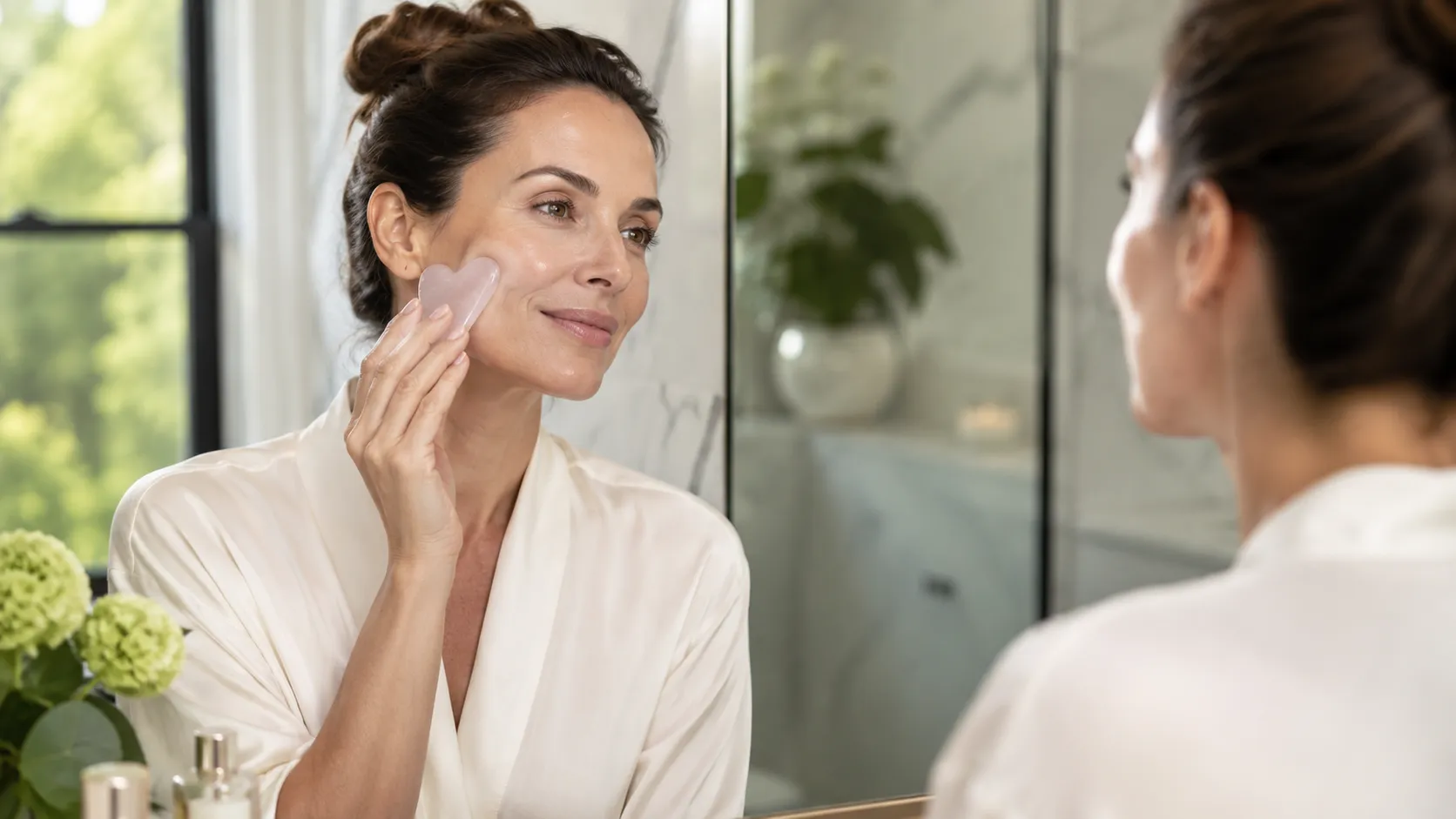
- Cheeks. Sweep from beside the nose outward to the ear, then down the neck.
- Under-eyes. With the lightest touch, sweep from the inner corner out to the temple, then down.
- Forehead. Sweep from the center out to the temples, then down the neck.
Notice the pattern: every stroke ends by draining down the neck. That is what makes it lymphatic rather than just a massage. For the full daily version with a tool, see our gua sha routine.
How hard should you press?
This is the part people get wrong. Lymphatic vessels sit just under the skin, so heavy pressure actually works against you by compressing the very channels you are trying to encourage. Use the weight of your fingers only — barely-there pressure, like smoothing the surface of water — with a slow, rhythmic, repeated motion. If your skin is turning red, you are pressing far too hard. When in doubt, go lighter and slower; this is one technique where less really is more.
Should you use your hands or a gua sha tool?
Both work well, and it comes down to preference. Your hands give you the most sensitive feedback, so it is easy to keep the pressure feather-light, and you always have them with you. A gua sha tool covers a little more area per stroke and, if you chill it first, adds a cooling, de-puffing feel that many people love in the morning. If you use a tool, keep it nearly flat and glide with the same barely-there pressure you would use with your fingers — the tool is not permission to press harder. A drop of facial oil helps either method glide smoothly instead of tugging.
How often and when should you do it?
Morning is ideal because that is when facial fluid has built up overnight. A few minutes daily is completely fine since the pressure is so light — there is no overdoing it the way there can be with firmer massage. It pairs perfectly with your morning skincare and a chilled tool. You can also do a quick round anytime your face feels puffy, such as after a salty meal or a poor night's sleep. Just remember the light-pressure rule to avoid the usual gua sha mistakes.
Does a lymphatic drainage face massage actually work?
For temporary de-puffing, yes — many people notice a visibly less swollen, more defined look right afterward, particularly in the morning. What it does not do is permanently reshape your face or replace skincare, hydration, and sleep. The honest way to think about it is as a gentle, pleasant way to encourage your face's natural draining, with effects that last hours rather than days. Enjoyed on those terms, it is a genuinely useful and calming few minutes — just not a permanent transformation.
How soon will you see less puffiness?
Often right away. Because the technique works by physically guiding built-up fluid toward the drainage points, many people notice a visibly less puffy, more defined look within the same session or shortly after — most obviously around the eyes and jaw first thing in the morning. That immediate payoff is exactly why the massage feels so satisfying before an event or a photo.
What that quick result is not is permanent. The fluid naturally returns over the day, which is completely normal and not a sign you did anything wrong. Think of it as a refresh you can repeat whenever you need it rather than a one-time fix. Doing it consistently each morning keeps that fresher look part of your routine, and pairing it with good hydration and sleep means there is less puffiness to move in the first place.
What are the benefits beyond de-puffing?
De-puffing is the headline benefit, but it is not the only one. The slow, rhythmic strokes are genuinely relaxing, which makes the massage a small stress-reliever as well as a beauty step — a few quiet minutes that ease the tension we hold around the jaw and brow. Because you are moving oil or serum across the skin as you go, there is often a soft, dewy finish afterward too. And like any consistent self-care habit, the routine itself can be grounding: a gentle way to start the morning that also happens to help your face look fresher. None of this reshapes your face or replaces skincare, but as a calming, feel-good ritual it offers more than puffiness relief alone.
Can you do lymphatic drainage too much?
Because the pressure is so light, this is one facial technique that is hard to overdo. A few minutes every morning is completely reasonable, and you can add a quick round anytime your face feels puffy without worrying about harm. The one caveat is that light must actually stay light — the risk is not frequency but pressing too hard out of a "more is better" instinct, which can irritate skin and defeat the purpose. If you keep the touch feather-soft, daily practice is fine. If your skin ever looks red or feels tender, that is a sign to lighten up or take a short break, not necessarily to stop altogether.
When should you skip a lymphatic drainage massage?
Gentle as it is, there are times to hold off. Skip facial massage over broken or irritated skin, active breakouts, sunburn, or a rash, since gliding over inflamed areas can make them worse. It is also wise to avoid it when you have swollen glands from a cold or infection, or any facial pain, and to stay clear of the exact spot of recent cosmetic procedures or injectables until everything has fully settled. If you have a diagnosed medical condition affecting your lymphatic system, circulation, or skin, check with a professional before adding it to your routine.
None of this makes lymphatic massage risky for most people — it simply means reading your skin and using common sense. When in doubt, wait until your skin is calm and comfortable, and keep the pressure feather-light when you do resume. Comfort is always the deciding factor.
Final takeaway
A lymphatic drainage face massage is all about gentle, repeated strokes that guide fluid toward your neck. Clear the neck first, keep the pressure feather-light, always drain downward, and do it in the morning. It is a quick, calming way to look less puffy and more sculpted, without any harshness on your skin.
General self-care information, not medical advice. Skip facial massage over infections, swollen glands from illness, or broken skin, and see a professional if you have a medical concern.
 📌 Save
Love this guide? Save it 📌
Pin it to your favorite board so it's easy to find again — and share it with a friend who'd love it too.
Save to PinterestFrequently asked questions
How does a lymphatic drainage face massage reduce puffiness?
It uses light, rhythmic strokes to guide fluid that has pooled in your face toward the lymph nodes at your neck and collarbone, where it drains away. That temporarily reduces puffiness and gives a more defined look.
How much pressure should I use?
Very little. The lymph vessels sit just under the skin, so you use only the light weight of your fingers or a flat tool. If your skin turns red, you are pressing far too hard.
Should I do lymphatic face massage in the morning or night?
Morning is best, because facial fluid builds up overnight and that is when puffiness is highest. A few gentle minutes with your morning skincare works well.
Can I do lymphatic drainage with a gua sha tool?
Yes. A flat gua sha tool works well as long as you keep the pressure feather-light and always sweep toward the neck to drain. Your fingertips alone work just as well.
How often can I do a lymphatic face massage?
Daily is fine because the pressure is so light. Just keep it gentle and always finish by draining down the neck.

Medically reviewed by The Fern Edit Editorial Team, . We cite sources and update this guide regularly.