
Beginners should choose a smooth gua sha tool with comfortable edges, simple curves, and easy cleaning. Stone, stainless steel, and other materials can all work, but technique and pressure matter more than the tool itself.
The best gua sha tool for beginners is not always the prettiest one on social media — it is the one you can hold comfortably, clean easily, and use gently. With so many shapes, stones, and price tags out there, it is easy to overthink the choice. This guide cuts through it with a simple checklist and answers to the questions beginners actually ask, so you can pick a tool you will genuinely reach for.
Before you begin
This guide is general beauty education, not medical advice. Face yoga and facial massage are not treatments and results vary. If you have pain, recent cosmetic procedures, skin irritation, jaw problems, or other concerns, check with a qualified professional first.
The most useful routines respect your real life. Keep it simple, track what works, and adjust based on comfort rather than chasing every trend.
What actually makes a good beginner gua sha tool?
A few practical qualities matter far more than looks. Run any tool you are considering through this quick checklist:
Smooth edges
The tool should feel smooth against the skin with no sharp or rough spots. A rough or chipped edge can scratch or catch, which is the opposite of the gentle glide you want.
A comfortable grip
A tool that slips out of your hand is harder to control, and control is what keeps pressure light. Hold it before you commit if you can, and make sure your fingers rest naturally on it.
A simple shape
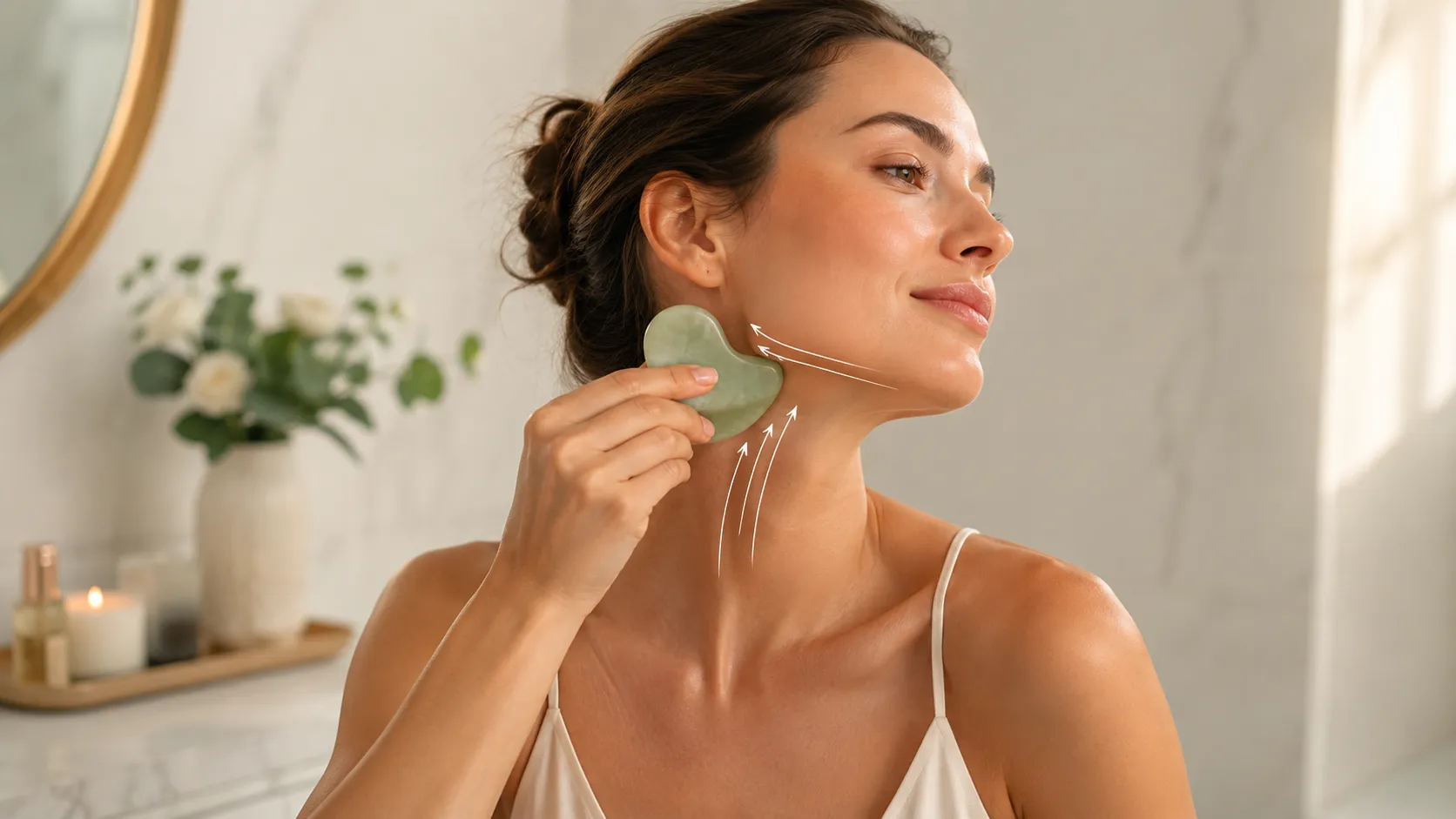
Heart, wing, or rounded rectangle shapes are the most beginner-friendly, because their curves fit the jaw, cheeks, and under-eyes without any guesswork about which edge to use.
Easy cleaning
Choose a material and design you can wash and dry easily. A tool that is a chore to clean is a tool you will use less.
Sensible weight and balance
A slightly weighted tool can feel premium and controlled, but it should never feel awkward or heavy in the hand. Comfort over gimmicks.
No fake promises
Skip anything marketed as permanently reshaping your face or replacing professional treatments. A good tool supports a relaxing routine; it does not perform miracles.
Which gua sha material should a beginner choose?
All the common materials can work, so this comes down to preference and upkeep rather than one "best" answer.
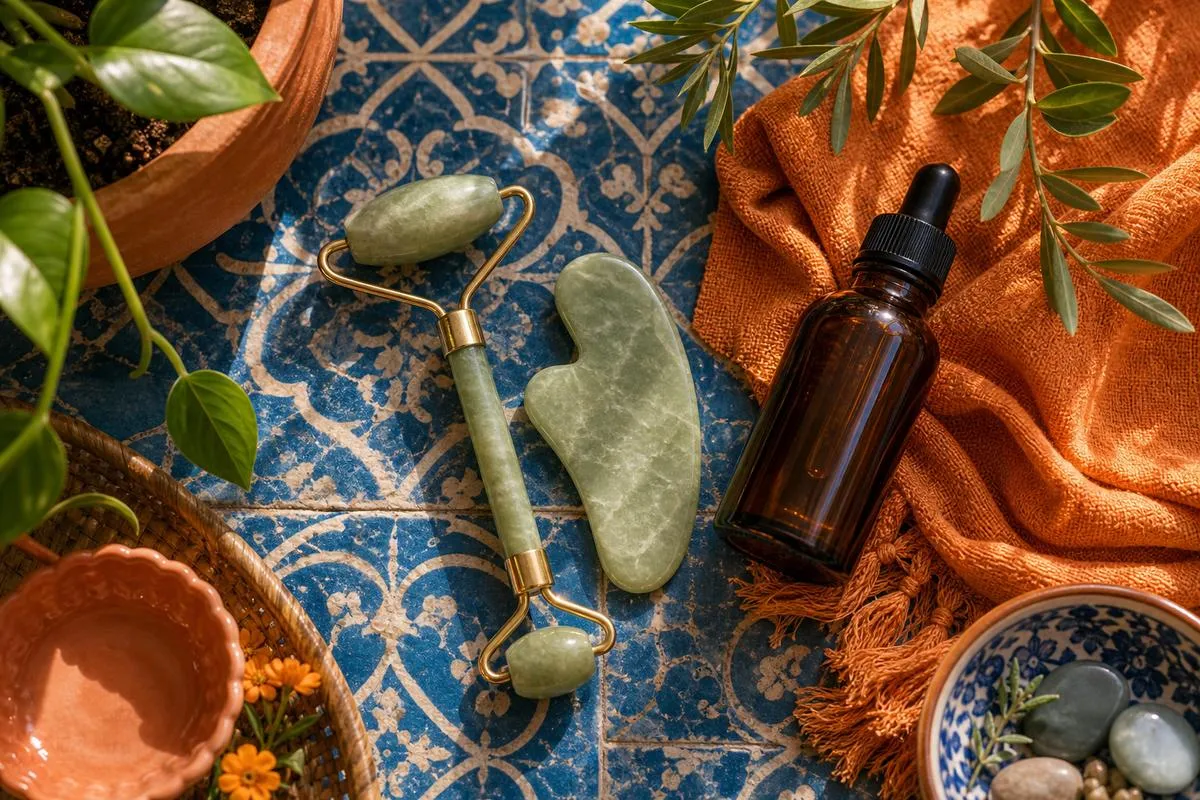
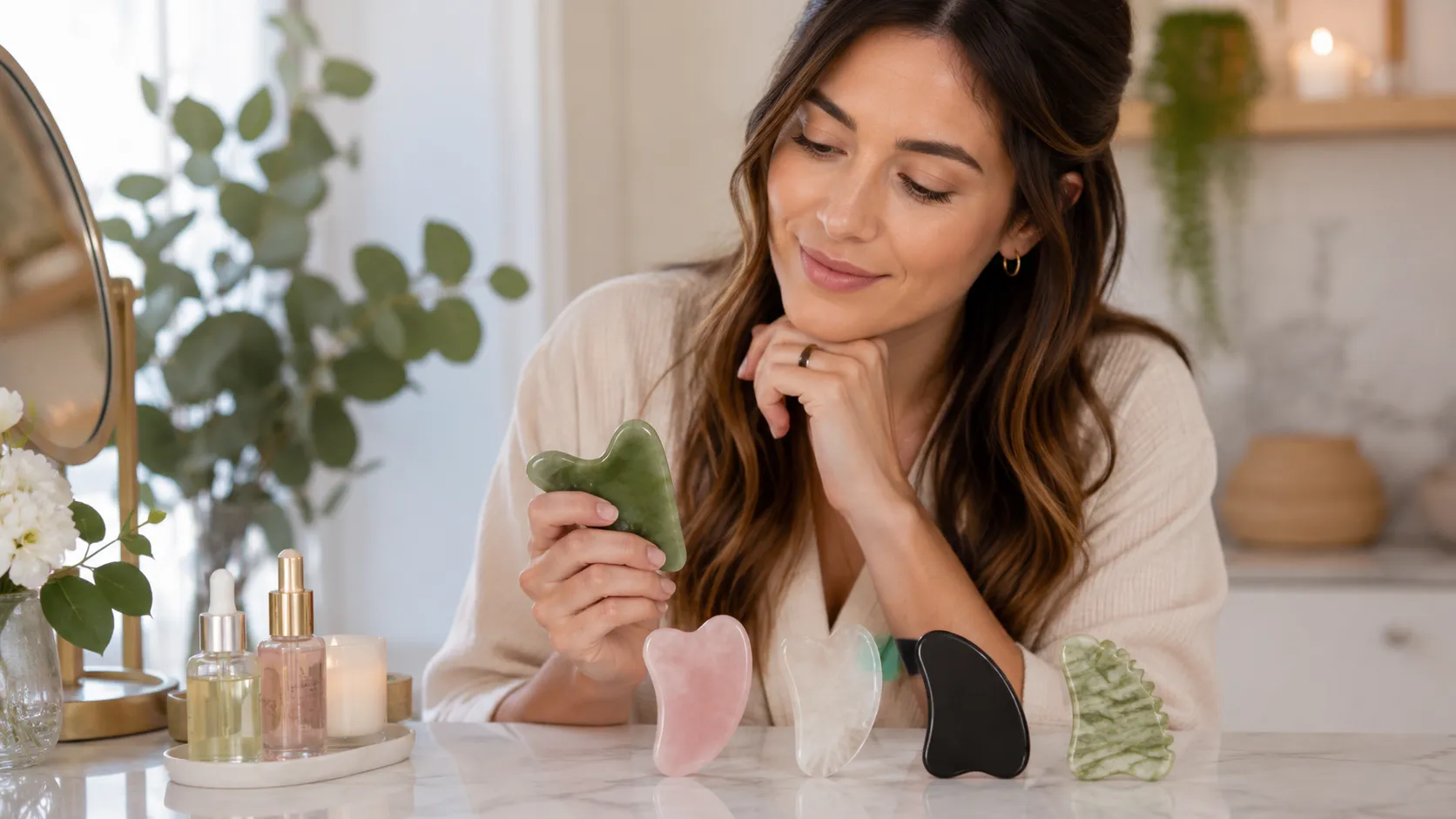
Rose quartz is the classic. It feels smooth and cool, stays comfortable against the skin, and is the stone most people picture when they think of gua sha. Jade is another traditional favorite with a similar feel and look. Stainless steel is the low-maintenance choice: it is the easiest to wipe clean, it chills quickly for a de-puffing morning session, and it will not chip the way a dropped stone can.
If you tend to be forgetful about cleaning, steel is forgiving. If you love the ritual feel of a cool stone, rose quartz or jade is lovely. There is no wrong pick here — comfort and easy cleaning matter more than the material's reputation.
Which shape is best for beginners?
Start with a heart or wing shape. That familiar curved outline gives you a large gentle curve for the cheeks and forehead, a notch that cups the jawline, and a smaller edge for delicate areas like under the eyes — one tool for the whole face. Rounded rectangles are a good alternative. What you want to avoid as a beginner is a tool covered in dramatic points and comb teeth, which are easy to over-think and unnecessary for a simple facial routine.
Do you need an expensive gua sha tool?
No. You do not need the most expensive tool to start, and price is a poor guide to how well a tool will suit you. A modest, smooth, well-shaped tool you find comfortable will serve you better than a pricey one that looks impressive but feels awkward. Spend based on the material and finish you genuinely prefer, not on the assumption that costlier means more effective. A small storage case or pouch is a nice extra, since it keeps the tool clean and protected between uses.
How do you keep a gua sha tool clean?
Cleaning is simple, and doing it consistently matters more than the tool itself. Rinse and dry the tool after every use so leftover oil and bacteria do not build up and transfer back to your skin. Every so often, wipe it with a gentle cleanser. Let it dry fully before you put it away, and store it somewhere clean rather than loose in a bag. Stainless steel is the quickest to keep spotless, but any material stays hygienic with this small habit.
How many gua sha tools do you actually need?
One is genuinely enough. A single well-shaped tool — heart, wing, or rounded rectangle — has a large curve for the cheeks and forehead, a notch for the jaw, and a smaller edge for under the eyes, so it handles your whole face on its own. There is no need to buy a set to get started, and a drawer full of shapes tends to make the routine feel more complicated than it is.
Down the line, some people like adding a second tool for a specific reason: a small dedicated eye tool, or a stainless steel piece to keep chilled for morning de-puffing alongside a stone they use in the evening. That is a preference, not a requirement. Start with one comfortable tool, get familiar with it, and only add more if you find a genuine gap.
What is the difference between a gua sha tool and a facial roller?
They are cousins, and both can be lovely, but they are not the same. A facial roller glides back and forth over the skin and is the easiest, most foolproof way to feel a cooling, relaxing massage — great for a low-effort morning pass. A gua sha tool has flat, contoured edges that let you use more deliberate, directional strokes, which gives you more control for draining toward the neck and working along the jaw and cheekbones.
If you want the simplest possible ritual, a roller is a gentle place to start. If you want to actually learn technique and direction, a gua sha tool rewards that. Many people happily own both and reach for whichever suits their mood. Neither reshapes your face permanently, so choose based on the feel you enjoy.
Where should you buy your first gua sha tool?
You do not need a specialist source. Reputable beauty retailers, well-reviewed brands, and established skincare shops all carry beginner-friendly tools. What matters more than the storefront is the tool itself: read reviews for mentions of smoothness and durability, check that the edges are described as polished with no rough spots, and be wary of listings that promise permanent lifting or reshaping. A modest tool from a trustworthy seller beats a flashy one making big claims. If a tool arrives feeling rough or chipped, it is worth returning rather than using.
How do you know a gua sha tool is good quality?
You can judge most of it with your hands and eyes. Run a fingertip along every edge: a quality tool feels uniformly smooth and polished, with no rough patches, chips, or seams that could catch the skin. Hold it up to the light and check for cracks, especially in stone tools, since a hairline crack can widen if the tool is dropped. The weight should feel solid and balanced rather than flimsy or awkwardly heavy. With stainless steel, look for a clean, even finish and no sharp burrs.
Reviews fill in the rest — pay attention to comments about durability, whether edges stayed smooth over time, and how the tool held up to cleaning. Be cautious of anything marketed with dramatic reshaping promises, since that marketing language is a better sign of hype than of a well-made tool. A simple, smooth, well-finished tool from a reputable seller is exactly what a beginner wants.
Common mistakes to avoid
- Trying too many new products or steps at once
- Copying a viral routine without adjusting for your skin, face, or lifestyle
- Using harsh pressure when the routine should stay gentle
- Expecting instant results from a routine that depends on consistency
- Skipping sunscreen or basic care while chasing trends
Does the tool matter more than technique?
This is the most important thing to understand before you buy anything: the tool matters far less than how you use it. A perfect stone used on dry skin with heavy pressure will still tug and irritate, while a modest tool used with plenty of slip and a light touch feels wonderful. Slip (a facial oil or slippery serum), gentle pressure, and a low angle are what create a good experience. Once you have a smooth, comfortable tool that clears the checklist above, your attention is far better spent on technique. If you are brand new, our gua sha for beginners guide walks through your first session, and the gua sha mistakes guide covers what to steer clear of.
Final thoughts
A smooth, easy-to-hold tool with simple edges is best for beginners. Technique, slip, and gentle pressure matter more than the price or material, so choose the tool you will actually use, keep it clean, and put your energy into a light, consistent routine.
Explore more from The Fern Edit: Gua Sha, Face Yoga, Skin Firming, Mature Skin, printables.
 📌 Save
Love this guide? Save it 📌
Pin it to your favorite board so it's easy to find again — and share it with a friend who'd love it too.
Save to PinterestFrequently asked questions
Which gua sha tool is best for beginners?
A smooth, easy-to-hold tool with simple edges is best for beginners.
Is stone or stainless steel better?
Both can work. Stone feels traditional, while stainless steel is often easy to clean and cooling.
Do expensive gua sha tools work better?
Not necessarily. Technique, slip, and gentle pressure matter more than price.
How do I know if a tool is safe?
It should have smooth edges, no chips, and be easy to clean.
Can I keep my gua sha in the fridge?
Some people enjoy a cool tool, but avoid extreme cold and use gentle pressure.
Should I buy a gua sha set?
A simple single tool is enough for most beginners.

We cite sources and update this guide regularly.