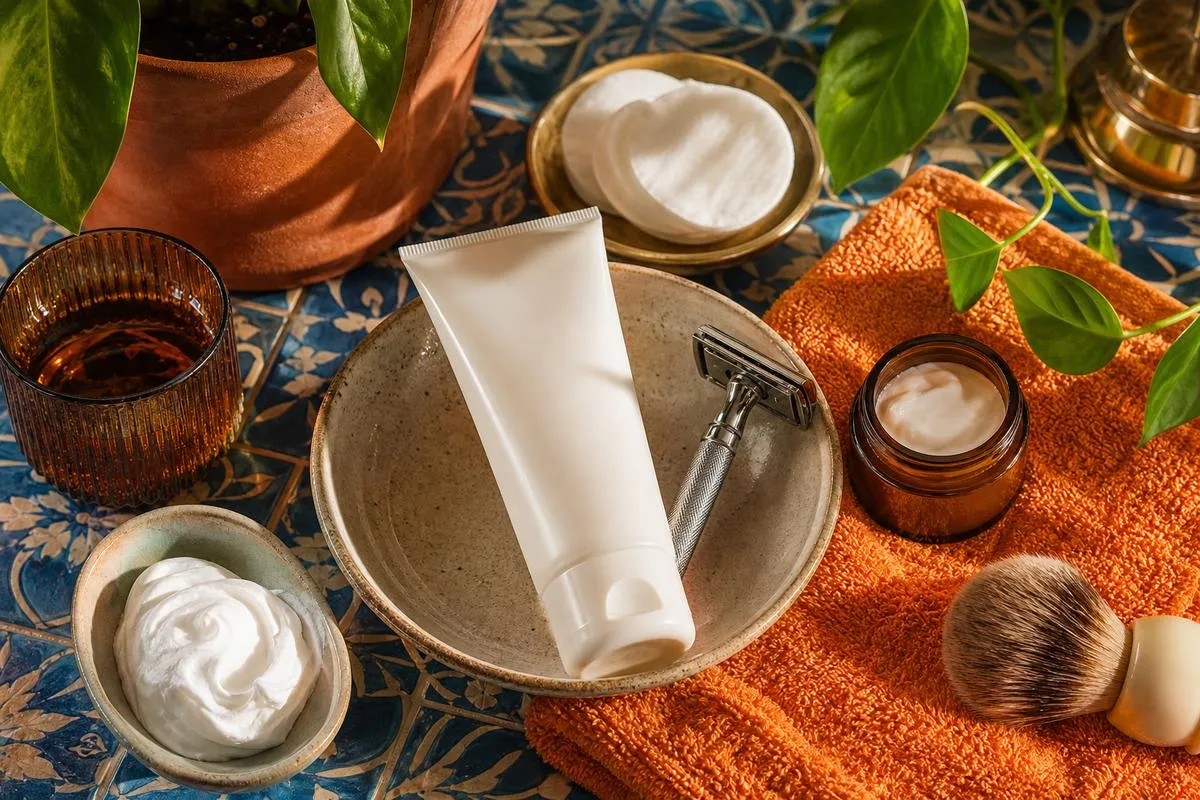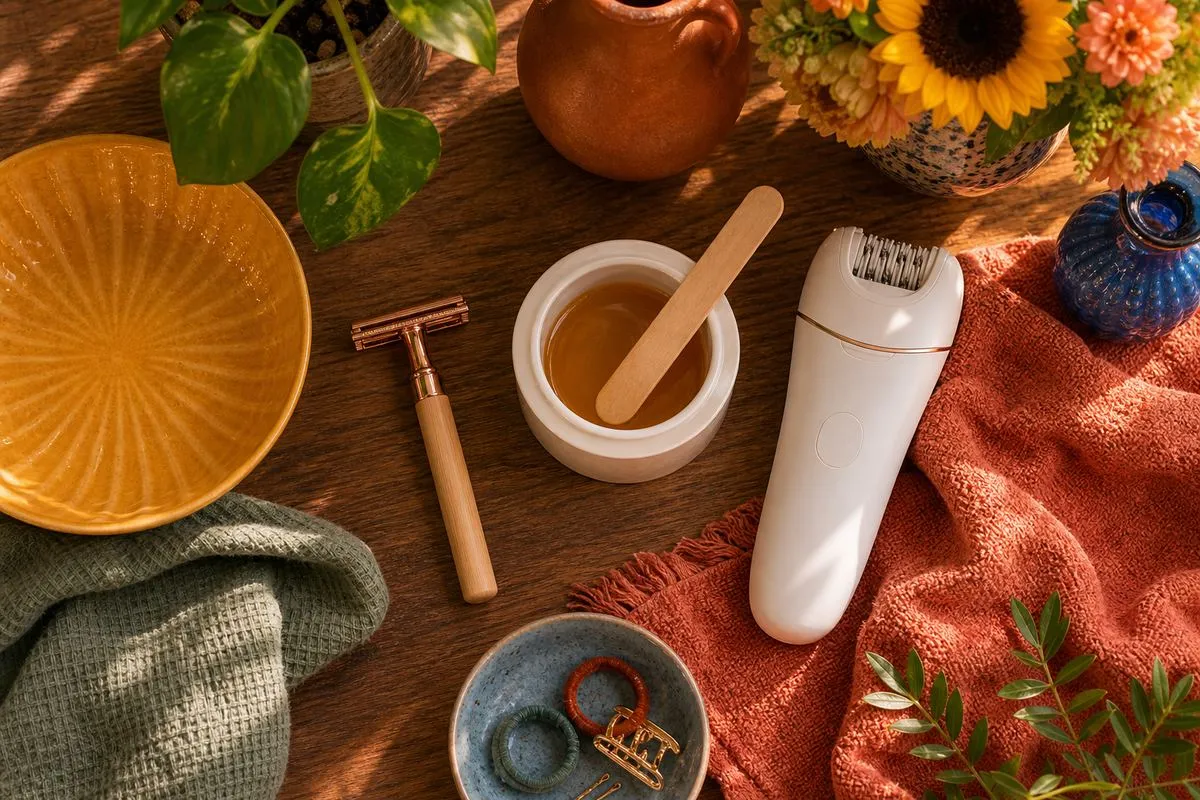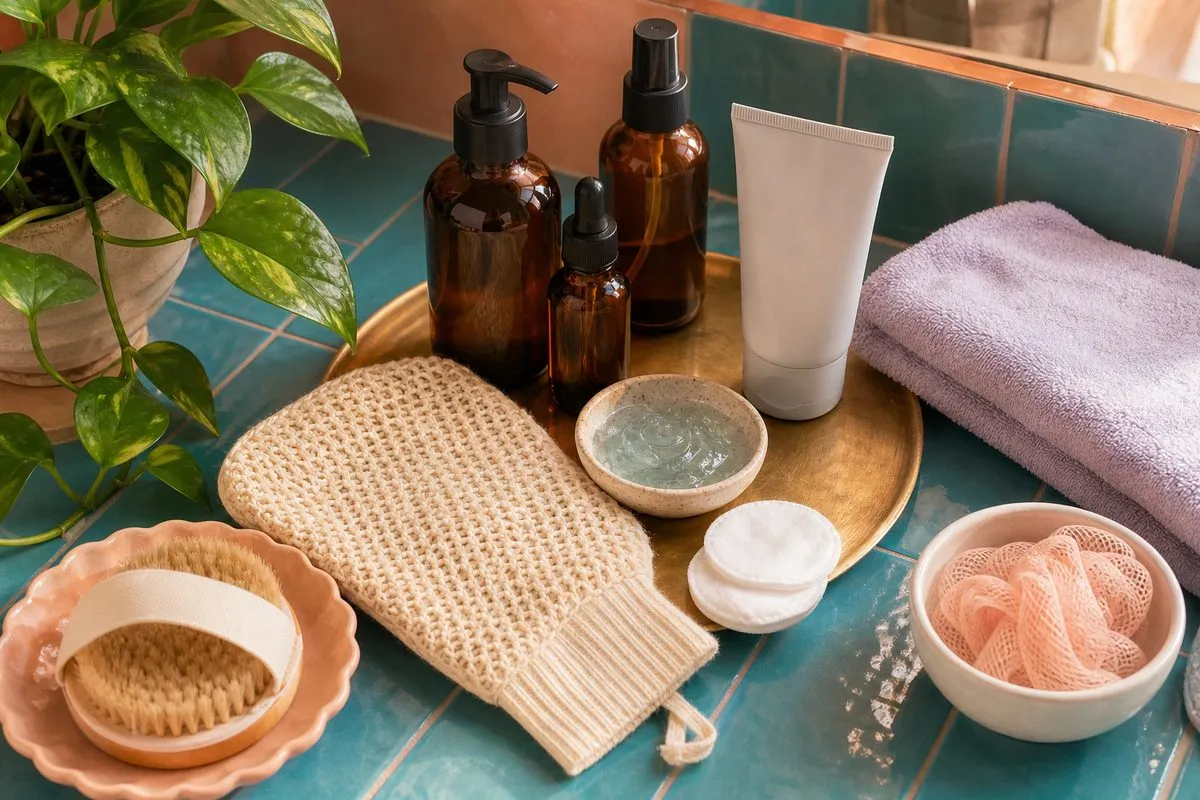
The safest at-home facial hair removal methods include dermaplaning (for fine peach fuzz), facial razors or gentle shaving, threading, tweezing (for stray chin hairs), facial waxing, and gentle depilatory creams made specifically for the face. Choose the method that suits the area and your skin, always patch test, work gently, and follow with soothing, fragrance-free aftercare. For coarse, fast-growing, or hormonal facial hair, it is worth checking with a doctor.
Soft, fine facial hair on the upper lip, chin, or cheeks is completely normal, and so is wanting a smooth, polished finish. The challenge is that facial skin is delicate and prone to irritation, so the methods that work on your legs are not always right for your face. The good news is that several gentle, effective options let you remove facial hair safely at home, as long as you choose the right method for the area and care for your skin afterward.
Soft, fine facial hair on the upper lip, chin, or cheeks is completely normal, and so is wanting a smooth, polished finish. The challenge is that facial skin is delicate and prone to irritation, so the methods that work on your legs are not always right for your face. The good news is that several gentle, effective options let you remove facial hair safely at home, as long as you choose the right method for the area and care for your skin afterward.
Here is how to remove facial hair at home safely, by method and by area.
Key Takeaways

- Facial skin is delicate, so use gentle, face-appropriate methods.
- Dermaplaning and facial razors suit fine peach fuzz.
- Threading and tweezing are great for the upper lip and chin.
- Use only depilatory creams labeled for facial use, and patch test.
- Soothing, fragrance-free aftercare prevents irritation and breakouts.
- Coarse or hormonal facial hair is worth discussing with a doctor.
Why Facial Hair Removal Needs a Gentle Approach
The skin on your face is thinner, more sensitive, and more visible than the skin on your body, and it is also more prone to breakouts and irritation. That means harsh body methods and aggressive technique can leave the face red, bumpy, or broken out. The goal with facial hair removal is to be effective but gentle: choose methods designed for delicate skin, always patch test, never rush, and soothe the skin afterward. Treating your face with extra care is what keeps it smooth and calm rather than irritated.
The Best At-Home Facial Hair Removal Methods

Several methods work well at home, each suited to different hair types and areas:
- Dermaplaning / facial razors for fine peach fuzz.
- Threading for the upper lip, brows, and chin.
- Tweezing for a few stray or coarse hairs (chin, brows).
- Facial waxing for the upper lip and chin.
- Depilatory creams (face-specific) for those who prefer no blades.
- Facial epilators for small areas, with care.
The right choice depends on your hair, your skin's sensitivity, and the area. Many women use a couple of methods for different spots.
Dermaplaning and Facial Razors
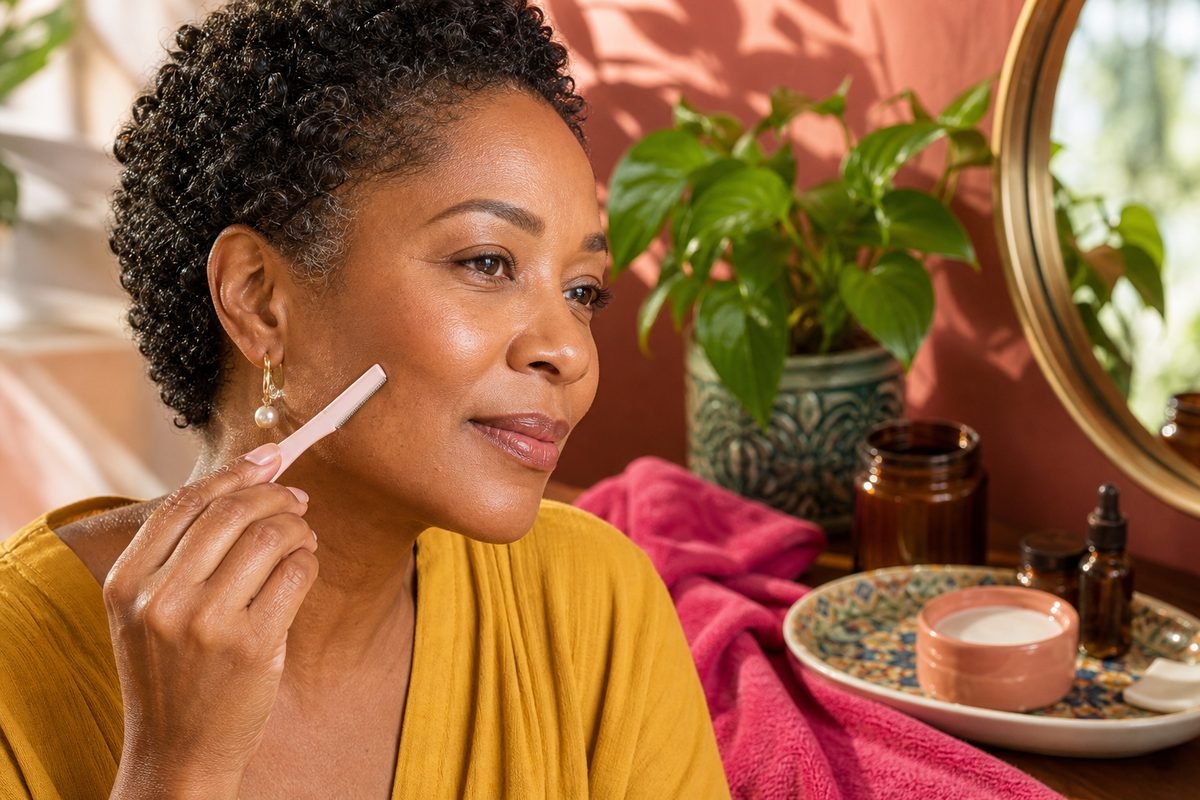
Dermaplaning uses a small, single-blade facial razor to gently glide across the skin, removing fine peach fuzz while also sweeping away dead surface skin for a smooth, glowy finish. Facial razors (often sold in small multipacks) work the same way and are inexpensive and easy.
To do it safely, use a clean facial razor on dry or lightly cleansed skin, hold the blade at a low angle, and use short, light, downward strokes. Avoid active breakouts and any raised spots. This method suits fine, soft facial hair beautifully and gives an instant smooth result, plus better makeup application. It is gentle, quick, and a favorite for peach fuzz.
Threading

Threading uses a twisted cotton thread to catch and lift hairs from the root, and it is precise, gentle on skin, and free of chemicals. It is especially good for the upper lip, eyebrows, and chin. While professional threading takes skill, at-home threading is learnable with practice (and there are small threading tools to help). Because it removes from the root, results last a few weeks, and over time regrowth can become finer. Threading suits those who want precise, root-level removal without wax or creams, and it is gentle enough for sensitive skin once you get the technique.
Tweezing
Tweezing is perfect for the occasional stray hair, a few coarse chin hairs, or shaping brows, removing one hair at a time from the root. It is precise and inexpensive, needing only good tweezers. Tweeze after a warm shower when pores are open, grip close to the root, and pull in the direction of growth to avoid breakage. Tweezing is ideal for small numbers of hairs rather than larger areas, since it would be slow and irritating over a big patch. For those few persistent chin hairs many women get, tweezing is the simple, targeted answer.
Facial Waxing

Waxing made specifically for the face removes hair from the root for several weeks of smoothness, and it works well on the upper lip and chin. Use a gentle facial wax (warm soft wax or hard wax designed for the face), always patch test first, and follow the directions carefully. Apply in the direction of hair growth and remove against it quickly while holding the skin taut. Because facial skin is delicate, soothe it immediately afterward and avoid waxing over irritated or broken-out skin. Facial waxing suits those who want longer-lasting results on small facial areas and can tolerate the quick sting.
Depilatory Creams for the Face
Depilatory (hair-removal) creams dissolve hair at the surface and offer a no-blade option, but you must use only creams clearly labeled as safe for the face, never body formulas, which are too harsh for facial skin. Always patch test on a small area first and wait the recommended time, since these creams are chemical and can irritate. Apply for only the time directed, remove gently, and rinse thoroughly, then soothe the skin. Facial depilatory creams suit those who dislike blades or waxing, but the patch test and careful timing are essential to avoid irritation on delicate facial skin.
Which Method for Which Area

Matching the method to the area helps:
| Area | Best Gentle Methods |
|---|---|
| Upper lip | Threading, facial waxing, dermaplaning, face-safe cream |
| Chin (few coarse hairs) | Tweezing, threading, facial waxing |
| Cheeks / peach fuzz | Dermaplaning, facial razor |
| Eyebrows | Threading, tweezing |
| Jawline | Dermaplaning, waxing, threading |
For widespread fine fuzz, dermaplaning is ideal; for a few coarse hairs, tweezing; for precise small areas, threading or facial waxing.
Aftercare for Facial Skin
Because the face is delicate and breakout-prone, aftercare matters. Right after removal, apply a soothing, fragrance-free moisturizer or a calming gel like aloe to reduce redness. Avoid heavy makeup, harsh actives (retinol, strong acids), and sun exposure on freshly treated skin for a day. Keep the area clean to prevent breakouts, since removing hair can briefly leave follicles more open. Always finish with sunscreen during the day, as freshly treated skin is more sensitive to the sun. Gentle aftercare keeps your face calm, clear, and smooth.
Common Myths

A few myths cause needless worry. The biggest: shaving or dermaplaning your face does not make hair grow back thicker, darker, or faster. Hair may feel a little coarse as the blunt-cut tip grows out, but the actual thickness and color do not change, this is one of the most persistent beauty myths. Another myth is that facial hair removal damages skin; done gently and correctly, these methods are safe. And dermaplaning does not cause more breakouts when done on clean skin avoiding active acne. Knowing the facts makes facial hair removal far less intimidating.
When to See a Doctor
Most facial hair is normal and harmless, but sometimes it is worth a conversation with a doctor. Consider seeing one if you notice sudden, rapid, or significant new facial hair growth, especially coarse, dark hair on the chin, jaw, or upper lip, or if it comes with other changes like irregular periods. Excess facial hair can sometimes relate to hormonal factors that a doctor can evaluate and help manage. There is no need to feel self-conscious about asking, since it is a common and treatable concern. For typical fine facial hair, though, gentle at-home removal is all you need.

Common Mistakes
- Using body methods or creams on the face. Use only face-specific products.
- Skipping the patch test. Always test waxes and creams first.
- Removing hair over breakouts or irritation. Wait until skin is calm.
- Skipping soothing aftercare. The face needs calming and sun protection.
- Believing the "thicker hair" myth. Removal does not change hair thickness.
Final Takeaway
Removing facial hair at home is safe and simple when you choose gentle, face-appropriate methods and treat your delicate skin with care. Reach for dermaplaning or a facial razor for peach fuzz, threading or waxing for the upper lip, and tweezing for stray chin hairs, always patch testing and soothing your skin afterward. Ignore the myth that removal makes hair grow back thicker, and check with a doctor if you notice sudden coarse growth. With the right method and gentle aftercare, you can enjoy smooth, polished skin without irritation. Be gentle, patch test, and your face will stay calm and lovely.
This article is for general beauty and self-care education only and is not medical advice. See a doctor for sudden, excessive, or coarse facial hair growth.
 📌 Save
Love this guide? Save it 📌
Pin it to your favorite board so it's easy to find again — and share it with a friend who'd love it too.
Save to PinterestFrequently asked questions
How do I remove facial hair at home safely?
Choose a gentle, face-appropriate method: dermaplaning or a facial razor for peach fuzz, threading for the upper lip and brows, tweezing for stray chin hairs, facial waxing for small areas, or a depilatory cream labeled for the face. Always patch test, work gently, and soothe afterward.
Does shaving or dermaplaning facial hair make it grow back thicker?
No. This is a common myth. Removing facial hair does not change its thickness, color, or growth speed. The blunt-cut tip may feel slightly coarse as it grows out, but the hair itself is unchanged.
What is the best way to remove upper lip hair?
Threading and facial waxing remove upper lip hair from the root for longer-lasting results, while dermaplaning and face-safe depilatory creams also work. Choose based on your skin's sensitivity, and always patch test waxes and creams.
How do I remove chin hairs?
For a few coarse chin hairs, tweezing is the simplest targeted method, removing each from the root. Threading and facial waxing also work well. Tweeze after a warm shower, gripping close to the root and pulling in the direction of growth.
Is dermaplaning safe to do at home?
Yes, when done gently. Use a clean facial razor at a low angle with short, light strokes on clean skin, avoiding active breakouts. It removes peach fuzz and dead skin for a smooth, glowy finish and better makeup application.
Can I use regular hair removal cream on my face?
No. Only use depilatory creams clearly labeled as safe for the face. Body formulas are too harsh for delicate facial skin and can cause irritation or burns. Always patch test even face-specific creams first.
When should I see a doctor about facial hair?
See a doctor if you notice sudden, rapid, or significant new coarse facial hair, especially with other changes like irregular periods, since this can relate to hormonal factors. For typical fine facial hair, gentle at-home removal is all you need.

We cite sources and update this guide regularly.