
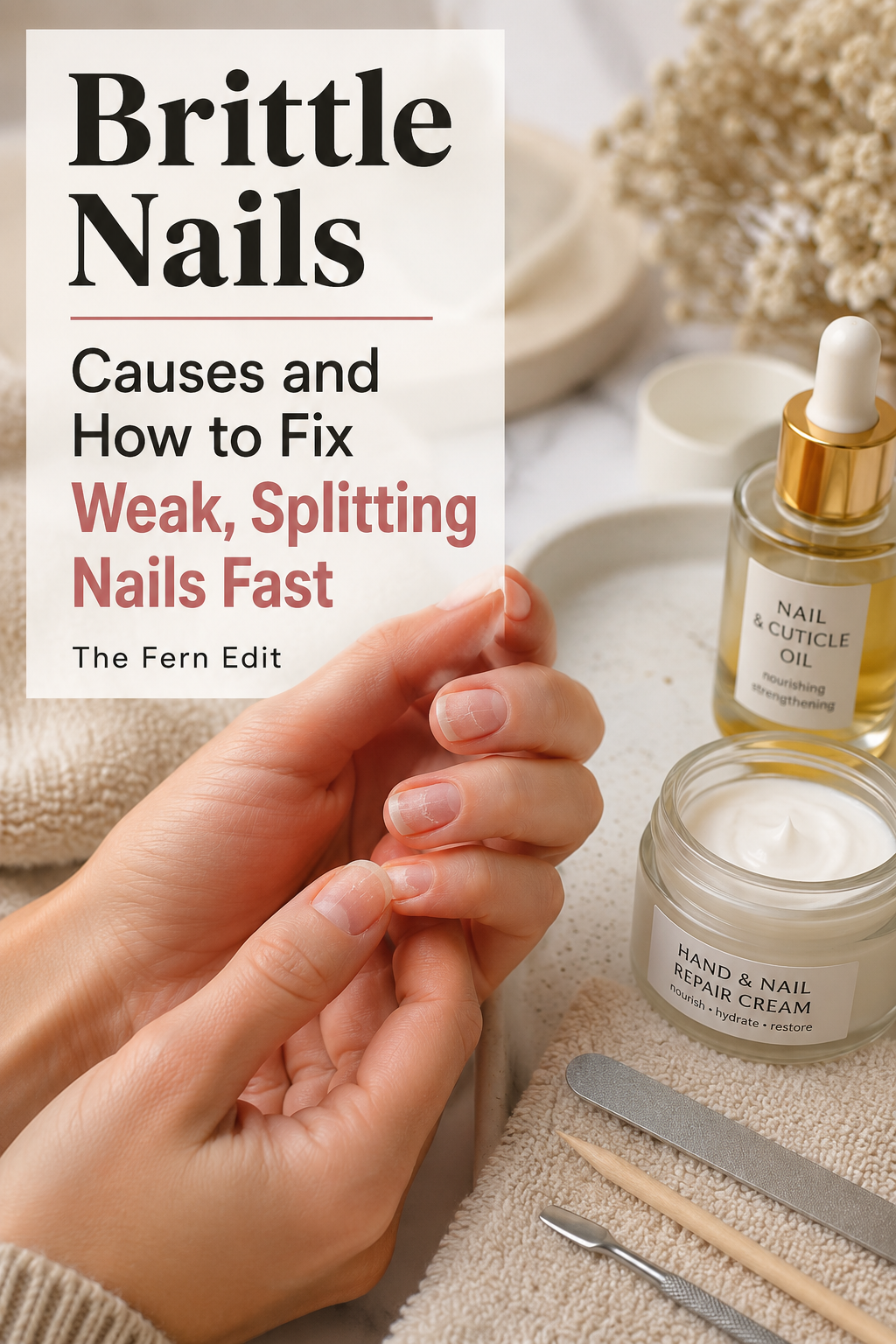
Brittle nails are usually caused by lost moisture—from frequent hand-washing, water exposure, harsh products, acetone, gel manicures, dry weather, or aging. To fix them, hydrate your nails and cuticles with oil twice a day, wear gloves for cleaning and dishes, file gently in one direction, keep nails short while they recover, use a strengthening base coat, and limit acetone and back-to-back gels. Most nails improve noticeably within a few weeks.
What causes brittle nails and how to help strengthen them.
You finally grow a little length—and then it splits, peels, or snaps right off. If that sounds like your nails, you have brittle nails, and you are in very good company. It is one of the most common nail complaints among women in the U.S., and the frustrating part is that it rarely comes from one obvious thing.
The reassuring news: brittle nails are usually a moisture-and-habits problem, not a permanent feature of your hands. Once you understand why yours are brittle, the fixes are simple, gentle, and mostly free. Here is exactly what causes brittle nails and how to bring them back to strong and flexible.
Key Takeaways
- Brittle = dry. The single biggest cause is moisture loss, so daily oiling is the biggest fix.
- Water and chemicals are the culprits—dishes, cleaning, acetone, and frequent gels all dry the nail.
- Protect while you rebuild: gloves, shorter length, gentle one-direction filing.
- Strengtheners help, but only alongside hydration—not instead of it.
- Persistent brittleness despite good care can have an internal cause worth checking with a doctor.
What Brittle Nails Actually Are
Brittle nails are nails that have lost their natural flexibility, so instead of bending under pressure they crack, split, peel into layers, or break. You might notice horizontal splits at the tips, thin nails that bend too easily, peeling at the free edge, or a dry, rough surface.
Dermatologists often describe two patterns: nails that are dry and brittle (too little moisture, often from the outside) and nails that are soft and brittle (sometimes from too much moisture or certain products). Most everyday brittleness falls into the dry category—which is great news, because hydration is one of the easiest things to fix. If your main issue is layers separating at the tip, our guide to peeling nails goes deeper on that specific pattern.
What Causes Brittle Nails?
1. Frequent hand-washing and water exposure
Nails absorb water and then lose it, and that constant swelling-and-shrinking weakens the keratin layers over time. People who wash dishes, clean, or wash their hands often are especially prone to it.
2. Harsh products and acetone
Acetone removers, strong soaps, sanitizers, and cleaning chemicals strip the natural oils that keep nails flexible. Acetone in particular can leave nails dry and chalky.
3. Gel and acrylic manicures
Beautiful, but back-to-back gels—and especially aggressive removal or peeling them off—thin the nail and leave it fragile. The damage is usually from the removal, not the polish itself.
4. Dry air and weather
Low humidity, winter air, and indoor heating pull moisture from nails just like they do from skin and lips.
5. Aging and hormones
Nails naturally tend to get drier with age, and hormonal shifts can change their texture too. This is normal—and very manageable with a good routine.
6. Nutrition gaps
Low intake of protein, iron, biotin, or zinc can show up in your nails, since nails are built from what your body has to work with. We cover the supplement question honestly in biotin and vitamins for nails.
7. Underlying health factors
Occasionally, persistently brittle nails relate to something internal—such as thyroid issues or iron deficiency. If nothing you try helps, that is a reason to check in with a doctor (more on that below).
How to Fix Brittle Nails: Step by Step
This is a routine, not a one-time treatment. Give it a few weeks and stay consistent.
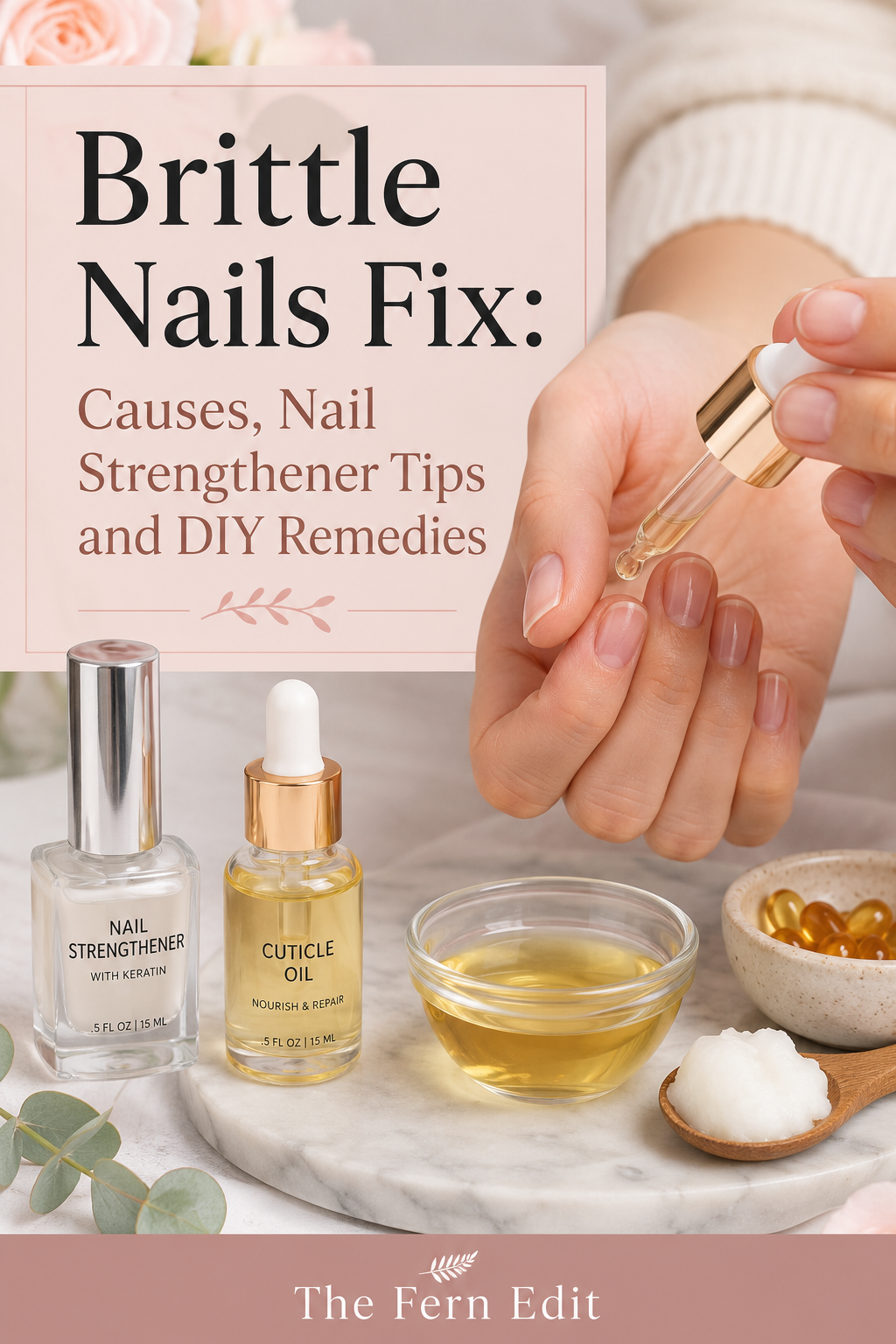
- Oil twice a day. Massage cuticle oil (jojoba, almond, or vitamin E) into the nail and cuticle morning and night. This is the most important step by far.
- Wear gloves. Rubber gloves for dishes and cleaning, and warm gloves outdoors in winter. Protecting nails from water and chemicals stops new damage.
- Keep them short for now. Shorter nails have less leverage to snap, giving healthier nail time to grow in.
- File gently, one direction. Use a fine glass or crystal file and never saw back and forth, which frays and splits the edge.
- Use a strengthening base coat. A keratin or protein base coat adds a protective shield. Avoid overusing hardeners with formaldehyde, which can over-harden and worsen brittleness.
- Cut back on acetone and gels. Take breaks between gel manicures and choose acetone-free or gentler removal when possible.
- Hydrate and eat well. Drink enough water and include protein, leafy greens, eggs, nuts, and fish in your meals.
For the complete day-to-day system this fits into, see our pillar guide: how to grow strong, healthy nails.
Best Ingredients and Products for Brittle Nails
You do not need a cabinet full of products—just a few good ones, all easy to find at U.S. stores like Target, Ulta, or Amazon:
- Cuticle oil with jojoba, almond, or vitamin E — your daily hydration hero.
- A rich hand cream — reapply after every wash.
- A strengthening base coat — protein- or keratin-based.
- A fine glass file — gentler than emery boards.
- Lined gloves — for dishes and cleaning.
Home Remedies That Help (and the Myths)
What genuinely helps: a warm oil soak once or twice a week (a few minutes in olive, jojoba, or almond oil), consistent cuticle oil, and simply protecting your hands. These work because they restore moisture—the real issue.
What to skip: aggressive buffing to “smooth” nails (it thins them), gelatin or random hacks promising overnight strength, and harsh hardeners used daily. There is no overnight fix—brittle nails recover as new, healthier nail grows out.
Common Mistakes That Keep Nails Brittle
- Peeling off gel or polish instead of removing it properly.
- Using nails as tools to scrape, pry, or open things.
- Soaking in hot, soapy water without gloves.
- Filing back and forth with a coarse board.
- Skipping oil because you “don’t have time” (it takes ten seconds).
- Giving up after a week—nails need a full growth cycle to show change.
Expert-Style Tips
- Oil at red lights and during TV. Tie it to something you already do so it actually happens.
- Apply hand cream before bed and sleep in cotton gloves once a week for a deep treatment.
- Keep a glass file in your bag so a small snag gets smoothed instead of tearing further.
- Choose a "breathable" stretch. Go bare and oiled for a week between manicures.
When to See a Doctor
Most brittle nails are cosmetic and respond to better habits. But it is worth checking with a doctor or dermatologist if your nails stay brittle despite weeks of good care, or if you also notice spoon-shaped nails, significant color changes, pitting, swelling, pain, or nails separating from the bed. These can occasionally signal an internal cause like iron deficiency or a thyroid condition, which a routine alone will not address.
Free Printable: 30-Day Nail Recovery Tracker
Brittle nails recover gradually, so it helps to see your progress. Grab our free printable nail recovery tracker to check off your daily oiling and watch your nails get stronger week by week.
Related Reads in This Series

- How to Grow Strong, Healthy Nails (Full Routine)
- Peeling Nails: Why They Happen and How to Fix Them
- Cuticle Care: How to Care for Your Cuticles
- How to Grow Your Nails Faster
- Biotin and Vitamins for Nails: Do They Work?
What deficiency causes brittle nails?
Low iron is a common one, and shortfalls in biotin, zinc, or protein can also play a role. Diet usually helps, but if brittleness persists despite eating well, ask a doctor to check for an underlying cause.
How do you fix brittle nails fast?
You cannot change existing nail overnight, but you can stop further damage immediately: oil twice daily, wear gloves, keep nails short, file in one direction, and pause gels and acetone. Visible improvement usually comes within a few weeks as healthier nail grows in.
Does drinking water help brittle nails?
Staying hydrated supports overall nail health, but most brittleness is about topical moisture loss. Daily cuticle oil and hand cream do more for the nail surface than water alone.
Are brittle nails a sign of something serious?
Usually not—they are most often caused by dryness and everyday wear. Occasionally they relate to iron deficiency or thyroid issues, so persistent brittleness with other changes is worth a doctor’s visit.
Can gel manicures cause brittle nails?
Frequent gels—especially peeling them off or rough removal—can thin and weaken nails. Spacing them out and removing them gently makes a big difference.
The Takeaway
Brittle nails are almost always a sign your nails are thirsty and a little over-exposed. Hydrate them daily, protect them from water and chemicals, keep them short and gently filed while they rebuild, and be patient through one growth cycle. Stick with it and brittle becomes bendy-strong—the way healthy nails are meant to be.
This article is for general beauty and self-care education only and is not medical advice. If your nails stay brittle despite good care or you notice other changes, please consult a doctor or dermatologist.
Nail inspiration to save 💅
Tap any look to open it — then save your favorites.



 📌 Save
Love this guide? Save it 📌
Pin it to your favorite board so it's easy to find again — and share it with a friend who'd love it too.
Save to PinterestFrequently asked questions
What deficiency causes brittle nails?
Low iron is a common one, and shortfalls in biotin, zinc, or protein can also play a role. Diet usually helps, but if brittleness persists despite eating well, ask a doctor to check for an underlying cause.
How do you fix brittle nails fast?
You cannot change existing nail overnight, but you can stop further damage immediately: oil twice daily, wear gloves, keep nails short, file in one direction, and pause gels and acetone. Visible improvement usually comes within a few weeks as healthier nail grows in.
Does drinking water help brittle nails?
Staying hydrated supports overall nail health, but most brittleness is about topical moisture loss. Daily cuticle oil and hand cream do more for the nail surface than water alone.
Are brittle nails a sign of something serious?
Usually not — they are most often caused by dryness and everyday wear. Occasionally they relate to iron deficiency or thyroid issues, so persistent brittleness with other changes is worth a doctor's visit.
Can gel manicures cause brittle nails?
Frequent gels — especially peeling them off or rough removal — can thin and weaken nails. Spacing them out and removing them gently makes a big difference.
What is the most important habit for stronger nails?
Moisture. Keeping your nails and cuticles hydrated with cuticle oil and hand cream is the single most effective thing you can do, since hydrated nails are flexible and far less likely to break.
How long does it take to strengthen nails?
You may notice less peeling and breakage within a few weeks, but because a nail takes 3 to 6 months to grow out completely, the fully strengthened nail takes a season or more. Consistency is key.
Do my nails need to breathe or take breaks from polish?
Giving nails occasional polish-free days lets you oil them directly and check their health, and taking breaks from gels and acrylics is especially helpful for brittle nails, since the removal process can thin and weaken them.
When should I see a doctor about my nails?
See a doctor if your nails change color, become thick or distorted, separate from the nail bed, show pitting, or if brittleness is sudden and severe. These can occasionally signal an underlying condition that needs attention.

We cite sources and update this guide regularly.