
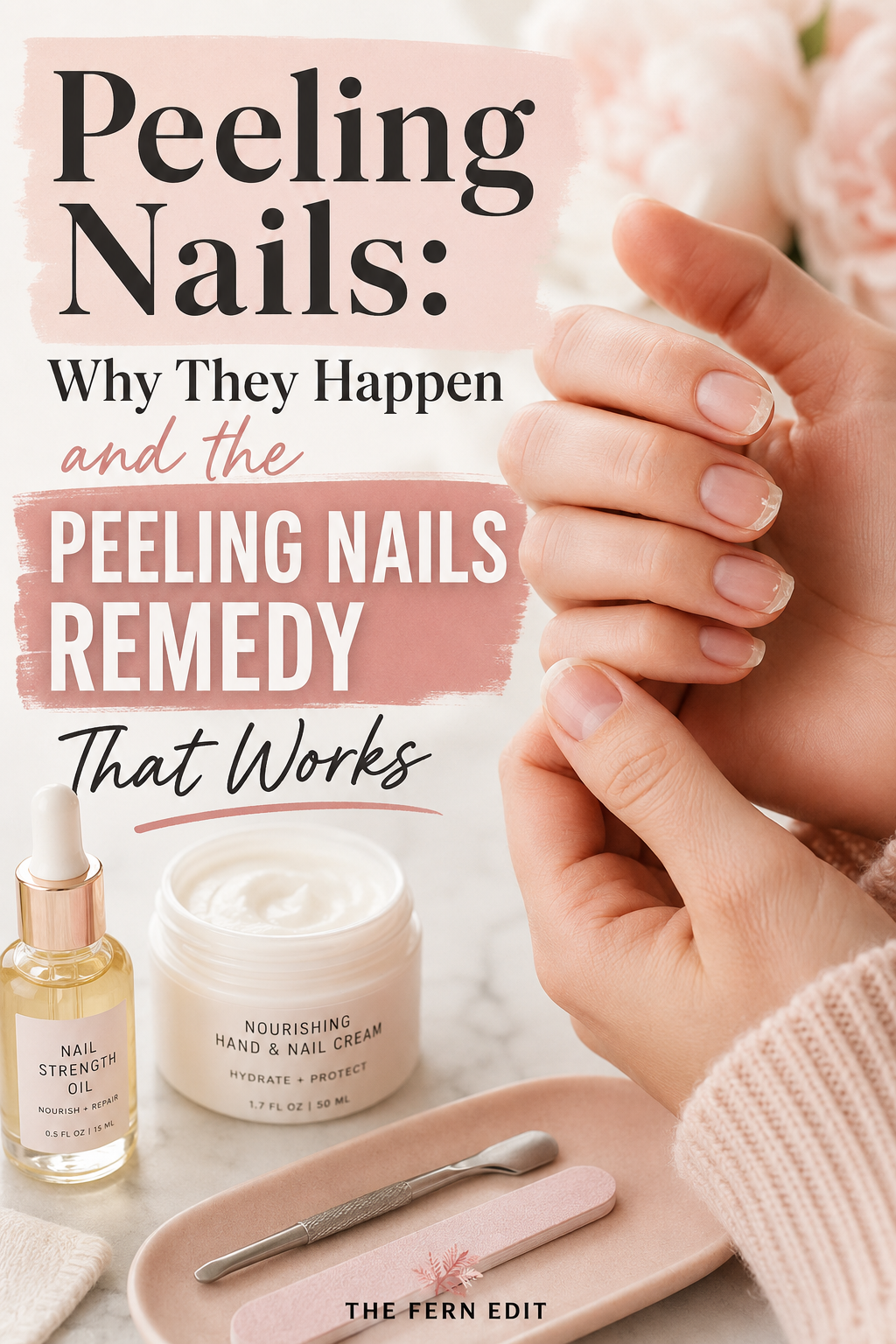
Peeling nails happen when the thin layers of the nail separate at the tip, usually from a cycle of water exposure and drying, harsh products, acetone, trauma, or over-buffing. To fix them, hydrate nails and cuticles with oil daily, wear gloves around water, keep nails short, file (never tear) the peeling edge, and use a strengthening base coat. Most nails stop peeling within a few weeks as healthier nail grows in.
There is a special kind of frustration in watching the tip of your nail split into thin, papery layers that flake away a little more every day. Peeling nails never seem to get the chance to grow, and picking at the loose edges (we have all done it) only makes things worse.
Here is the reassuring part: peeling nails are almost always a moisture-balance problem on the surface of the nail—not a sign that something is wrong inside you. That means the fixes are simple, gentle, and very doable at home. Let’s look at why nails peel and exactly how to stop it.
Key Takeaways
- Peeling is a surface moisture issue, most often from water-and-dry cycles.
- Gloves are essential—dishes and cleaning are major culprits.
- Never peel or tear a flaking layer; file it smooth instead.
- Daily oil + a base coat protect the layers and let them grow out together.
- Persistent peeling with other symptoms is worth a doctor’s check.
What Peeling Nails Are
The nail is built from many thin layers of keratin pressed together, a bit like plywood. When those layers lose their “glue” of moisture and natural oils, they start to separate at the free edge—and that is the flaky peeling you see. Dermatologists sometimes call this onychoschizia.
Peeling is closely related to brittleness, but with a key difference: peeling is layers separating at the tip, while brittleness is more about nails snapping or splitting. Many women have a mix of both, so our guide to brittle nails is a perfect companion to this one.
What Causes Peeling Nails?
1. The water-and-dry cycle (the main culprit)
Nails repeatedly getting wet and then drying out—dishes, hand-washing, swimming—makes the layers swell and shrink until they separate. This is the most common cause by far.
2. Harsh products and acetone
Strong soaps, sanitizers, cleaning chemicals, and acetone removers strip the oils that hold the layers together.
3. Trauma and using nails as tools
Typing hard, scratching, prying, or picking at polish puts mechanical stress on the tip and lifts the layers.
4. Over-buffing
Buffing the nail surface too often thins it and encourages peeling.
5. Gel and acrylic removal
Peeling off gels—or rough removal—takes the top nail layers with them.
6. Dry weather
Low humidity and indoor heating pull moisture from nails just like skin.
7. Nutrition (less common)
Occasionally, low iron or other nutrient gaps contribute. We cover supplements honestly in biotin and vitamins for nails.
How to Fix Peeling Nails: Step by Step
- Hydrate, hydrate, hydrate. Apply cuticle oil to the nail and tip morning and night, and hand cream after every wash. This is the core fix.
- Wear gloves around water. Rubber gloves for dishes and cleaning break the water-and-dry cycle that causes most peeling.
- Keep nails short for now. Less length means less stress on the separating tip while healthier nail grows in.
- File, never tear. Gently smooth a peeling edge with a fine glass file—pulling or biting a flake rips deeper into the nail.
- Use a strengthening base coat. It binds the layers and shields the tip. Reapply every few days.
- Cut back on acetone and gels. Choose gentle removal and space out manicures.
- Eat and hydrate well. Support healthy nail from the inside with protein, water, and a balanced diet.
These steps slot into the bigger picture in our pillar guide, how to grow strong, healthy nails.
Best Products and Ingredients
- Cuticle oil with jojoba, almond, or vitamin E—your daily layer-binding moisture.
- A strengthening base coat to hold the layers together.
- A rich hand cream for after every wash.
- A fine glass file to smooth edges without tearing.
- Lined gloves for dishes and cleaning.
All easy to find at U.S. stores like Target, Ulta, or Amazon.
Home Remedies That Help (and the Myths)
What helps: a short weekly warm-oil soak, consistent cuticle oil, gloves, and gentle filing. They all restore or protect moisture—the real issue.
What to skip: long hot soapy soaks (they worsen peeling), aggressive buffing, peeling polish off, and overnight “miracle” hacks. There is no instant fix—peeling resolves as intact new nail grows out.
Common Mistakes to Avoid

- Picking or peeling the flaking layer (the fastest way to make it worse).
- Skipping gloves and soaking nails in hot, soapy water.
- Over-buffing to “smooth” the peel.
- Using harsh acetone often without re-oiling.
- Filing back and forth, which frays the edge further.
- Expecting results in days instead of a growth cycle.
Expert-Style Tips
- Keep oil by the sink and reapply every time you wash your hands.
- Smooth, don’t snip, any loose layer the moment you notice it.
- Sleep in a hand treatment—cream plus cotton gloves—once a week.
- Always wear a base coat, even bare, to armor the tips.
When to See a Doctor
Peeling nails are usually cosmetic and respond well to better habits. But check with a doctor or dermatologist if peeling persists despite weeks of good care, affects all your nails suddenly, or comes with other changes like spooning, significant brittleness, color changes, or signs of low iron such as fatigue. Occasionally peeling links to a nutritional or health factor a professional can address.
Free Printable: Nail Recovery Checklist
Consistency is what stops the peeling. Grab our free printable nail recovery checklist to keep your daily oiling and glove habits on track while your nails heal.
Related Reads in This Series
- How to Grow Strong, Healthy Nails (Full Routine)
- Brittle Nails: Causes and How to Fix Them
- Ridges in Fingernails: What They Mean
- Cuticle Care: How to Care for Your Cuticles
- Biotin and Vitamins for Nails: Do They Work?
Why are my nails peeling in layers?
Most often from a cycle of getting wet and drying out, plus harsh products, acetone, trauma, or over-buffing, which loosen the thin layers at the tip. Daily hydration and gloves usually fix it.
How do you fix peeling nails?
Oil nails and cuticles daily, wear gloves around water, keep nails short, file (never tear) the peeling edge, and use a strengthening base coat. Peeling stops as healthier nail grows in over a few weeks.
What deficiency causes nails to peel?
Peeling is usually a surface moisture issue, but occasionally low iron contributes. If peeling persists despite good care or comes with fatigue, ask a doctor to check.
Should I cut peeling nails?
Do not peel or tear them. Gently file the loose edge smooth with a fine glass file so it cannot catch and rip deeper into the nail.
Does drinking water stop nails from peeling?
Overall hydration helps your body, but peeling is mainly about topical moisture loss. Cuticle oil, hand cream, and gloves do far more for the nail surface than water alone.
The Takeaway
Peeling nails are simply layers that have dried out and started to separate—not a sign of anything sinister. Break the water-and-dry cycle with gloves, flood your nails with daily oil, smooth (never tear) the edges, and protect them with a base coat. Stay consistent through one growth cycle and your nails will grow out whole and strong again.
This article is for general beauty and self-care education only and is not medical advice. If peeling persists despite good care or comes with other symptoms, please consult a doctor or dermatologist.
Nail inspiration to save 💅
Tap any look to open it — then save your favorites.

 📌 Save
Love this guide? Save it 📌
Pin it to your favorite board so it's easy to find again — and share it with a friend who'd love it too.
Save to PinterestFrequently asked questions
Why are my nails peeling in layers?
Most often from a cycle of getting wet and drying out, plus harsh products, acetone, trauma, or over-buffing, which loosen the thin layers at the tip. Daily hydration and gloves usually fix it.
How do you fix peeling nails?
Oil nails and cuticles daily, wear gloves around water, keep nails short, file (never tear) the peeling edge, and use a strengthening base coat. Peeling stops as healthier nail grows in over a few weeks.
What deficiency causes nails to peel?
Peeling is usually a surface moisture issue, but occasionally low iron contributes. If peeling persists despite good care or comes with fatigue, ask a doctor to check.
Should I cut peeling nails?
Do not peel or tear them. Gently file the loose edge smooth with a fine glass file so it cannot catch and rip deeper into the nail.
Does drinking water stop nails from peeling?
Overall hydration helps your body, but peeling is mainly about topical moisture loss. Cuticle oil, hand cream, and gloves do far more for the nail surface than water alone.
How do I fix splitting nails?
Hydrate and oil daily to restore flexibility, keep nails shorter, avoid harsh chemicals and over-buffing, use a nail strengthener, and eat a nourishing diet. For an existing split, a tiny nail glue repair can hold it until it grows out.
Can diet cause nails to peel or split?
Diet can play a role. Low protein or nutrients like iron and biotin may contribute to fragile nails. A balanced, nourishing diet supports stronger nails, though most peeling and splitting comes from dryness and external damage. Check with a doctor before supplements.
How long does it take for peeling and splitting to improve?
You will usually notice improvement within a few weeks of consistent moisture and protection, but because nails grow slowly, a fully healthy nail takes 3 to 6 months to grow out. The visible edge shows old damage until it grows past.

We cite sources and update this guide regularly.