To stop biting your nails, first notice your triggers (stress, boredom, focus), then make biting harder and less rewarding: keep nails short and neat, apply a bitter-tasting or pretty polish, keep your hands busy with a fidget, and start a daily cuticle-oil ritual. Replace the habit with a substitute, protect your nails during high-risk moments, and track small wins. Most people improve within a few weeks of consistent effort.
If you bite your nails, you already know the cycle: you catch yourself mid-bite, promise to stop, and then your fingers are back at your mouth before you have even decided to. First, let go of the guilt—nail biting is a habit loop, not a lack of willpower, and habits respond far better to smart strategies than to shame.
The women who finally quit almost never do it with one heroic burst of self-control. They do it by making biting harder, keeping their hands busy, and giving their nails a reason to be protected. Here is a kind, practical plan to stop biting your nails—and grow the healthy ones you actually want.
Key Takeaways
- It’s a habit, not a flaw. Strategy beats willpower—and shame makes it worse.
- Know your triggers. Most biting is tied to stress, boredom, or concentration.
- Make it harder and less rewarding: bitter polish, short nails, busy hands.
- Replace the urge with a substitute action rather than just resisting it.
- Give nails a reason to be protected—a manicure you love is great motivation.
Why Do We Bite Our Nails?
Nail biting (sometimes called onychophagia) is usually an automatic, self-soothing habit rather than a conscious choice. Common triggers include:
- Stress or anxiety — biting can feel like a release valve in tense moments.
- Boredom — idle hands look for something to do.
- Concentration — many people bite while focusing, reading, or thinking.
- A picking tendency — a rough edge or hangnail becomes an invitation.
Understanding your personal trigger is the first real step, because the right fix depends on what sets you off. A stress-biter and a boredom-biter need slightly different tools.
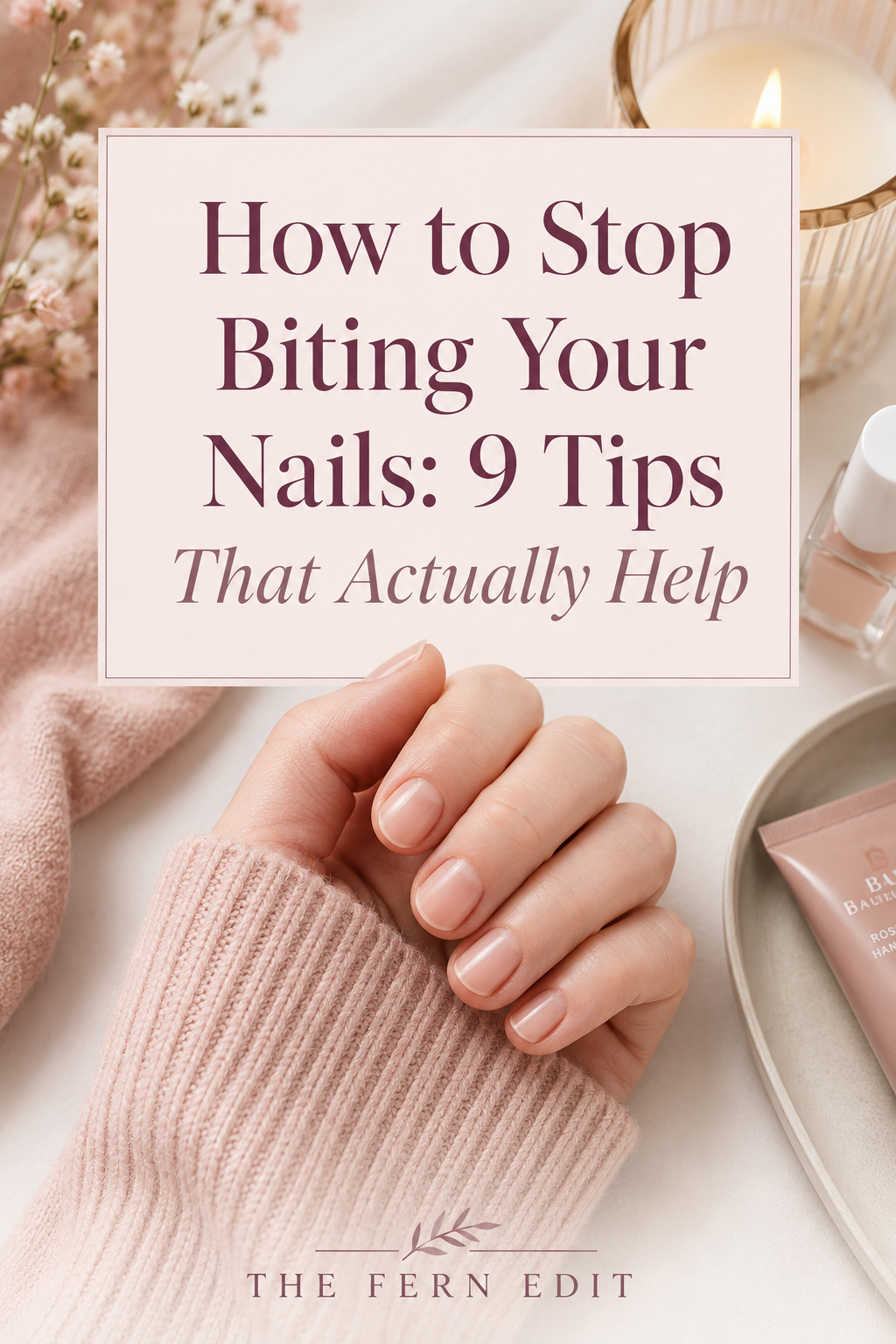
9 Tips to Stop Biting Your Nails
1. Identify and track your triggers
For a few days, simply notice when you bite—during work calls, while scrolling, when anxious. Awareness alone interrupts a lot of automatic biting.
2. Keep your nails short and neatly filed
Short, smooth nails give you far less to grab onto, and no rough edges to pick at. File gently in one direction so nothing snags.
3. Use a bitter-tasting polish
A safe bitter polish made for this purpose creates an instant “stop” signal the moment your finger reaches your mouth. It is one of the most effective tools for breaking the automatic loop.
4. Wear a polish you do not want to ruin
A pretty manicure you love is surprisingly motivating—you protect what you are proud of. Even a clear strengthening coat counts.
5. Keep your hands busy
Give your fingers a job: a fidget ring, stress ball, textured stone, or even doodling. Busy hands rarely wander to your mouth.
6. Start a cuticle-oil ritual
Applying cuticle oil several times a day does double duty—it heals the damage and replaces the hand-to-mouth motion with a soothing, caring one. See our cuticle care guide.
7. Replace the habit, don’t just resist it
Willpower runs out; substitutes last. When the urge hits, do a small replacement action—press your fingertips together, snap a hair tie gently, or reach for your oil. You are rewiring the loop, not white-knuckling it.
8. Protect your nails during high-risk moments
If you bite most during meetings or while watching TV, keep gloves, a fidget, or busy work handy specifically for those windows.
9. Set tiny goals and reward progress
Try quitting one finger at a time, or aim for one bite-free day, then three. Track it and celebrate small wins—maybe a salon manicure as a milestone reward.
What to Do With Your Hands Instead
Substitution is the secret weapon. Good replacements include a fidget ring or spinner, a smooth worry stone, a stress ball, knitting or doodling, sipping water, or a quick hand-cream massage. Keep one of these within reach in the exact spots where you usually bite.
How to Care for Bitten Nails While They Heal
Bitten nails are often short, sore, and ragged, with damaged cuticles. Be extra gentle as they recover:
- Oil the nails and cuticles several times a day to soothe and protect.
- Keep edges smooth with a gentle glass file so there is nothing to pick.
- Use a strengthening base coat to support the regrowing nail.
- Be patient—it takes a full growth cycle to see real length.
For the complete regrowth routine, see our pillar guide, how to grow strong, healthy nails, and our tips on growing nails faster.
Common Mistakes to Avoid
- Relying on willpower alone. Set up your environment so biting is harder.
- Shaming yourself after a slip. Guilt fuels stress, which fuels biting. Just reset.
- Leaving rough edges. A snag is an invitation—keep nails smooth.
- Quitting cold turkey with no substitute. Always give your hands somewhere else to go.
- Expecting overnight results. Habits ease over weeks, not days.
Expert-Style Tips

- Stack a new habit onto an old one. Oil your nails every time you sit at your desk or pick up your phone.
- Book a manicure for week one. The investment makes you want to protect your nails.
- Keep bitter polish topped up—it only works if it is actually on.
- Manage the stress, not just the nails. Breathing breaks and movement reduce the urge at the source.
When It’s More Than a Habit
For many people, nail biting is a mild habit these strategies can resolve. But if biting feels compulsive, causes pain, bleeding, or repeated infections, or is tied to significant anxiety, it can be a body-focused repetitive behavior—and that is nothing to be ashamed of. A doctor or mental health professional can offer supportive, effective approaches, so please reach out if it feels beyond a simple habit. You deserve that support.
Free Printable: 30-Day Stop-Biting Tracker
Breaking a habit is easier when you can see your streak. Grab our free printable 30-day stop-biting tracker to mark each bite-free day and watch your nails grow back.
Related Reads in This Series

- How to Grow Strong, Healthy Nails (Full Routine)
- Cuticle Care: How to Care for Your Cuticles
- How to Grow Your Nails Faster
- Brittle Nails: Causes and How to Fix Them
- Peeling Nails: Why They Happen and How to Fix Them
How do I stop biting my nails?
Notice your triggers, keep nails short and smooth, apply a bitter or pretty polish, keep your hands busy with a fidget, start a cuticle-oil ritual, and replace the urge with a substitute action. Track small wins and most people improve within a few weeks.
Why can’t I stop biting my nails?
Nail biting is an automatic, self-soothing habit often tied to stress, boredom, or focus, so willpower alone rarely works. Changing your environment and replacing the habit with another action is far more effective.
Does bitter nail polish actually work?
For many people, yes—the unpleasant taste interrupts the automatic hand-to-mouth motion. It works best combined with short nails, busy hands, and a substitute habit.
How long does it take to stop biting your nails?
Many people see real progress within a few weeks of consistent effort, though it varies. Quitting one finger at a time and tracking your streak helps it stick.
Is nail biting a sign of anxiety?
It can be, since biting often soothes stress, but it is not always. If biting feels compulsive or is linked to significant anxiety, a doctor or mental health professional can help.
The Takeaway
You can absolutely stop biting your nails—not by forcing yourself, but by making biting harder, giving your hands somewhere better to go, and giving your nails a reason to be protected. Be patient and kind with yourself through the slips, keep your cuticle oil close, and let those healthy nails grow back one bite-free day at a time.
This article is for general beauty and self-care education only and is not medical or mental-health advice. If nail biting feels compulsive or causes injury, please reach out to a doctor or mental health professional.
Nail inspiration to save 💅
Tap any look to open it — then save your favorites.

 📌 Save
Love this guide? Save it 📌
Pin it to your favorite board so it's easy to find again — and share it with a friend who'd love it too.
Save to PinterestFrequently asked questions
How do I stop biting my nails?
Notice your triggers, keep nails short and smooth, apply a bitter or pretty polish, keep your hands busy with a fidget, start a cuticle-oil ritual, and replace the urge with a substitute action. Track small wins and most people improve within a few weeks.
Why can't I stop biting my nails?
Nail biting is an automatic, self-soothing habit often tied to stress, boredom, or focus, so willpower alone rarely works. Changing your environment and replacing the habit with another action is far more effective.
Does bitter nail polish actually work?
For many people, yes — the unpleasant taste interrupts the automatic hand-to-mouth motion. It works best combined with short nails, busy hands, and a substitute habit.
How long does it take to stop biting your nails?
Many people see real progress within a few weeks of consistent effort, though it varies. Quitting one finger at a time and tracking your streak helps it stick.
Is nail biting a sign of anxiety?
It can be, since biting often soothes stress, but it is not always. If biting feels compulsive or is linked to significant anxiety, a doctor or mental health professional can help.

We cite sources and update this guide regularly.