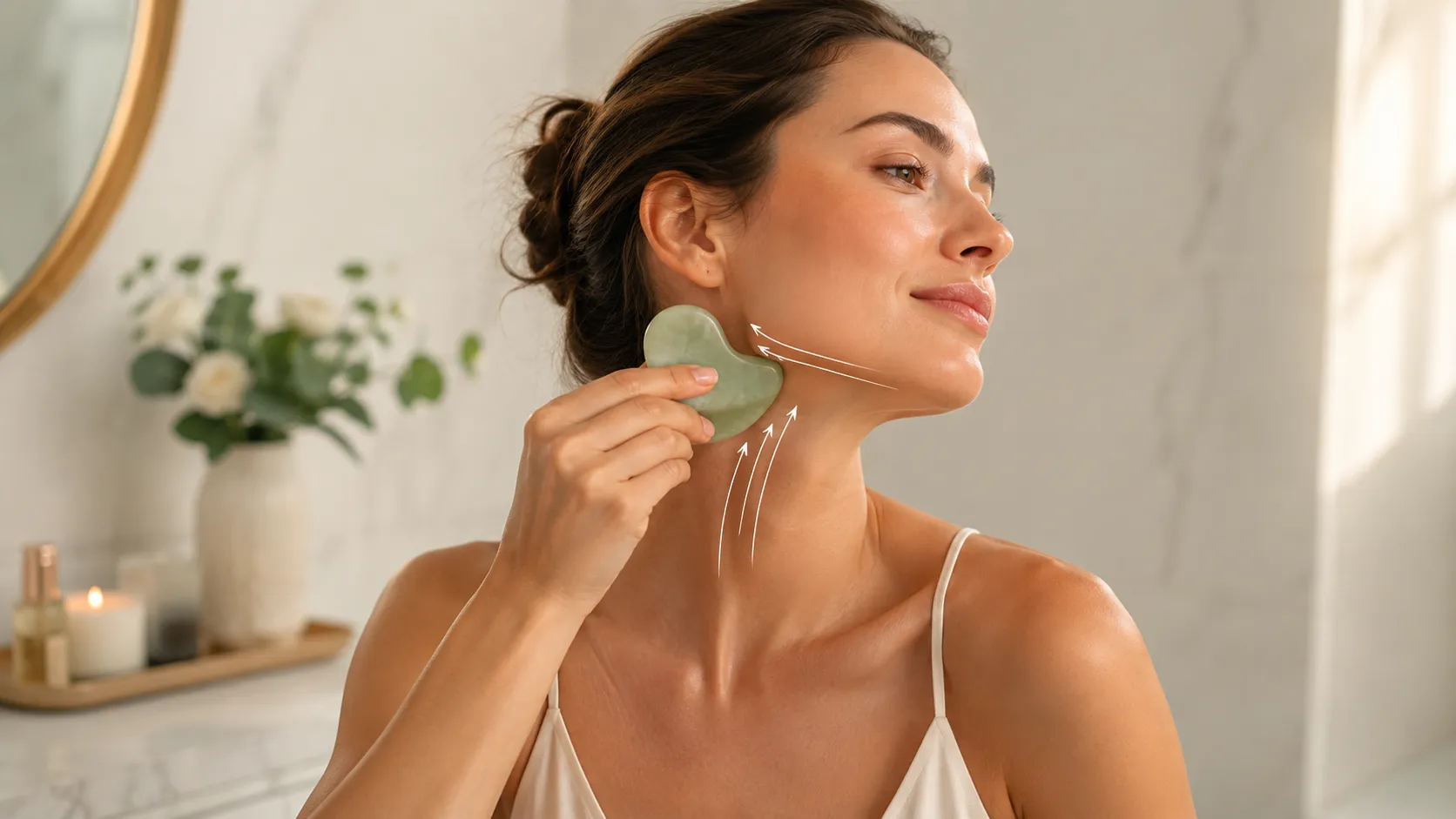
A good gua sha routine is: cleanse, apply facial oil, then glide the tool upward and outward from the center of your face, 3 to 5 strokes per area, always finishing down the neck to drain. Keep the tool nearly flat, use light pressure, and do it 3 to 5 times a week for a few minutes.
A full step-by-step gua sha routine for a sculpted, de-puffed look.
A gua sha routine only takes a few minutes, but doing the steps in the right order (and the right direction) is what turns a nice face massage into a genuinely de-puffing, lifting ritual. Here is a simple daily routine you can follow, plus what to prep beforehand, how often to do it, and what to expect.
Quick answer
Cleanse your face, apply a facial oil so the tool glides, then sweep the gua sha upward and outward from the center of your face using light pressure, 3 to 5 strokes per section. Always finish by draining down the sides of your neck. Do it 3 to 5 times a week for 3 to 5 minutes.
Key takeaways
- Always use oil or a rich serum first, so the stone glides instead of dragging skin.
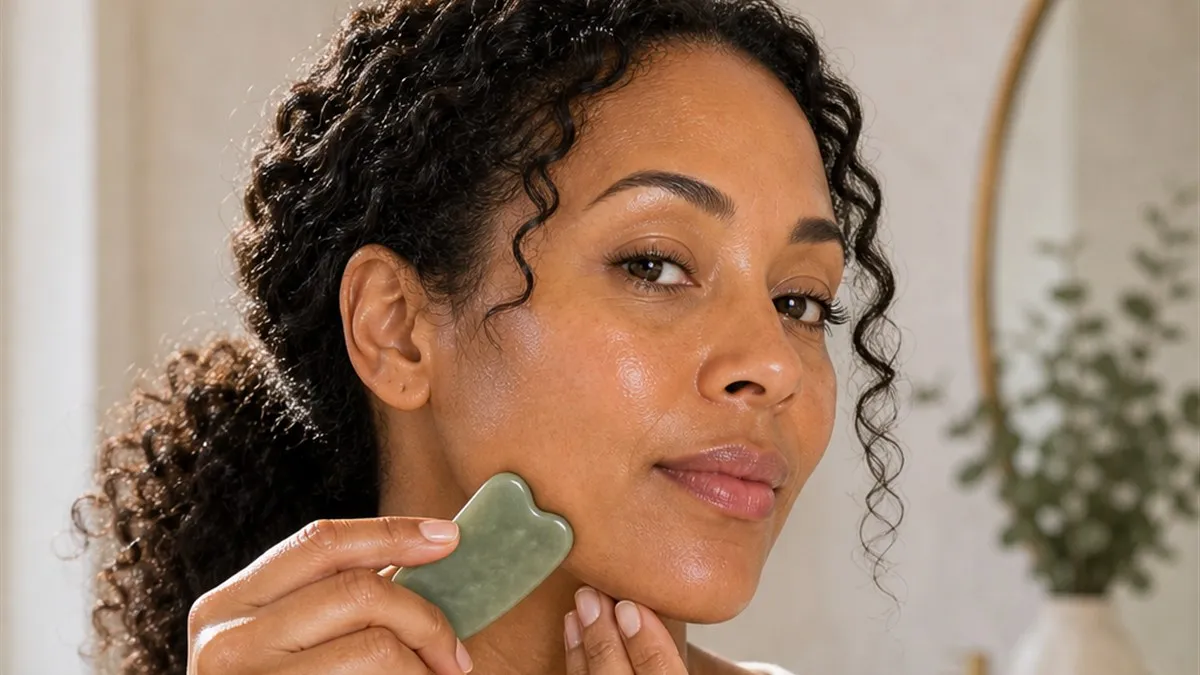
- Keep the tool almost flat against your skin and use light, gentle pressure.
- Work upward and outward, and always finish down the neck to move fluid away.
- Consistency matters more than force: a few minutes most days beats one hard session.
What do you need before you start?
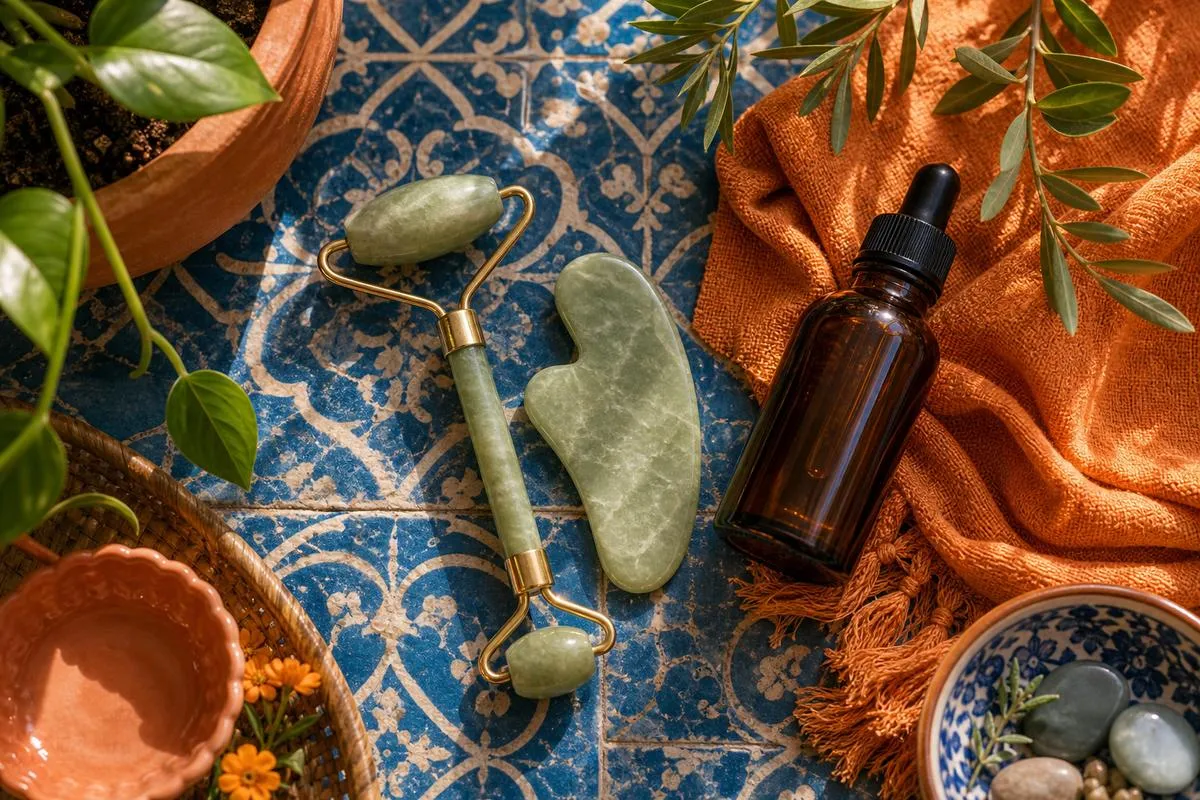
Very little, which is part of the appeal. You need a smooth gua sha tool with a curved edge and a facial oil or a slippery serum to give the tool slip. That is genuinely the whole kit. A clean face is the only other requirement, since gua sha should always go on freshly cleansed skin rather than over makeup or the day's grime.
A couple of optional extras make it nicer. Chilling a stone tool in the fridge adds a cooling, de-puffing feel that is lovely in the morning, and keeping a small towel nearby helps with any excess oil. If you are still choosing a tool, our gua sha tools for beginners guide covers what to look for. Beyond that, you are ready to start.
Step-by-step daily routine
- Cleanse. Start on clean skin so you are not pushing makeup or dirt around.
- Apply oil. A few drops of facial oil or a slippery serum gives the tool enough slip. Never use gua sha on dry skin.
- Neck first. Sweep the tool down the sides and back of your neck 5 times on each side. This opens the drainage path so everything you move next has somewhere to go.
- Jaw and chin. Rest the curved edge under your jaw and glide from the center of your chin out toward your ear, 3 to 5 times per side.
- Cheeks. Glide from beside your nose out toward your ear and temple, following your cheekbone, 3 to 5 times.
- Under-eyes. Switch to the smallest curve and very light pressure. Sweep gently from the inner corner out toward the temple, 3 times.
- Forehead. Glide from your brows up toward your hairline, then out toward the temples.
- Finish. Return to the neck and sweep downward a few more times to drain.
The order is not random: you clear the neck first so it can receive fluid, work from the center of the face outward, and drain back down the neck at the end. Keep that logic and the routine works even if you improvise slightly.
Should you do gua sha in the morning or at night?
Either works, so pick the time you will actually keep up with. A morning routine is best for de-puffing: it wakes up circulation and helps with the fluid that builds up overnight, and a chilled tool makes it especially refreshing. An evening routine is more relaxing and pairs beautifully with your nighttime oil, easing the tension that collects in the jaw and brow over a long day. Some people even do a quick morning drain and a slower evening wind-down. There is no wrong choice — consistency beats timing. If you are just starting out, our gua sha for beginners guide walks through your first session.
How often should you do gua sha?
Three to five times a week is plenty for most people. Daily is fine as long as you keep the pressure light. More is not better here: aggressive, everyday scraping can irritate skin or cause tiny broken capillaries. If you want the de-puffing effect specifically, focus on the draining movements in our lymphatic drainage face massage guide, which you can do gently every morning without any worry about overdoing it.
How long should each session take?
A few minutes is all you need — roughly 3 to 5 minutes for a full-face routine. A quick de-puffing pass focused on the neck and jaw can take as little as a minute or two, while a slower, more meditative evening session might stretch closer to ten if you are enjoying it. Longer is not automatically better; what matters is smooth, unhurried strokes rather than the total time on the clock. If you only have two minutes, a short gentle routine done consistently will always beat a long one you skip most days.
What should you do after gua sha?
Seal everything in with a moisturizer, and in the morning always finish with sunscreen — massage boosts circulation but does nothing to protect against the sun, so that step still matters. Rinse and dry your tool after each use so oils and bacteria do not build up on it, and wipe it with a gentle cleanser now and then. Store it somewhere clean, and remember a stone tool feels extra soothing if you chill it in the fridge before your next session.
Where does gua sha fit in your skincare order?
Gua sha goes on clean skin, over a layer of slip, and before you seal everything in. In practice that means: cleanse first, then apply the product that gives the tool its glide — a facial oil or a rich, slippery serum — and do your gua sha at that stage. Afterward, follow with moisturizer, and in the morning finish with sunscreen. Doing it after cleansing and over oil is what protects the skin from dragging, and doing it before your heavier creams means you are not wiping those away with the tool. If you use actives like retinoids or acids, keep them in their usual slot and simply make sure the skin is comfortable and not irritated before you glide over it.
Do you need to prep or warm up your skin?
There is no formal warm-up required, but a couple of small habits make the routine feel better. Cleansing with slightly warm water leaves skin relaxed and receptive, and taking a moment to spread your oil evenly means the tool glides from the very first stroke. Starting at the neck also acts as a natural warm-up: those first downward sweeps open the drainage path and ease you into the rhythm before you move up to the face. Beyond that, you do not need steam, special preparation, or any elaborate ritual — clean, slippery, comfortable skin is all the prep gua sha asks for.
What results should a regular routine give you?
With consistent, gentle practice you can expect a temporarily brighter, less puffy, more relaxed-looking face, most noticeably in the morning. Over weeks, the biggest payoff is often the habit itself: calmer skin, a few minutes of daily tension release, and skincare that you apply more thoughtfully. What a routine will not give you is permanent contouring or a substitute for sunscreen, sleep, and good skincare. Hold those realistic expectations and a regular routine is genuinely rewarding — just as a soothing circulation ritual rather than a transformation.
Can you do a gua sha routine without a tool?
You can get many of the same benefits using just your hands, and it is a perfectly good way to start or to keep up the habit when your tool is not nearby. Use your fingertips and knuckles to sweep in the same directions — up and out across the face, and always draining down the neck — with the same light pressure and a little facial oil for slip. Your hands give you especially sensitive feedback, which makes it easy to stay gentle.
What a tool adds is a firmer, cooler contact surface and a bit more precision along the jaw and cheekbones, plus the pleasant chill if you keep a stone or steel tool in the fridge. Neither is required. If you have a tool, use it; if you do not, your hands will carry the routine just fine until you get one.
Expert tips
- If you see faint redness, that is normal circulation. Deep bruising means you pressed too hard.
- Keep the angle low: about 15 degrees between the tool and your skin.
- Support your skin with your other hand so you are lifting, not tugging.
- Skip active breakouts, sunburn, or any broken skin, and avoid the exact spot of recent injectables until it settles.
- Watch your technique so you avoid the usual gua sha mistakes.
Final takeaway
A gua sha routine is simple: oil, upward and outward, drain down the neck, light pressure, most days of the week. Done consistently, it leaves skin looking calmer, brighter, and less puffy. Keep your expectations realistic (this is a lovely circulation and relaxation ritual, not a face-lift) and enjoy the few quiet minutes it gives you.
This is general self-care information, not medical advice. Skip gua sha over active acne, rashes, or broken skin, and check with a professional if you have a skin condition.
 📌 Save
Love this guide? Save it 📌
Pin it to your favorite board so it's easy to find again — and share it with a friend who'd love it too.
Save to PinterestFrequently asked questions
What order should I do a gua sha routine in?
Start at the neck to open the drainage path, then work jaw, cheeks, under-eyes, and forehead, always sweeping upward and outward. Finish back at the neck, sweeping downward to drain. Doing the neck first and last is the key to the de-puffing effect.
How long should a gua sha routine take?
Three to five minutes is enough. You are aiming for a few smooth strokes per area, not a long or forceful session. Consistency several times a week matters more than doing it for a long time.
Should I do gua sha in the morning or at night?
Morning is best for de-puffing and waking up circulation. Evening is more relaxing and pairs with your nighttime oil. Both work, so choose the time you will realistically keep up with.
Do I need oil for a gua sha routine?
Yes. Always apply a facial oil or a slippery serum first so the tool glides. Using gua sha on dry skin drags and pulls, which can cause irritation and redness.
How often should I do a gua sha routine?
Three to five times a week suits most people, and daily is fine with light pressure. Avoid pressing hard every day, which can irritate skin or cause broken capillaries.

Medically reviewed by The Fern Edit Editorial Team, . We cite sources and update this guide regularly.