

Vertical ridges—lines running from cuticle to tip—are usually a normal part of aging and dryness, and they are harmless. Horizontal ridges that run across the nail are less common and can follow illness, injury, or stress, so they are worth a doctor’s look. You cannot fully erase ridges, but you can soften their appearance by keeping nails hydrated with cuticle oil, using a ridge-filling base coat, and buffing very lightly (not aggressively).
You glance down at your hands and notice little lines running along your nails—some so subtle you only feel them, others you can clearly see. It is a moment that makes a lot of women pause and wonder, is this normal, or is my body telling me something?
Most of the time, nail ridges are completely harmless and incredibly common, especially as we get older. But the direction of the ridge matters, and knowing the difference helps you relax about the harmless kind and pay attention to the rare kind that deserves a check-up. Here is what ridges in your fingernails mean and how to smooth their appearance.
Key Takeaways
- Vertical ridges are normal, especially with age—think of them like fine lines for your nails.
- Horizontal ridges are different and can point to an underlying cause, so get them checked.
- You can soften, not erase. Hydration and a ridge-filling base coat smooth the look.
- Don’t over-buff. Aggressive buffing thins the nail and can make things worse.
- Dryness exaggerates ridges, so daily cuticle oil genuinely helps.
What Are Nail Ridges?
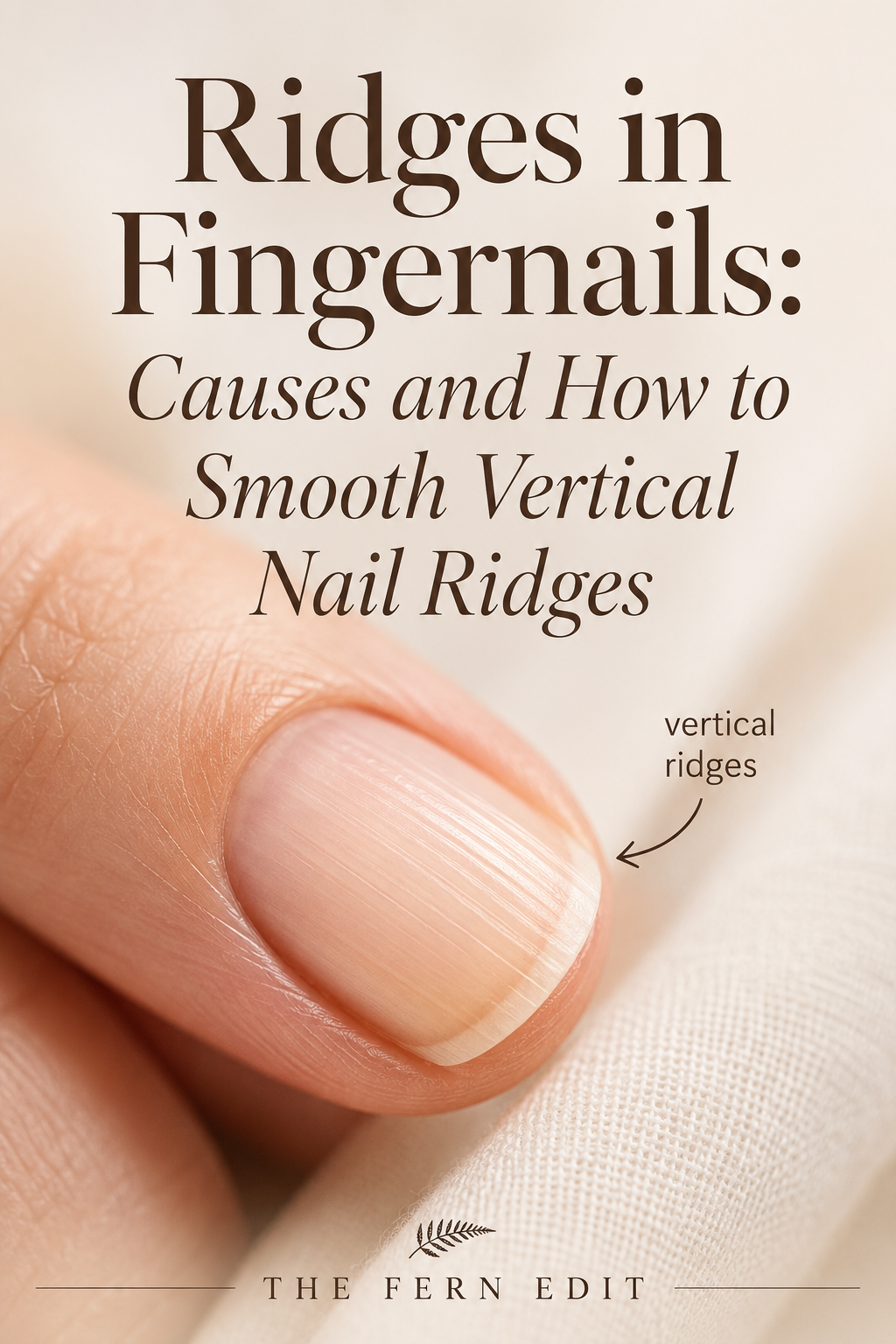
Nail ridges are raised lines or grooves in the surface of the nail. They come in two main directions, and that direction is the most important thing to notice:
- Vertical ridges run lengthwise, from the cuticle to the tip. These are by far the most common and are usually nothing to worry about.
- Horizontal ridges run side to side, across the nail. These are less common and more likely to have a specific cause worth investigating.
Knowing which you have turns a worrying mystery into a simple, manageable situation.
Vertical Ridges and What They Mean

Vertical ridges are a normal part of getting older. Just as skin develops fine lines, nails tend to develop these lengthwise grooves over time as cell turnover slows. They are extremely common and generally harmless.
Other everyday factors that make vertical ridges more noticeable include dryness, low humidity, and minor nutrient gaps. Because dryness exaggerates them, well-hydrated nails almost always look smoother. If your nails are also dry, weak, or splitting alongside the ridges, our guide to brittle nails pairs perfectly with this one.
Horizontal Ridges and What They Mean
Horizontal ridges—sometimes called Beau’s lines—run across the nail and are worth more attention. They can appear after something temporarily interrupts nail growth, such as a high fever, illness, significant stress, injury to the nail, or certain treatments. A single deep horizontal line often simply marks a past event growing out.
Because horizontal ridges can occasionally reflect an internal cause, they are the type worth showing to a doctor or dermatologist—especially if they appear on several nails at once or keep recurring.
How to Smooth and Minimize Ridges
Set expectations first: you cannot permanently erase ridges, because they form in the nail as it grows. What you can do is soften how they look and help new, smoother nail grow in.
- Hydrate daily. Cuticle oil and hand cream plump the nail surface so ridges look less pronounced. This is the gentlest, most effective step.
- Use a ridge-filling base coat. These are designed to fill grooves for an instantly smoother, polish-ready surface—a quick cosmetic win.
- Buff very lightly. A soft buffer used occasionally and with a feather-light touch can even out the surface. Stop while the nail still has thickness to spare.
- Support healthy growth. Eat enough protein and key nutrients, and follow a consistent routine so the new nail grows in smoother.
This all fits inside the bigger system in our pillar guide, how to grow strong, healthy nails.
How to Prevent Ridges From Getting Worse
- Keep nails and cuticles moisturized—dryness is the main thing that makes ridges stand out.
- Wear gloves for cleaning and dishes to limit drying water and chemicals.
- Be gentle with manicures and removal; trauma to the nail can deepen grooves.
- Eat a balanced diet with protein, iron, and zinc. For the supplement angle, see biotin and vitamins for nails.
Common Mistakes to Avoid
- Aggressive buffing. The biggest mistake—buffing hard to “sand away” ridges thins and weakens the nail.
- Ignoring hydration. Dry nails make every ridge look deeper.
- Panicking over vertical ridges. They are almost always normal; stress is not a fix.
- Dismissing horizontal ridges. These are the ones actually worth a closer look.
Expert-Style Tips
- Apply a ridge-filler before polish for a flawless, smooth finish on photo days or events.
- Oil at night so the nail surface stays supple and ridges soften over time.
- Take a baseline photo. If you are watching a horizontal line grow out, a photo helps you track it for your doctor.
- Choose cream or satin polish finishes—they disguise texture better than high-shine on ridged nails.
When to See a Doctor
Vertical ridges almost never need medical attention. But it is smart to check in with a doctor or dermatologist if you notice horizontal ridges across several nails, deep grooves that appear suddenly, ridges alongside color changes, pitting, spooning, thickening, pain, or nails lifting from the bed. These less-common patterns can occasionally relate to an internal cause, and a professional can give you real peace of mind.
Free Printable: Healthy Nail Routine Checklist
Smoother nails start with consistent hydration. Grab our free printable nail care checklist to lock in the daily oiling habit that keeps ridges looking their best.
Related Reads in This Series

- How to Grow Strong, Healthy Nails (Full Routine)
- Brittle Nails: Causes and How to Fix Them
- Yellow Nails: Causes and How to Whiten Them
- Cuticle Care: How to Care for Your Cuticles
- Biotin and Vitamins for Nails: Do They Work?
Are ridges in fingernails normal?
Vertical ridges that run from cuticle to tip are very normal, especially with age, and are usually harmless. Horizontal ridges running across the nail are less common and worth having checked by a doctor.
What deficiency causes ridges in nails?
Ridges are most often from aging and dryness rather than a deficiency, but low iron, zinc, or protein can sometimes contribute. If you are concerned, a doctor can check for an underlying cause.
How do I get rid of ridges in my nails?
You cannot fully erase them, but you can soften their look: hydrate daily with cuticle oil, use a ridge-filling base coat, and buff very lightly. Smoother nail also grows in over time with good care.
Do vertical nail ridges mean I'm unhealthy?
No—vertical ridges are a normal feature of aging nails and rarely signal a health problem on their own. It is the horizontal ridges that are more worth investigating.
Can I buff nail ridges away?
Light, occasional buffing can smooth the surface, but aggressive buffing thins and weakens the nail and can make ridges and brittleness worse. Gentle is the rule.
The Takeaway
Ridges in your fingernails are usually just your nails showing their age—harmless, common, and easy to soften with hydration and a ridge-filling base coat. The one thing to remember is direction: lengthwise lines are almost always fine, while lines running across the nail are the ones worth a quick check. Keep your nails oiled, be gentle, and let smoother nail grow in.
This article is for general beauty and self-care education only and is not medical advice. If you notice horizontal ridges, sudden changes, or other nail symptoms, please consult a doctor or dermatologist.
Nail inspiration to save 💅
Tap any look to open it — then save your favorites.






 📌 Save
Love this guide? Save it 📌
Pin it to your favorite board so it's easy to find again — and share it with a friend who'd love it too.
Save to PinterestFrequently asked questions
Are ridges in fingernails normal?
Vertical ridges that run from cuticle to tip are very normal, especially with age, and are usually harmless. Horizontal ridges running across the nail are less common and worth having checked by a doctor.
What deficiency causes ridges in nails?
Ridges are most often from aging and dryness rather than a deficiency, but low iron, zinc, or protein can sometimes contribute. If you are concerned, a doctor can check for an underlying cause.
How do I get rid of ridges in my nails?
You cannot fully erase them, but you can soften their look: hydrate daily with cuticle oil, use a ridge-filling base coat, and buff very lightly. Smoother nail also grows in over time with good care.
Do vertical nail ridges mean I'm unhealthy?
No — vertical ridges are a normal feature of aging nails and rarely signal a health problem on their own. It is the horizontal ridges that are more worth investigating.
Can I buff nail ridges away?
Light, occasional buffing can smooth the surface, but aggressive buffing thins and weakens the nail and can make ridges and brittleness worse. Gentle is the rule.

We cite sources and update this guide regularly.