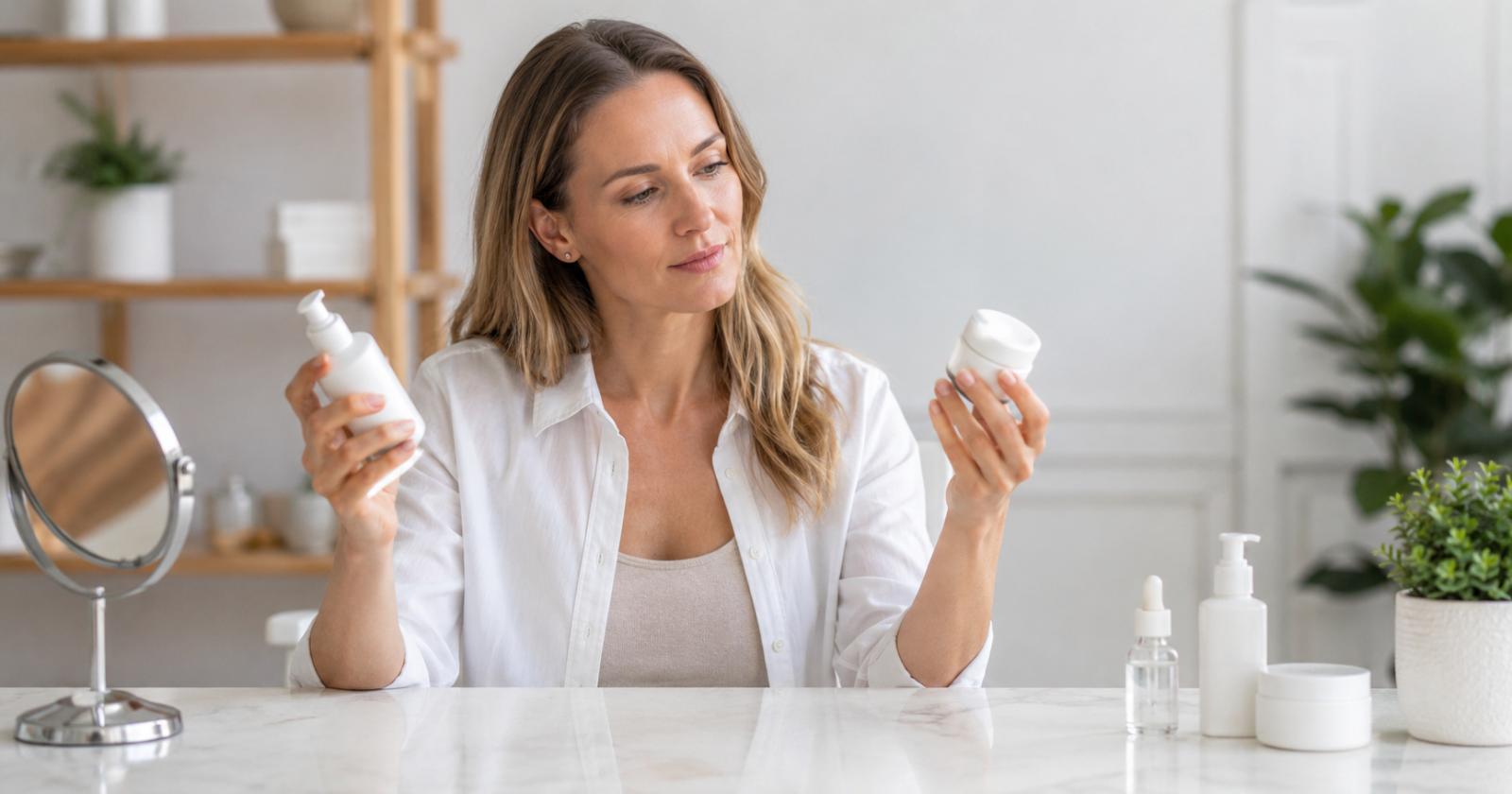

To support collagen naturally, protect skin from the sun, eat enough protein and vitamin C, avoid smoking and excess sugar, sleep well, and use collagen-supporting skincare like retinoids and vitamin C. You cannot flood skin with collagen from outside, but these habits help your body make and keep more of its own.
Daily habits that may support your skin's collagen.
Collagen is the protein that keeps skin firm and springy, and it naturally declines with age. You cannot simply rub collagen back into your face, but you can support your body's own production and slow its breakdown with everyday habits. Here is how to boost collagen naturally.
Quick answer
The biggest wins are protecting collagen from the sun with daily SPF, eating enough protein and vitamin C so your body has the building blocks, and avoiding the things that degrade collagen like smoking and excess sugar. Retinoids and vitamin C in skincare also nudge production. It is about supporting and preserving, not flooding skin from outside.
Key takeaways
- You cannot directly add collagen to skin from a cream; you support your own supply.
- Sun protection is the number one way to preserve existing collagen.
- Diet, sleep, and avoiding smoking and sugar spikes all matter.
At what age does collagen start to decline?
Collagen production begins its slow, natural decline in your mid-to-late 20s, and continues gradually from there — a commonly cited general estimate is a loss of roughly 1% per year, though this varies a lot between individuals. The drop can become more noticeable around menopause, when hormonal changes accelerate it for many women. The encouraging flip side is that decline is gradual and heavily influenced by habits, so the sooner you protect and support your collagen, the more of it you preserve over the long run. It is never too early or too late to start.
Can you rebuild collagen naturally?
To a degree, yes — mostly by supporting your body's own machinery rather than adding collagen from outside. Proven skincare actives like retinoids genuinely prompt the skin to make more collagen over time, and protecting your skin lets it rebuild faster than it breaks down. What you cannot do is dramatically regrow collagen through diet or creams alone, or restore youthful levels completely. The realistic goal is to tip the balance toward preserving and gently stimulating what you have, which adds up to firmer-looking skin over the years.
Protect the collagen you have
The fastest way to lose collagen is UV damage, which breaks it down faster than your body rebuilds it. Daily broad-spectrum sunscreen is therefore the most important collagen-preserving habit you have, and it underpins everything else you do for firmness.
What foods are best for collagen?
Your body builds collagen from nutrients, so a balanced, whole-food diet gives it the raw materials:
- Protein. Collagen is made from amino acids, so adequate protein — from meat, fish, eggs, dairy, beans, and legumes — provides the building blocks.
- Vitamin C. Essential for collagen synthesis, found in citrus, berries, peppers, kiwi, and leafy greens.
- Zinc and copper. Trace minerals that support the process, found in nuts, seeds, shellfish, and whole foods.
- Colorful produce. Antioxidants from brightly colored fruits and vegetables help defend collagen from damage.
You do not need exotic "collagen foods" — a varied diet with enough protein and produce covers most of this.
Habits that slow collagen loss
- Do not smoke. Smoking dramatically accelerates collagen breakdown and skin aging.
- Limit excess sugar. Too much sugar can stiffen and damage collagen through a process called glycation.
- Sleep well. Skin repairs during sleep, so consistent rest supports it.
- Manage stress. Chronic stress hormones can work against skin repair.
Skincare that supports production
- Retinoids are the most proven topical for stimulating collagen over time.
- Vitamin C supports synthesis and protects against damage.
- Peptides signal the skin to support its structure.
These are the same actives behind at-home skin tightening, so your firming routine and your collagen habits reinforce each other.
Does vitamin C really help collagen?
Yes, and it plays two useful roles. Vitamin C is a necessary cofactor in collagen synthesis, meaning your body literally cannot build collagen properly without it — so getting enough through food (citrus, berries, peppers, leafy greens) supports production from the inside. Applied topically in a well-formulated serum, vitamin C also provides antioxidant protection that helps defend existing collagen from daily UV and free-radical damage, and it supports a brighter, more even tone. It is not a magic wand on its own, but as part of the package — diet plus a morning vitamin C serum under sunscreen — it genuinely earns its place.
How long does it take to support collagen?
This is a long game, not a quick fix. Dietary and lifestyle changes work quietly in the background, and topical actives like retinoids and vitamin C generally take around 8 to 12 weeks of consistent use before you notice smoother, firmer-looking skin, with continued gains over six months and beyond. Sun protection pays off over years by preventing loss you would otherwise accumulate. Because so much of this is preservation, the "results" often look like skin that ages more slowly rather than a dramatic before-and-after. Consistency over months and years is what compounds.
Do collagen creams work?
Mostly not in the way the marketing implies. The collagen molecule is too large to penetrate the skin and become part of your own collagen, so a cream that simply contains collagen mainly acts as a surface moisturizer — which is nice, but not collagen-building. What genuinely helps are the actives that stimulate your skin to make its own, like retinoids, vitamin C, and peptides. So when shopping, look at the active ingredients rather than the word "collagen" on the front of the jar.
Do collagen supplements work?
Some people take collagen peptide supplements, and early research is mixed but somewhat encouraging for skin hydration and elasticity. They are generally considered safe, but think of them as a possible bonus on top of the fundamentals, not a replacement for sun protection and a good diet. If you try one, keep your expectations modest and give it consistent time.
Does sugar really damage collagen?
There is a real mechanism behind this one, though it is worth keeping in perspective. When you eat a lot of sugar, excess glucose can attach to proteins like collagen in a process called glycation, forming byproducts that make collagen stiffer and more brittle over time — which works against the springy quality that keeps skin firm. This does not mean an occasional treat ruins your skin, or that you need to fear sugar. It means that a consistently high-sugar diet is one of the everyday factors that quietly degrades collagen, so moderating added sugar is a sensible, skin-friendly habit alongside protein, produce, and sun protection.
Final takeaway
Boosting collagen naturally is really about preserving and supporting: daily sunscreen to protect it, a protein- and vitamin-C-rich diet to build it, healthy habits to slow its loss, and proven skincare to nudge production. Do these consistently and your skin keeps more of its natural firmness for longer.
General wellness and skincare education, not medical advice.
 📌 Save
Love this guide? Save it 📌
Pin it to your favorite board so it's easy to find again — and share it with a friend who'd love it too.
Save to PinterestFrequently asked questions
How can I boost collagen naturally?
Protect skin from the sun daily, eat enough protein and vitamin C, avoid smoking and excess sugar, sleep well, and use retinoids and vitamin C in skincare. These support your body's own collagen production and slow its breakdown.
Can food increase collagen?
Food gives your body the building blocks. Protein supplies amino acids, and vitamin C is essential for collagen synthesis, so a balanced diet rich in both, plus colorful antioxidant produce, supports production.
Do collagen supplements actually work?
Research is mixed but somewhat promising for skin hydration and elasticity, and they are generally safe. Treat them as a possible bonus rather than a substitute for sun protection, diet, and good skincare.
What destroys collagen the fastest?
Ultraviolet light from the sun is the biggest destroyer of collagen, followed by smoking and diets high in excess sugar. Daily sunscreen and avoiding smoking are the most protective habits.
Does skincare rebuild collagen?
Certain actives help. Retinoids are the most proven at stimulating collagen over time, and vitamin C supports synthesis while protecting against damage. Creams cannot add collagen directly, but they can encourage your skin to make more.

Medically reviewed by The Fern Edit Editorial Team, . We cite sources and update this guide regularly.